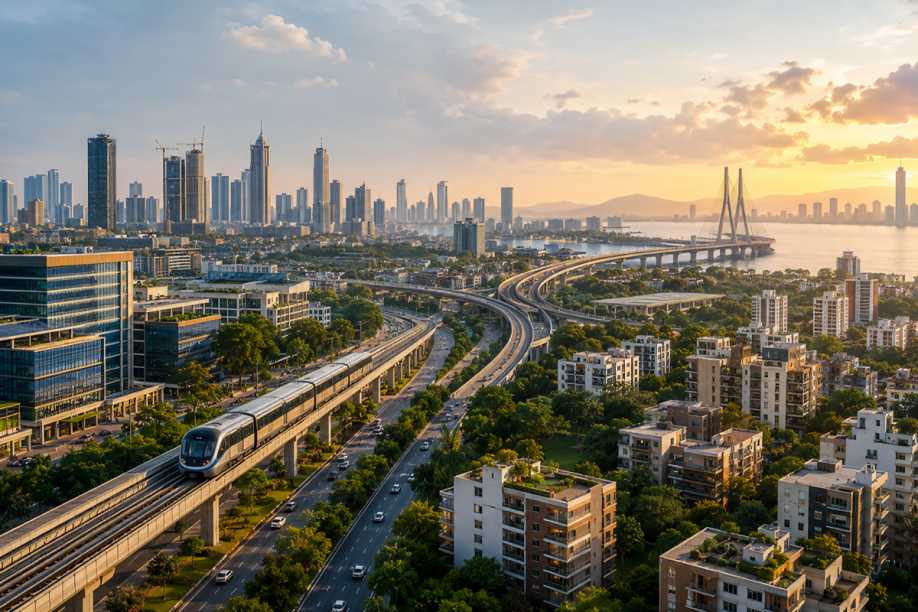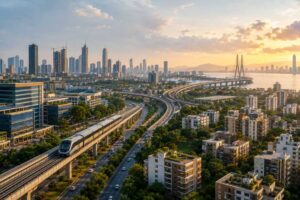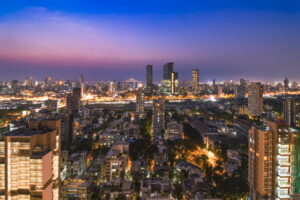

Mumbai is witnessing one of the largest infrastructure expansions in its history, with more than $60 billion being invested in metro networks, expressways, airport development, sea links and regional connectivity projects. The scale of these initiatives has led many to describe the 2020s as a defining decade for the city’s urban evolution.
Several global cities experienced transformational phases through major infrastructure upgrades. New York’s growth accelerated through bridges, subways and skyscrapers in the late 19th century, while Singapore and Dubai reshaped their identities through ambitious urban planning in later decades. For Mumbai, the current decade could mark a similar turning point.
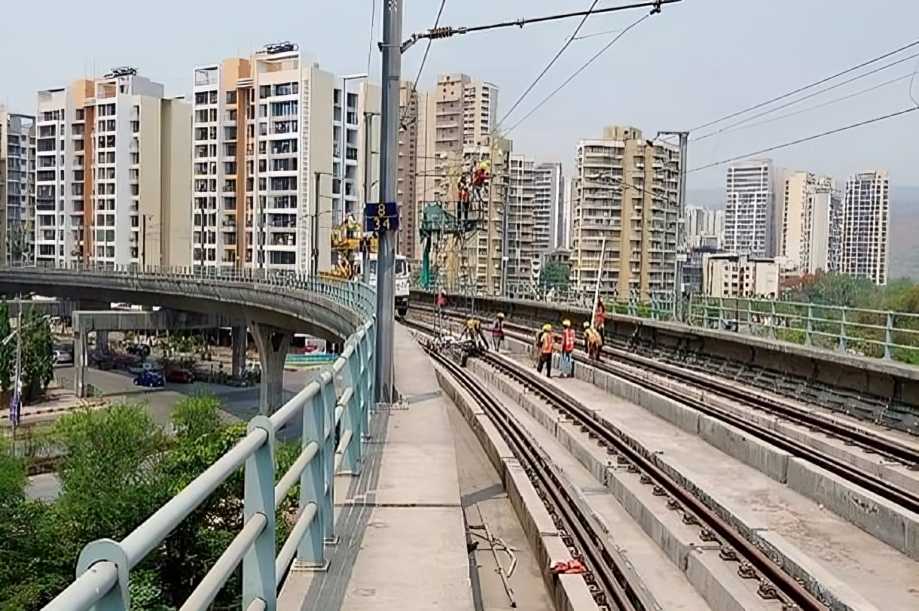
The city is simultaneously developing a second international airport, a 16-line metro network, new highways, tunnels, coastal connectivity projects and transit-oriented development zones. These projects are expected to influence not just mobility but also housing patterns, business locations and the overall structure of the Mumbai Metropolitan Region (MMR).
However, Mumbai’s long-standing challenges remain significant. The city continues to face overcrowded public transport, expensive housing and lengthy daily commutes. The suburban railway network carries more than 7 million passengers every day, putting pressure on infrastructure that was built for much lower demand.
For decades, Mumbai expanded without matching urban planning. Employment opportunities remained concentrated in South Mumbai and later Bandra-Kurla Complex (BKC), while residential growth moved towards the suburbs and neighbouring regions, increasing travel distances.
The ongoing infrastructure push aims to change this pattern by creating a connected metropolitan region rather than a city dependent on a few commercial hubs.
Sanjay Mukherjee, metropolitan commissioner of the Mumbai Metropolitan Region Development Authority (MMRDA), said, “This is not a routine expansion but a turning point for Mumbai. Instead of a linear northward stretch, we are building a networked metropolitan region.”
He added, “Reliable commute times change where people live and work, making this less about adding infrastructure and more about reshaping how the city functions.”
Projects such as Metro lines, the Mumbai Trans Harbour Link (Atal Setu), coastal connectivity and airport infrastructure are being planned as part of an integrated transport system. The focus is on seamless interchanges, feeder services and last-mile connectivity.
Urban planner Pankaj Joshi, principal director, Urban Centre Mumbai, said, “Mumbai has been moving towards a multi-centric metropolitan region with ‘splintered urbanism’, where employment and population are no longer concentrated in South Mumbai or a single business district.”
The expansion of Navi Mumbai, Thane, Airoli, Malad and other emerging centres reflects this shift, with these locations increasingly becoming independent employment destinations.
The Navi Mumbai International Airport is expected to further accelerate this transformation by opening new economic zones connected through highways, sea links and transit networks.
“Better connectivity is expected to support additional business hubs beyond existing clusters, making the city more balanced. By 2035, Mumbai could feel smaller in travel time, with more reliable commutes, multiple active nodes and greater confidence in where people choose to live and work,” Mukherjee said.
Real estate experts believe improved connectivity will reshape property demand across the region. Niranjan Hiranandani, chairman of the National Real Estate Development Council (NAREDCO), said, “Mumbai’s infrastructure reset is not merely about new roads or metro lines; it is about rewriting the city’s growth blueprint.”
He added, “We are witnessing the democratisation of access across the MMR. Travel time is shrinking, business districts are decentralising and micro-markets once considered peripheral are emerging as vibrant growth centres.”
However, experts caution that infrastructure growth must be supported by efficient public transport, including better bus connectivity, to avoid increasing dependence on private vehicles.
The success of Mumbai’s transformation will ultimately depend on whether these projects improve everyday life for citizens. As Mukherjee said, “Global cities are judged not just by their skyline or size, but by how efficiently they function. Mumbai already has the talent and scale; what we are strengthening now is its operating efficiency, which is what global investors look for.”
The infrastructure boom of the 2020s could become a defining chapter in Mumbai’s history, but its true impact will be measured by whether it creates a more accessible, efficient and liveable city.
Source: The Economic Times