
The Maharashtra government’s proposed Third Mumbai project has once again brought land acquisition concerns to the forefront in Raigad district, where many farmers say they have been facing similar challenges for decades.
For residents of the region, the latest urban expansion plan is not viewed as a standalone development initiative but as another chapter in a long history of land acquisition, compensation disputes and promises they believe remain unfulfilled.
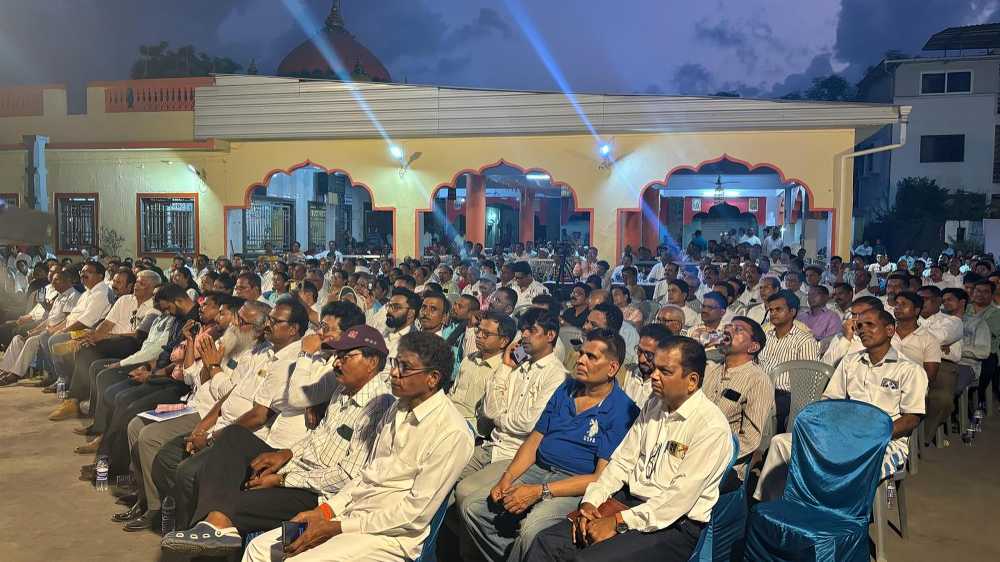
One such resident is 44-year-old Rupesh Patil, who carefully studies a government notification while standing near Chirner Lake, close to the historic 17th-century Maha Ganpati Temple. The village, known for its ancient gadhegals—stone markers symbolising historic land grants—is among the 124 villages identified for the proposed Third Mumbai project.
Patil believes the project threatens the ownership of agricultural land that has been held by local families for generations.
“Ha navin prayatna ahe amchya jameeni hadapnyacha ani udyaogpatinchya ghashyat ghalnyacha. Kay garaj ahe, jameen ghenya aiwaji development karana. Malki amchich rahudya [This is the third attempt at grabbing all our lands at low prices and putting them in the laps of big conglomerates, contractors, and agents, who are manipulating farmers to sell],” says Patil.
Many landowners in Raigad argue that development should take place without transferring ownership of their properties. They contend that infrastructure and urban growth can be pursued while allowing farmers to retain their land rights.
The proposed Third Mumbai project is expected to reshape large parts of Raigad by creating new urban and economic zones to support the expanding Mumbai Metropolitan Region (MMR). However, local opposition remains strong, with many residents pointing to previous land acquisition experiences that, they claim, resulted in delayed compensation and inadequate rehabilitation.
As discussions over the project continue, the state government faces the challenge of balancing large-scale urban development with the concerns of communities whose livelihoods remain closely tied to their land.
Source: The Hindu