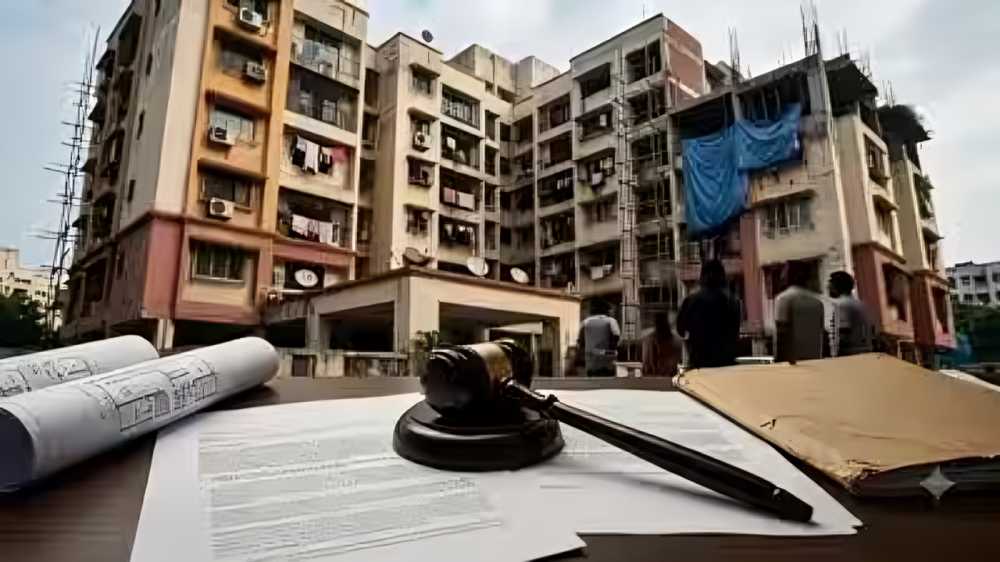

The National Consumer Disputes Redressal Commission (NCDRC) has directed a Mumbai-based developer to pay Rs 6 crore compensation to a cooperative housing society after finding that residents had been facing uncertainty and the risk of demolition for over two decades due to the builder’s failure to obtain an occupation certificate (OC).
The commission has also instructed the developer to secure the occupation certificate within 12 months and pay an additional Rs 10 lakh towards litigation expenses. The order was passed on August 17, 2026.
The case involved Tirupati Devi Cooperative Housing Society, comprising 33 members occupying 25 flats in two wings of Balaji Apartments in Santacruz. The society had entered into a redevelopment agreement with Raja Construction Company on March 14, 2005.
Under the agreement, the developer was responsible for demolishing the existing structures, constructing new buildings, handing over flats to members and obtaining necessary approvals, including the occupation certificate, completion certificate and water connection.
Although possession of the redeveloped flats was handed over from 2008 onwards, the society alleged that the developer failed to provide the required documents and approvals. Members later claimed through an RTI application that the construction did not match the sanctioned plans, with additional construction allegedly carried out without approvals.
The society approached the NCDRC in 2013, seeking compensation for delays, differences in flat areas, regularisation charges and failure to provide essential certificates.
The developer denied the allegations, arguing that the complaint was delayed and claiming that some residents had made unauthorised modifications to their flats, affecting the issuance of the OC. However, the commission found no evidence supporting these claims and held the developer responsible for obtaining approvals.
The bench comprising President A.P. Sahi and member Bharatkumar Pandya observed that the residents had possession of their homes but the legality of the construction remained uncertain.
“Though the possession is being enjoyed by the members from 2008 onwards, the legality of the extent of construction and of such possession is in jeopardy in view of the refusal or resistance by the authorities to grant such permission in view of the fact of part of the construction being in excess of or contrary to the approved plan as submitted by the Developer to the authorities,” the commission said.
The NCDRC noted that the absence of the OC had caused prolonged anxiety among residents. “In our considered opinion, the non-obtaining of the OC and putting the members under the continuing risk of demolition of the building due to illegality in construction over a longish period of more than 20 years, calls for the compensation at enhanced 1.5 times the stipulated rate,” it observed.
The total compensation included delayed possession-related dues, additional hardship costs and expenses linked to the lack of municipal water connection and other issues.
The commission held the builder and its partners jointly responsible and directed them to pay the compensation within three months. Failure to comply will attract 8% annual interest until full payment. The developer must also complete the OC process and hand it over to the society members within the stipulated period.
Source: The Times of India