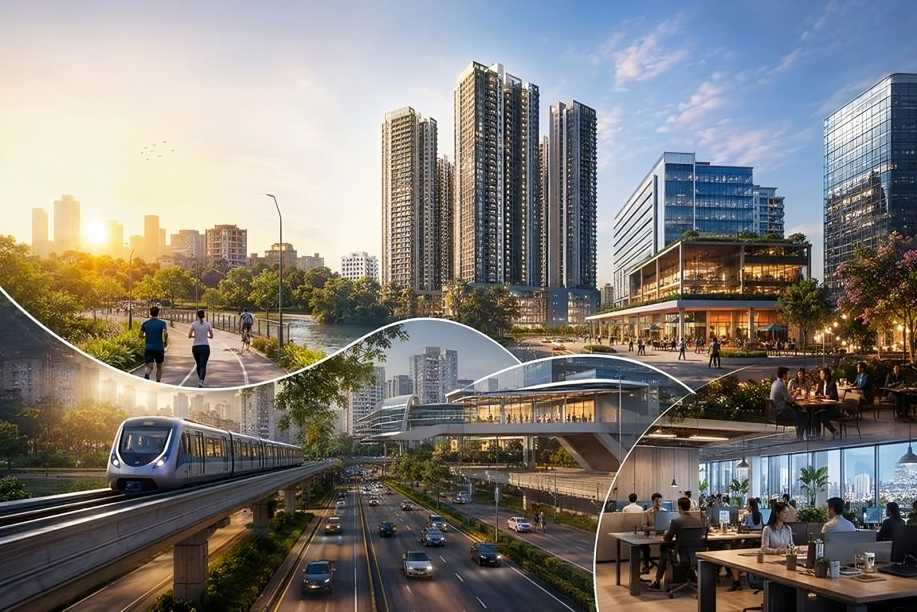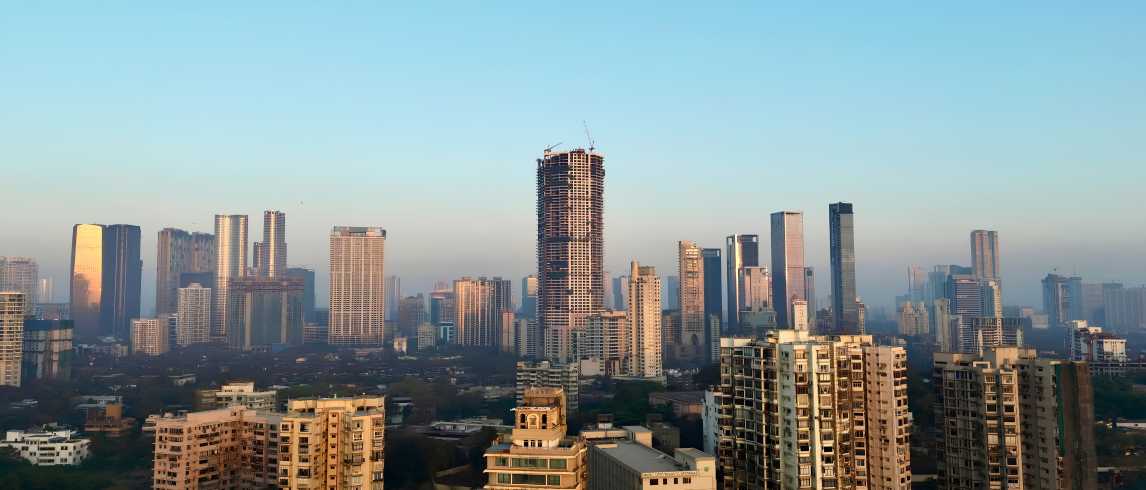

Panvel is rapidly emerging as a major residential and mixed-use growth hub in the Mumbai Metropolitan Region (MMR), moving beyond its earlier image as a peripheral housing market. Its location between Mumbai, Navi Mumbai, Pune and the Konkan region, along with improving transport infrastructure, has increased its appeal among developers, investors and homebuyers.
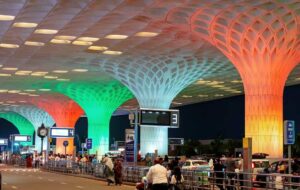
An ANAROCK report highlights the transformation, citing connectivity through the Mumbai-Pune Expressway, Sion-Panvel Highway, Atal Setu and Panvel Railway Junction. The operationalisation of Navi Mumbai International Airport (NMIA) has further strengthened the area’s growth prospects.
“This market increasingly benefits from the convergence of residential demand, airport-linked employment, logistics activity and planned mixed-use development,” says Dr. Prashant Thakur, Executive Director & Head – Research & Advisory, ANAROCK Group.
Panvel witnessed a sharp increase in residential launches, with new supply rising 211% in 2022 and another 261% in 2023. Although launches declined 7% in 2024, Panvel’s share of Navi Mumbai’s residential supply increased from 28% in 2021 to 46% in 2024.
The market remains largely focused on mid-income buyers. Homes priced between Rs 50 lakh and Rs 1 crore accounted for 47% of launches between 2021 and H1 2026, while 1 BHK and 2 BHK homes together represented 85% of supply.
“The supply composition is that of a classic end-user and mid-income market,” says Thakur. “This configuration mix suggests that developers continue to prioritise relatively accessible homes for first-time buyers, young professionals, and nuclear families.”
Residential prices have also climbed substantially. Panvel’s price index reached 176 in H1 2026, compared with Navi Mumbai’s 164, using 2021 as the base year. This represents a 76% increase in prices.
Infrastructure remains the biggest growth driver. Atal Setu, Navi Mumbai Metro, the Panvel-Karjat rail corridor, the proposed Mumbai Metro Line 8 and the Alibaug-Virar Multimodal Corridor are expected to further improve connectivity.
“The airport is emerging as the most significant catalyst,” says Thakur. “It will support demand for aviation, logistics, hospitality, retail and commercial space, and the proposed 667-acre Aerocity is poised to create an integrated ecosystem around the airport.”
With 91% of available inventory under construction as of H1 2026, Panvel’s future will depend on sustained demand, timely infrastructure delivery and employment generation.
“If this growth materialises as planned,” Thakur says, “Panvel could consolidate its position as one of the MMR’s most important infrastructure-led residential and mixed-use corridors.”
Source: Realty Plus