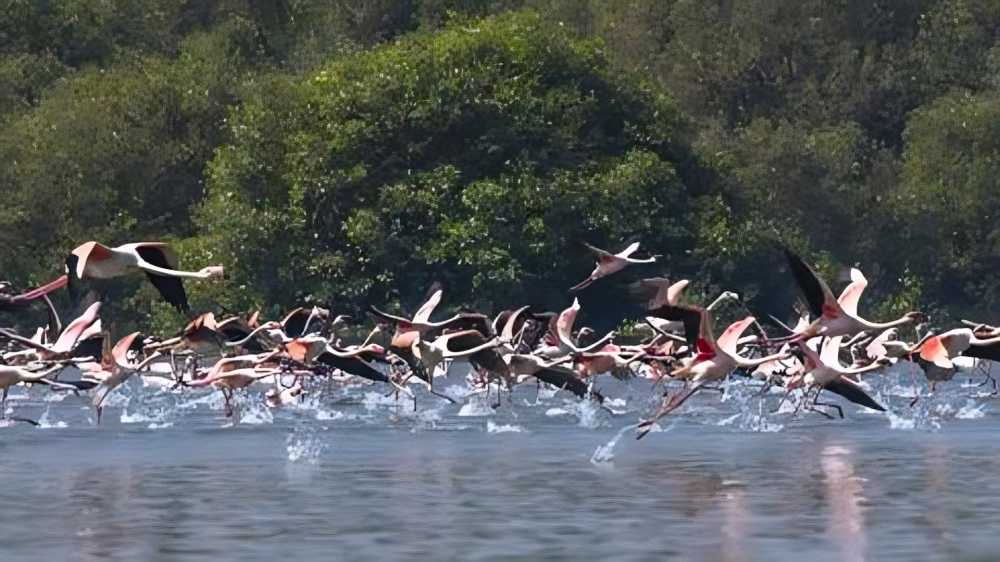

The Maharashtra Coastal Zone Management Authority (MCZMA) has asked the Mumbai Metropolitan Region Development Authority (MMRDA) to explore an alternative alignment for the proposed Balkum-to-Anandnagar coastal road in Thane, citing concerns over its potential impact on the Thane Creek flamingo sanctuary and 3,754 mangroves spread across 2.72 hectares of forest land.
The direction is a setback for MMRDA, which submitted its proposal to the coastal regulator on August 11 seeking approval for the Elevated Thane Coastal Road Phase-II. The proposed six-lane corridor is planned to extend from Balkum to Anandnagar in Mulund East and connect with the Eastern Freeway extension between Ghatkopar and Thane.
According to MCZMA, MMRDA should examine a route that would minimise the project’s impact on the ecologically sensitive zone. The authority has also sought a report from the state forest department’s Mangrove Protection Cell to assess the likely effect on mangroves.
MMRDA has further been asked to prepare plans for compensatory mangrove plantation and submit a detailed assessment of the project’s impact on creek ecology and flamingo habitat, along with proposed mitigation measures. The authority has also directed the agency to provide details of complaints received regarding the project.
Environmentalist D Stalin of NGO Vanashakti said, “The MMRDA has built many coastal roads in Thane. Why do they need one more? TMC has already destroyed mangroves from Thane to Bhiwandi. Now they propose to destroy even more.’’
An MMRDA official said altering the main alignment would be difficult because it follows the road notified under the Thane Municipal Corporation’s Development Plan. However, alternative options at certain interchanges have been examined and presented to MCZMA.
The official said the proposed road is designed as an extension of Thane Coastal Road Phase-I and forms part of a wider regional transport network, including the proposed Kopri-Patni bridge, Eastern Freeway extension at Anand Nagar and the Eastern Express Highway.
MMRDA maintained that the project has been deferred rather than rejected and that the additional information sought by MCZMA will be submitted.
The authority also highlighted that the section crossing the eco-sensitive and mangrove areas will be elevated on piers, reducing its footprint. It said the standard 30-metre span has been increased to 45-50 metres to reduce the number of pier foundations and limit intervention in mangrove areas.
Source: Hindustan Times