
The Maharashtra government has approved 12 additional data centre projects, bringing the total number of operational and proposed facilities in the state to 32. Most of the newly cleared developments are located in the Mumbai Metropolitan Region (MMR), while one is planned for Hinjewadi in Pune.
Alongside the approvals, the government has established an expert committee led by former Atomic Energy Commission chairperson Dr Anil Kakodkar to examine the sector’s environmental and social consequences. The move follows concerns expressed by environmentalists, residents and legislators about the substantial electricity and water requirements of data centres.
Chief Minister Devendra Fadnavis has set a target of attracting 60% of India’s data centres to the MMR, reinforcing Maharashtra’s ambition to become a major digital infrastructure hub.
Among the approved projects, STT Global Data Centres India Private Limited will develop a facility on 1,33,871 square metres in Ambernath. Rochak Systems Private Limited has proposed another centre across 1,14,500 square metres at Navi Mumbai’s Trans-Thane Creek Industrial Area. The approvals also cover data centre parks by Lodha Developers in Ambernath and Gigaplex Estate Private Limited in Airoli.
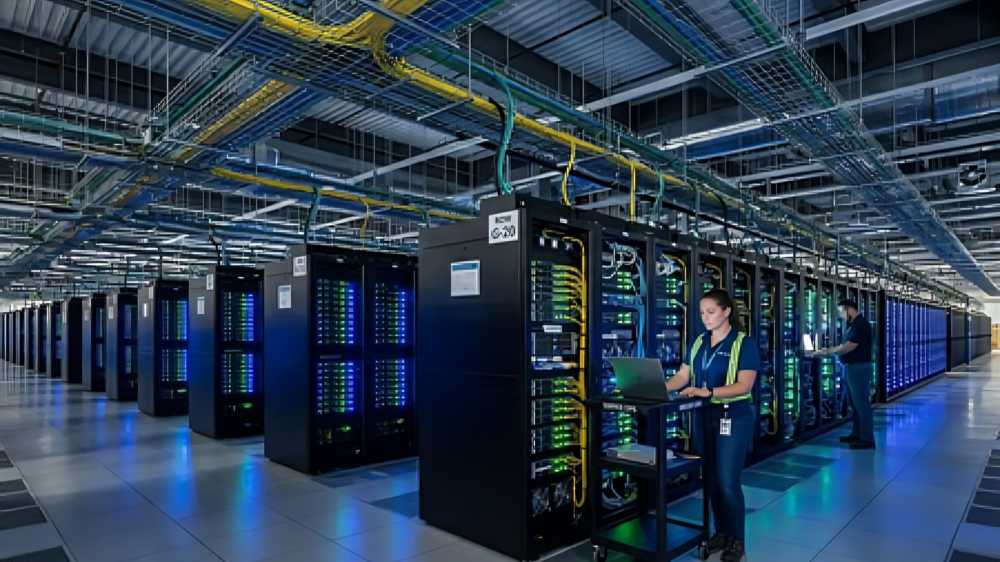
Data centres store and process digital information and support services such as cloud computing and artificial intelligence. Their growing energy and cooling requirements have raised concerns about pressure on water supplies, electricity networks and surrounding ecosystems. An International Energy Agency estimate suggests that a 100-megawatt hyperscale data centre can consume around two million litres of water daily.
“The committee will conduct a scientific study of the impact of data centres on the environment, water, energy, air quality, noise levels and local ecosystems,” the government resolution (GR) states.
The panel must submit its final report within three months of the government resolution. Its recommendations will cover water recycling, alternative cooling systems, energy efficiency, sustainable construction and environmental safeguards. It will also propose standard operating procedures, public awareness measures, local employment opportunities, skill development and corporate social responsibility initiatives.
The committee includes senior officials from the energy, water resources, industries, environment and climate change departments, along with representatives of MIDC and state electricity utilities.
Source: Hindustan Times