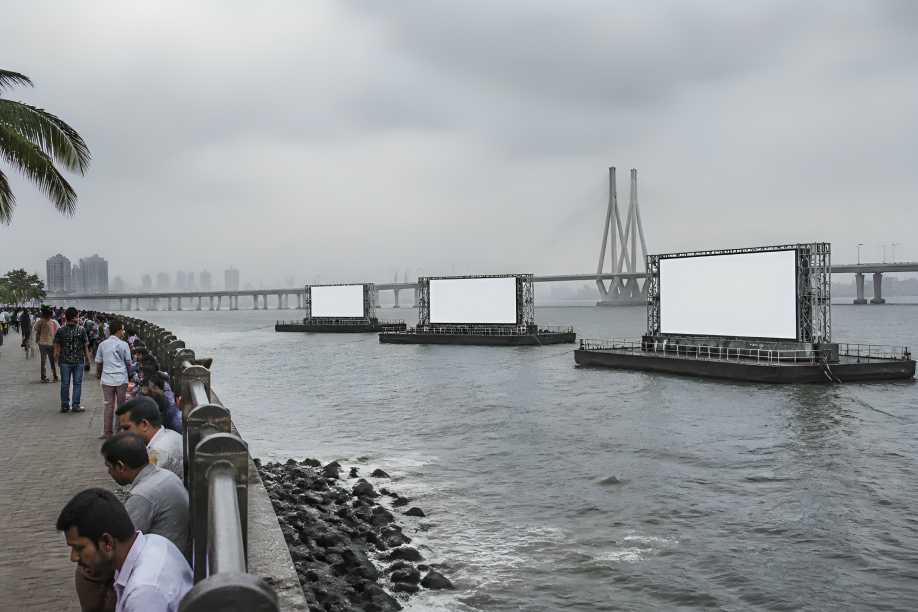

Mumbai’s proposal to introduce floating advertising barges and hoardings at prominent waterfront locations has raised questions about coastal regulations, public access and the commercial use of open spaces. Although the initiative aims to generate funds for maritime and water transport infrastructure, concerns remain over the necessary environmental approvals and its impact on the city’s seafront.
The Maharashtra Maritime Board (MMB) has invited tenders to appoint advertising agencies under a Design, Build, Finance, Operate and Maintain model. The plan covers approximately 20 sites across the Mumbai Metropolitan Region, including Juhu Beach, Lotus Jetty, Carter Road, Marve Jetty and the Bandra-Worli Sea Link jetty in Worli.
Maharashtra Ports and Fisheries Minister Nitesh Rane said the board previously issued no-objection certificates for advertising but now intends to earn revenue directly from such installations. The proceeds are expected to help support port facilities and water transport infrastructure.
However, the proposal has encountered a regulatory obstacle. The Maharashtra Coastal Zone Management Authority has reportedly stated that the proposed installations do not have the required Coastal Regulation Zone (CRZ) clearances. The approval process and the board’s next steps remain unclear.
The MMB has maintained that the structures will comply with environmental and coastal regulations and follow international standards. Rane also said a comprehensive hoarding and advertising policy had been prepared. Nevertheless, the reported objection makes regulatory approval a crucial prerequisite for implementation.
The proposed structures could also alter the appearance of beaches, jetties and open waterfront areas. Residents and activists have reportedly criticised the plan, describing the installations as an eyesore. Unlike roadside advertisements, floating billboards could become prominent features against Mumbai’s coastline, skyline and open-water views.
The tender model would place responsibility for designing, financing, constructing, operating and maintaining the installations on private agencies. However, details about contract duration, expected earnings, maintenance costs, safety requirements and liability have not been specified in the available report.
Each location will also require careful consideration because beaches such as Juhu serve recreational purposes, while several jetties support waterfront access and transport activities. Applying a uniform advertising approach across these different settings could overlook their distinct public-use and safety requirements.
The proposal highlights the challenge of balancing commercial returns with coastal protection. While advertising could provide an additional revenue stream for maritime infrastructure, its financial benefits cannot override regulatory obligations or public interest.
The next steps will depend on the clearances obtained, final site selection, design standards and tender conditions. Until these details are established, the project’s implementation timeline, financial viability and environmental implications remain uncertain.
Source: Urban Acres