
Maharashtra has entered into an agreement to utilise approximately 6.17 crore metric tonnes of fly ash generated by thermal power plants for three proposed expressways and a mineral transportation corridor in the eastern part of the state. The initiative aims to support infrastructure development while reducing environmental risks associated with the prolonged storage of industrial waste.
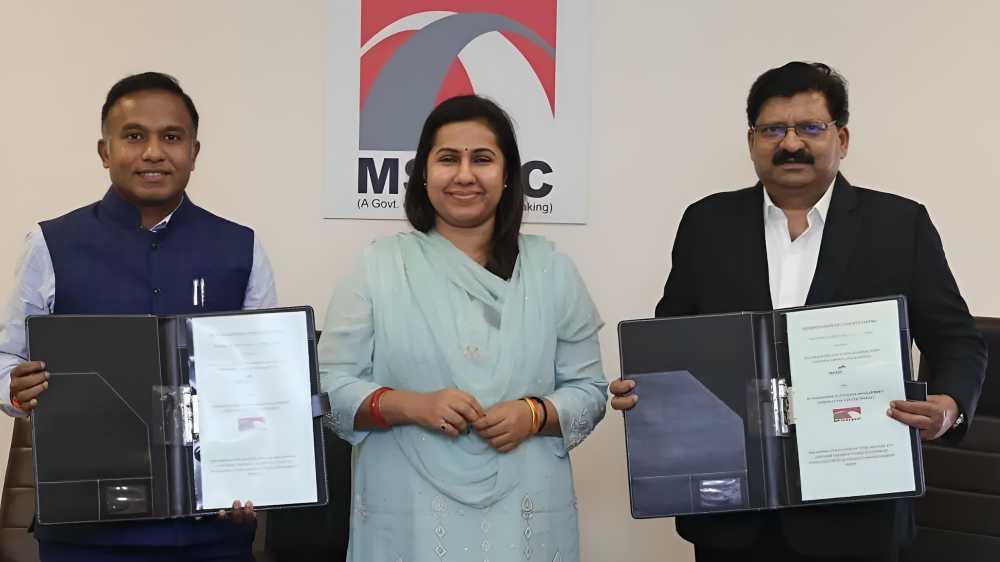
The Memorandum of Understanding (MoU) was signed between Maharashtra State Power Generation Company (Mahagenco) and the Maharashtra State Road Development Corporation (MSRDC) in the presence of Minister of State for Energy Meghna Sakore-Bordikar.
The planned utilisation period runs from January 2027 to December 2028, with the material intended for four infrastructure projects.
The Nagpur-Chandrapur Expressway will require the largest quantity, estimated at 2.79 crore metric tonnes. The Nagpur-Gondia Expressway is expected to use 2.09 crore tonnes, while the Bhandara-Gadchiroli Expressway will need 1.14 crore tonnes. The Navegaon More-Surjagad mineral transportation corridor has an estimated requirement of 0.15 crore tonnes.
Fly ash for projects in the Nagpur region will be sourced from the Koradi or Khaparkheda thermal power plants. The Chandrapur facility will supply material for projects in its surrounding region. Actual quantities may change depending on technical specifications, site conditions and material availability.
Mahagenco Chairman and Managing Director Radhakrishnan B and MSRDC Vice-Chairman and Managing Director Anilkumar B Gaikwad signed the agreement.
Further tripartite agreements involving the relevant power plants, MSRDC and authorised contractors or agencies will establish project-specific supply volumes, delivery schedules, transportation arrangements and financial assistance terms. Eligible financial claims will be considered after measurements, utilisation certification and document verification are completed.
The initiative seeks to achieve complete fly ash utilisation in accordance with the Central Government’s notification issued on December 31, 2021, and Maharashtra’s policy dated September 19, 2025.
The MoU will remain effective until March 31, 2032, or until the projects are completed, whichever comes first. An extension may be granted with approval from the competent authorities of both organisations.
Source: Mid-day