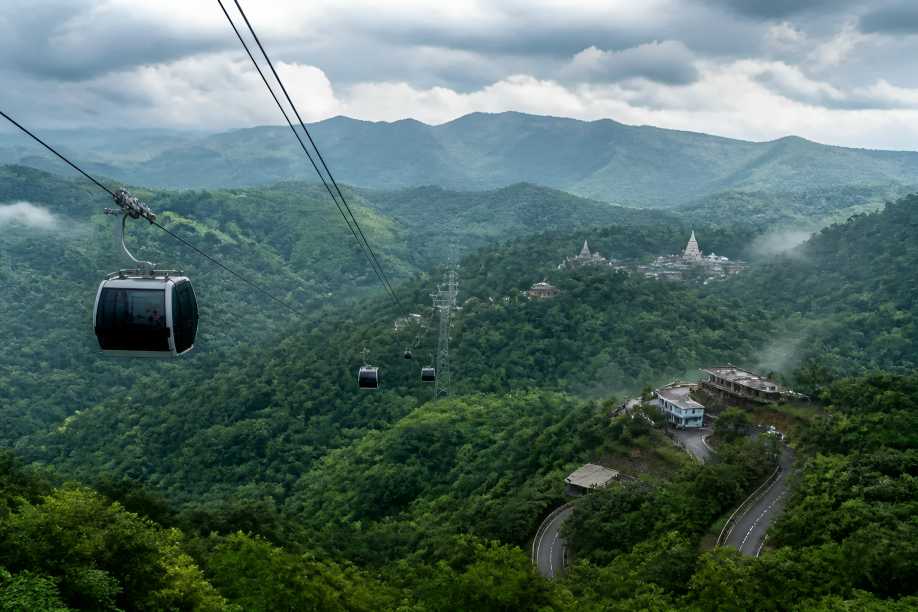

A Rs 650-crore ropeway project has been proposed to connect Karjat in Raigad district with the Bhimashankar temple, offering devotees from Mumbai and neighbouring regions a potentially faster and more convenient way to reach the popular pilgrimage destination.
The proposal was announced by former Maharashtra minister Dilip Walse Patil during his visit to Bhimashankar on November 14, 2026. He was reviewing preparations for devotees and development activities being undertaken as part of the temple’s broader improvement plan.
However, the project is yet to receive final government approval. Construction is expected to commence only after the proposal receives clearance from a state-level subcommittee headed by the Chief Minister.
According to Walse Patil, the proposed ropeway will have the capacity to carry 144 passengers simultaneously. Of these, 72 passengers will travel towards Bhimashankar, while the remaining 72 will be accommodated on the return journey. The arrangement is intended to improve transportation facilities for pilgrims visiting the temple, particularly those travelling from Mumbai and surrounding areas.
With an estimated investment of Rs 650 crore, the project is being planned as an alternative aerial transport connection between Karjat and the religious destination. Walse Patil described the proposed facility as environmentally friendly and said it would make the pilgrimage journey more comfortable for visitors.
Several important aspects of the project, including its overall route length, station locations, construction schedule, implementing agency and environmental safeguards, are yet to be disclosed. These details are expected to emerge during the approval and subsequent planning stages.
The proposed ropeway forms part of the wider development initiatives aimed at improving facilities around the Bhimashankar temple. If approved, it could provide an additional transport option for pilgrims while potentially easing dependence on existing road routes.
For now, the immediate priority is obtaining clearance from the Chief Minister-led subcommittee. The project’s implementation and eventual benefits will depend on the final route alignment, infrastructure planning and integration with road-based transport facilities at Karjat and Bhimashankar.
Source: Urban Acres