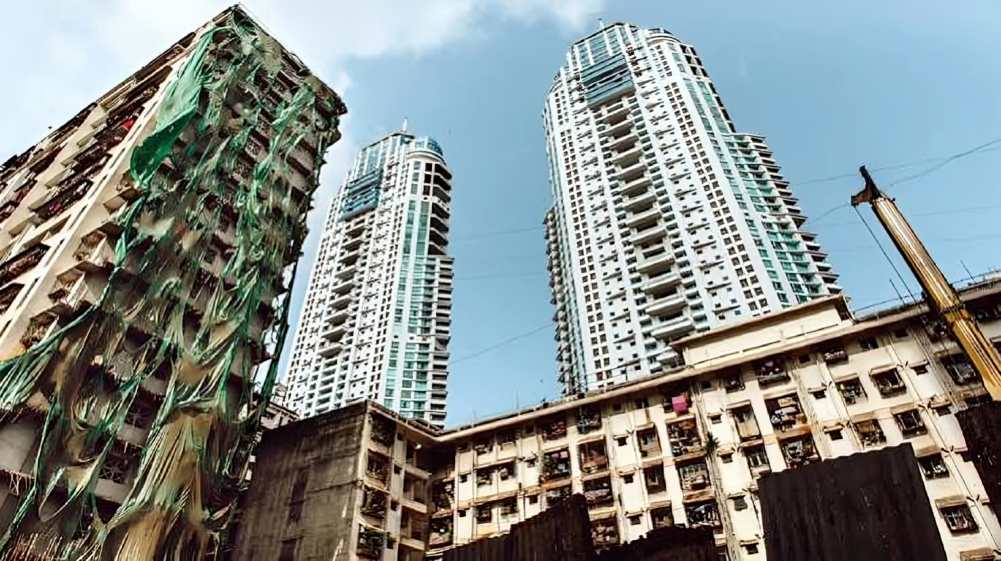

The Maharashtra government has introduced a revised framework for the redevelopment of cooperative housing societies, replacing the guidelines issued in July 2019. The new Government Resolution (GR), dated September 30, 2026, issued under Section 79A of the Maharashtra Cooperative Societies Act, 1960, outlines procedures and timelines covering the entire process, from the initial proposal to the allocation of newly constructed homes.
The updated rules apply to conventional developer-led projects, self-redevelopment, federation-led group projects and cluster redevelopment. They also specify that only a duly elected managing committee can take redevelopment decisions, excluding administrators and authorised officers appointed by the Registrar.
Under the revised procedure, at least 20% of society members can request a Special General Meeting (SGM) to discuss redevelopment. The initial proposal requires approval from at least 51% of the total membership, with a two-thirds quorum. Members voting in favour must subsequently provide written consent.
Societies must appoint an architect or project management consultant, who is required to prepare a detailed feasibility report covering available Floor Space Index (FSI), Transferable Development Rights (TDR), construction options, parking and other project benefits. Developer selection must follow a competitive tender process, with bids opened at an SGM rather than a managing committee meeting.
The 2026 GR introduces several procedural changes. Members facing difficulties attending meetings can participate through video conferencing, subject to a minimum physical attendance of 51% of the total membership. A secret ballot for developer selection can also be demanded in writing by one-fifth of the members. The Registrar must decide on appointing an authorised officer within 14 days of receiving the society’s proposal.
Another major change concerns financial security. The earlier mandatory bank guarantee of 20% of the project value has been replaced by an amount and format determined by the general body. Developers must also execute individual Permanent Alternative Accommodation Agreements (PAAAs) within three months of registering the development agreement.
The project completion period remains two years from the first or plinth certificate, with an extension of up to three years in exceptional circumstances. Members must not be asked to vacate until statutory approvals are secured and their PAAAs are registered.
The resolution also requires redevelopment records to be available for inspection, strengthening transparency. While the Bombay High Court has previously treated the 2019 directions as directory rather than strictly mandatory, the legal position on the 2026 GR is yet to be tested.
Overall, the revised framework retains the core approval thresholds while introducing clearer deadlines, greater member participation and additional safeguards for redevelopment projects across Maharashtra.
Source: Legal 500
Pic Credit: Mumbai Live