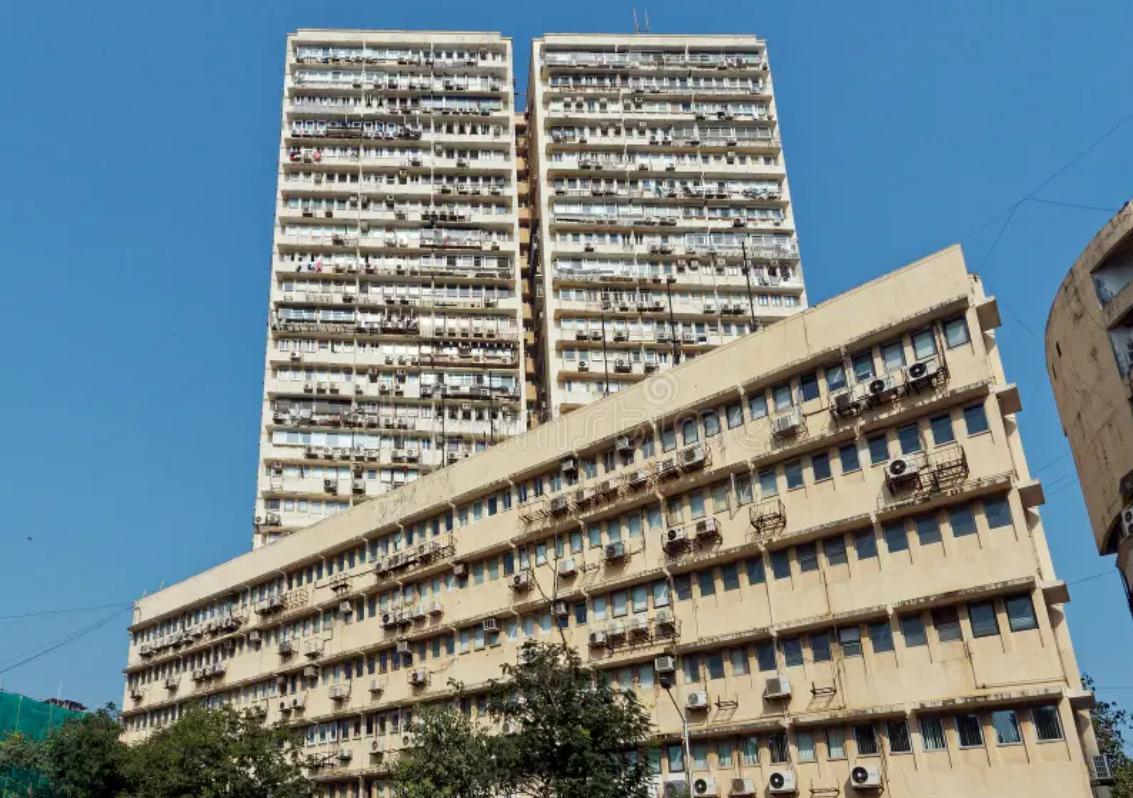

In a city where ageing buildings on prime land are routinely pushed toward redevelopment, the iconic Panchratna building near Opera House has taken an unusual route—returning to its original residential identity instead of being rebuilt.
Constructed in 1972, the 25-storey structure was once the nerve centre of India’s diamond trade. At its peak, nearly 90% of the country’s diamond transactions were routed through this building and the surrounding Opera House area. Today, however, Panchratna tells a different story. Of its 144 flats, 121 are now occupied by families, marking a quiet but significant transition from commerce back to community living.
The shift began around 2011, when diamond traders started moving operations to the Bharat Diamond Bourse (BDB) in Bandra Kurla Complex and to Surat. Over time, commercial units—many of which were originally residential apartments converted into offices—gradually reverted to homes. It is only recently that the building has reached near-full residential occupancy.
Property prices in the building today range between Rs 40,000 and Rs 55,000 per square foot for units sized between 700 and 1,200 square feet, reflecting sustained demand driven by location and views.
Residents cite both lifestyle and connectivity as key reasons for moving in. “I moved to Panchratna as it offers the best view of the sea. After the building turned from commercial to residential, I decided to grab the opportunity considering its closeness to important neighbourhoods,” said Chirag Patel, a businessman who shifted there eight years ago.
Long-time resident Chandrika Nagraj, who has lived in the building for 37 years, has witnessed its transformation firsthand. “Earlier it had become a commercial hub, but now it feels like a community again. Schools, colleges, hospitals and even the railway station are nearby. The building continues to maintain tight security,” she said.
Originally designed as a mixed-use development, Panchratna allocated its lower six floors to commercial activity while reserving the upper floors for residences overlooking the Arabian Sea, with views stretching from Marine Drive’s Queen’s Necklace to Malabar Hill and Nariman Point. However, within just three years of completion, the booming diamond trade led to widespread conversion of residential units into offices.
By 2002, the Brihanmumbai Municipal Corporation formally acknowledged this shift, allowing residential flats to be converted into commercial tenements. Each flat was subdivided into multiple office units, leaving only about 10 residential apartments at the time.
The building soon became one of Asia’s most expensive commercial hubs. By the 1980s, Panchratna and its surrounding cluster of buildings housed around 4,500 diamond-related businesses. At its peak, the area handled an estimated annual turnover of over Rs 5,000 crore and saw daily footfall of 10,000 to 12,000 people.
Security infrastructure reflected the scale of operations, with 386 CCTV cameras and 32 guards deployed to monitor activity. Even today, the building continues to attract around 4,000 daily visitors, largely to offices operating on the lower floors.
According to the Ministry of Commerce, India imported 150 million carats of rough diamonds and exported 59.9 million carats of cut and polished diamonds worth $18.24 billion in 2010-11, with a majority of deals taking place in the Opera House area.
However, the ecosystem began to unravel after the July 13, 2011 bomb blasts, one of which occurred near Panchratna. The attacks, which claimed 27 lives and injured 127 people, accelerated the shift of the diamond trade to the more secure and modern BDB.
Spread over 20 million square feet, BDB offered 2,500 offices, advanced security systems, and an integrated ecosystem including banks and grading facilities—advantages that the congested Opera House locality could not match.
Despite the migration, Panchratna retains its legacy appeal. Some jewellers, lawyers, doctors and consultants continue to operate from its commercial floors. Businesses like Popley & Sons have maintained a presence in the building since the 1970s.
For many in the trade, the building remains a symbol of Mumbai’s entrepreneurial past. But for its current residents, Panchratna’s revival as a residential address reflects something equally significant—the city’s ability to reinvent without erasing its history.