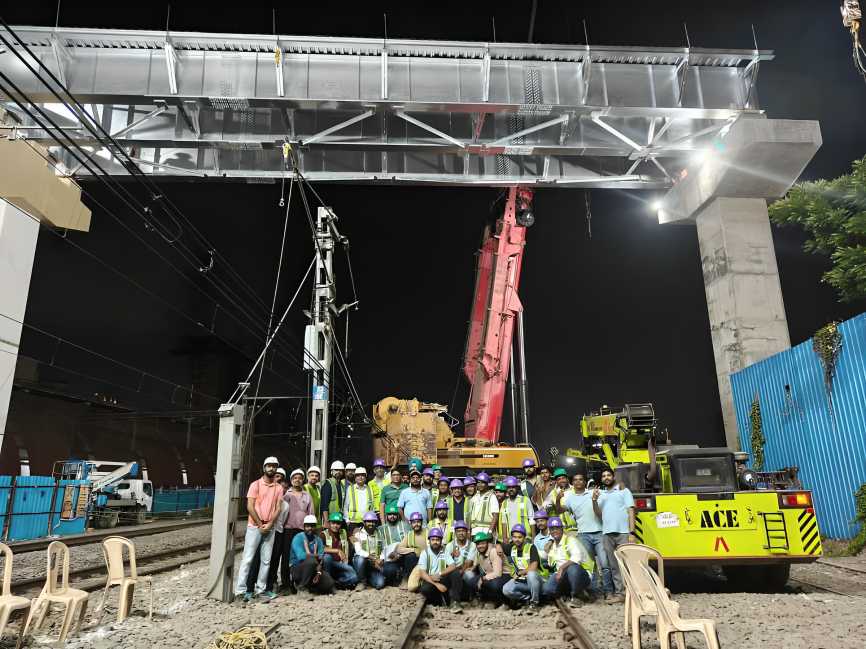

Mumbai’s Metro Line 6 project has reached an important construction milestone with the successful installation of three girders over the Western Railway corridor. The Mumbai Metropolitan Region Development Authority (MMRDA) completed the high-risk operation 30 minutes ahead of schedule, reflecting careful planning and coordinated execution.
The task was carried out above active railway tracks, making it one of the most technically demanding phases of the project. The work was executed during a pre-planned block period to minimise disruption, ensuring that train services continued with limited impact.
Officials highlighted that the operation required close coordination between multiple agencies, including railway authorities and engineering teams. Heavy-duty cranes and specialised equipment were used to lift and position the large girders with precision. Given the risks associated with working over live tracks, strict safety measures were followed throughout the process.
Such infrastructure activities typically demand precise timing and execution, especially in densely populated urban corridors like Mumbai. Similar operations along the same alignment have involved overnight installation of large structural spans, demonstrating the increasing use of advanced construction techniques in metro development.
Metro Line 6, also known as the Pink Line, is a key east–west corridor that will connect Lokhandwala to Vikhroli. The project is expected to improve connectivity between the western and eastern suburbs, reducing travel time and easing congestion across major routes.
With a substantial portion of civil work already completed, milestones like this indicate steady progress toward operational readiness. The corridor is part of Mumbai’s broader effort to expand its metro network and enhance urban mobility.
The early completion of this critical task underscores the project’s momentum and brings the city a step closer to a more efficient and integrated public transport system, offering improved cross-city connectivity for daily commuters.
Source: The Free Press Journal