
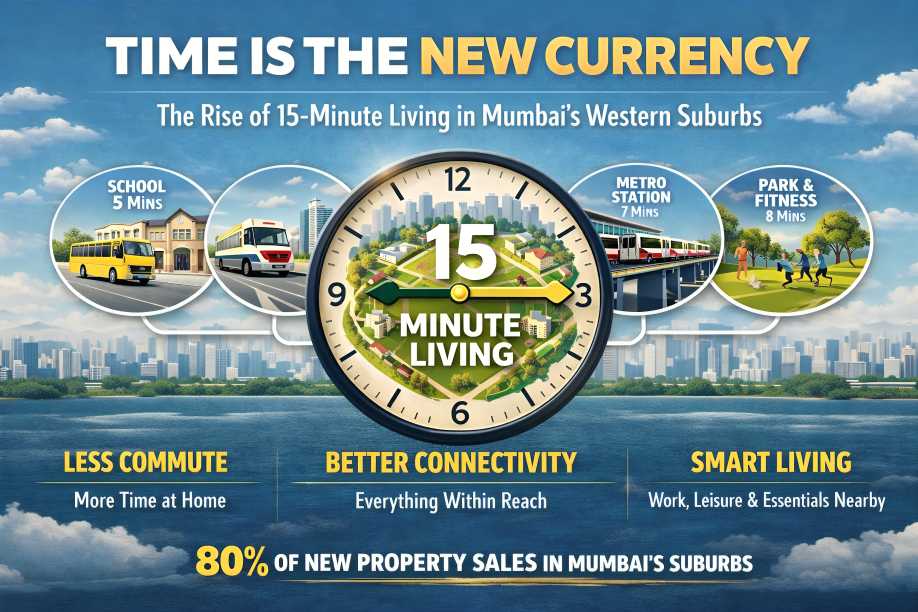
Housing demand in Mumbai’s western suburbs is increasingly being shaped by a preference for proximity-based living, with homebuyers focusing on neighbourhoods that allow daily needs to be met within short travel distances. Often referred to as “15-minute living,” this trend reflects a shift towards minimising commute time and improving day-to-day convenience.
According to data from Knight Frank, Mumbai recorded more than 97,000 residential sales in 2025, despite a year-on-year price rise of around 7%. The city also saw over 1.5 lakh property registrations, the highest in more than a decade. Suburban locations accounted for over 80% of this activity, underlining their growing importance in the housing market.
The trend is particularly visible in western suburban areas such as Andheri, Vile Parle, Goregaon, Malad, and Borivali. These micro-markets offer a combination of established residential communities, improving metro connectivity, and access to essential services such as schools, hospitals, and retail hubs within close proximity.
Industry experts note that buyers are now evaluating homes beyond just apartment features. Greater emphasis is being placed on how efficiently everyday routines can be managed within a locality, including access to workplaces and social infrastructure.
Dhruman Shah, promoter of Ariha Group, observed that buyers are no longer focusing solely on the physical aspects of a property but are also assessing how well their daily activities can be supported within the surrounding ecosystem. Established neighbourhoods with existing infrastructure are therefore seeing stronger demand.
Nihar Jayesh Thakkar, founder of The Mandate House Pvt. Ltd., added that the concept of location has evolved, with buyers now prioritising the overall living experience. Areas where work, leisure, and essential services coexist are drawing increased interest due to reduced travel needs.
Developers are also adapting to this shift by planning projects as integrated communities. A spokesperson from Chandak Group noted that value is now linked to how seamlessly residents can manage their daily lives within a neighbourhood, supported by connectivity and shared infrastructure.
This evolving demand highlights a broader shift in Mumbai’s housing market, where time efficiency and convenience are becoming key drivers of residential choices.
Source: Prop News Time