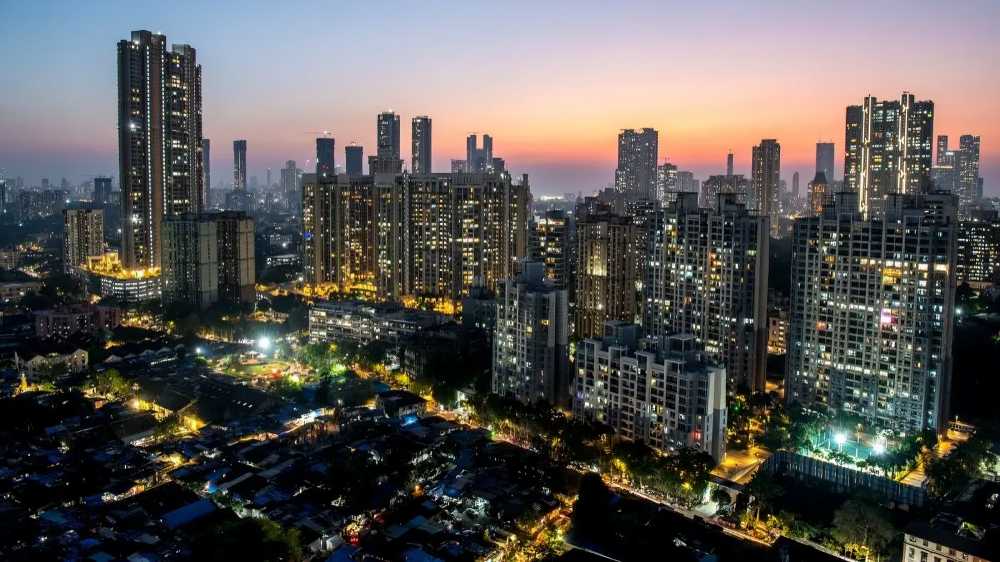

Maharashtra’s urban redevelopment approach is witnessing a strategic shift, with policymakers and planning authorities stressing that large-scale housing projects must be backed by robust infrastructure to achieve long-term success. Speaking at the Republic Bharat Real Estate and Infra Summit, Deputy Chief Minister Eknath Shinde and officials from the Mumbai Metropolitan Region Development Authority (MMRDA) highlighted that the Dharavi Redevelopment Project (DRP) is being designed around an integrated live-work ecosystem rather than standalone residential towers.
The redevelopment of Dharavi, spread across nearly 621 acres, is expected to emerge as a key example of this new urban planning philosophy. The project aims to combine housing with critical infrastructure such as metro connectivity, schools, healthcare facilities, commercial zones, and employment opportunities. Nearly 1.5 lakh homes are proposed under the redevelopment initiative across the Mumbai Metropolitan Region (MMR).
At the summit, Shinde emphasized that merely constructing residential buildings without parallel infrastructure development would only relocate congestion instead of solving it. The state government is therefore aligning housing expansion with major infrastructure initiatives, including Metro network growth and the Mumbai Coastal Road project, to improve connectivity and quality of life for future residents.
Officials noted that the Dharavi blueprint has been carefully planned despite several geographical and regulatory challenges, including restrictions linked to the Mithi River and airport height norms. At the same time, planners intend to preserve Dharavi’s long-standing “live-work” ecosystem that supports thousands of small businesses and informal industries.
The proposed design includes commercial and industrial spaces at podium and ground levels, with modern residential units above them, allowing residents to continue livelihood activities within the same neighbourhood.
The project will also set a new benchmark in slum rehabilitation by extending benefits to eligible residents living on upper floors, a move being described as a first in global slum redevelopment models. Eligible residents who occupied homes before 2000 will receive free 350 sq ft rehabilitation units, while those who arrived later may be accommodated under subsidised or hire-purchase housing schemes.
“Housing is the superstructure; infrastructure is the backbone,” noted MMRDA Commissioner Dr. Sanjay Mukherjee, underlining the state’s broader vision for future urban redevelopment in Mumbai.
Source: Republic World