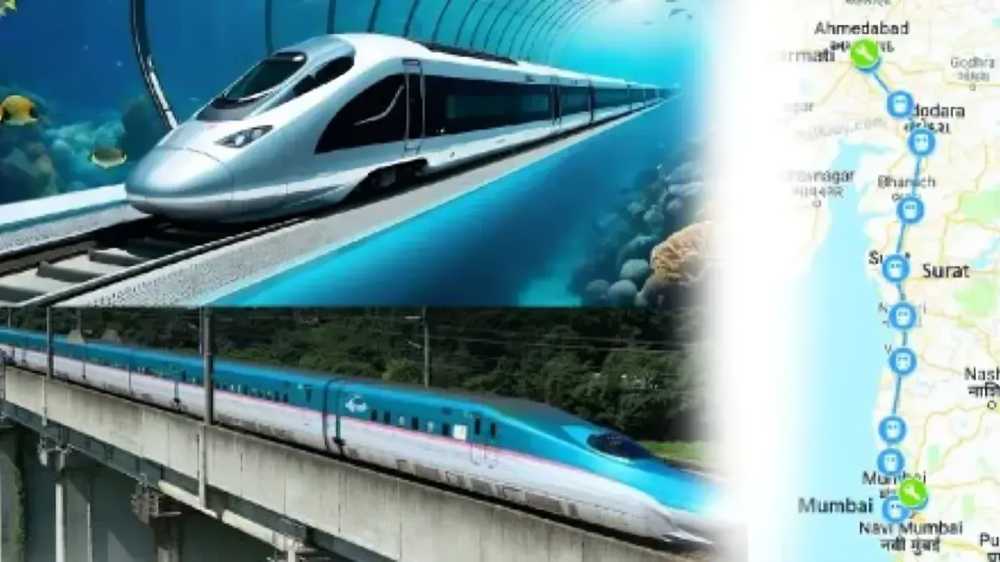

India’s proposed high-speed rail corridor between Mumbai and Hyderabad has moved a step closer to reality after authorities finalised the alignment for the ambitious project, which is expected to reshape regional mobility, economic activity and urban development across Maharashtra and Telangana.
The proposed bullet train corridor will span nearly 760 kilometres and connect several important urban and semi-urban centres, including Navi Mumbai, Pune, Daund, Akluj, Pandharpur, Solapur, Kalaburagi and Hyderabad. Railway planners view the project as part of a larger national strategy aimed at expanding India’s high-speed rail network beyond major metropolitan cities while integrating emerging economic regions into faster transport systems.
Once operational, the corridor is expected to significantly reduce travel time between Mumbai and Hyderabad, while also shortening journey durations between Mumbai and Pune. Experts believe faster connectivity could influence business travel, tourism, commuting patterns and investment flows across western and southern India.
The alignment is considered particularly important for districts such as Solapur and Pandharpur, which have traditionally remained outside India’s primary high-speed transport networks. Improved connectivity to Pandharpur, one of Maharashtra’s major pilgrimage destinations, could boost religious tourism and hospitality-related development in the region.
Urban development specialists also suggest that the project may strengthen industrial and logistics activity across interior Maharashtra by improving access between manufacturing hubs, warehousing centres and metropolitan markets. High-speed transport infrastructure often drives land value appreciation, commercial investments and urban expansion around proposed station locations.
However, infrastructure experts caution that large-scale bullet train projects involve complex financial and execution challenges. Land acquisition, environmental approvals, rehabilitation requirements and engineering constraints could affect implementation timelines and overall project costs.
The proposed corridor forms part of the Union government’s broader push to modernise intercity transport infrastructure and introduce multiple new high-speed rail routes across India in the coming years. Analysts also note that rail-based high-capacity transport could help reduce long-term carbon emissions compared to growing dependence on highways and short-haul flights, provided future construction prioritises sustainability and climate-resilient planning.
As Maharashtra and Telangana continue to urbanise rapidly, planners believe the Mumbai-Hyderabad bullet train corridor could emerge as one of the region’s most transformative infrastructure projects, with its long-term success depending on how effectively its economic benefits extend beyond major cities into smaller connected urban centres.
Source: Urban Acres