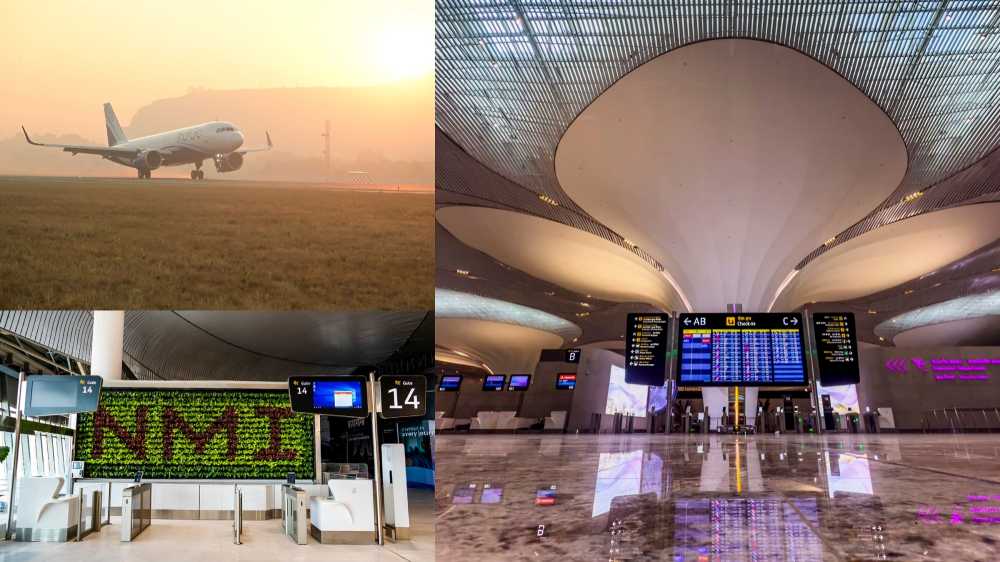

Just four months after beginning operations with 23 daily flights, Navi Mumbai International Airport has quickly established itself as Mumbai’s second major aviation hub. The airport now handles more than 150 daily flight movements across nearly 45 destinations, while passenger traffic has already crossed the one-million mark. Airlines, too, are steadily increasing their schedules from the new facility.
However, as the airport expands, the focus is gradually shifting from aviation infrastructure to commuter accessibility. For passengers across the Mumbai Metropolitan Region, the practicality of using NMIA now depends less on distance and more on how smoothly and predictably they can reach the airport.
The opening of the Mumbai Trans Harbour Link has significantly improved connectivity from South Mumbai. Travellers from Colaba and Nariman Point can now access the airport in nearly 20 to 40 minutes during non-peak hours. In comparison, commuters from western suburbs such as Borivali often spend between 90 minutes and two hours navigating traffic congestion along the Western Express Highway, Jogeshwari-Vikhroli Link Road and Sion-Panvel corridor.
This growing contrast is beginning to influence airport preferences. Residents of Vashi, Belapur and Panvel increasingly consider NMIA their preferred airport because of shorter travel durations. Meanwhile, passengers travelling from Bandra and BKC continue to face delays caused by congestion at Santacruz-Chembur Link Road, Chembur and Govandi.
At present, the airport remains largely dependent on road transport. Although services such as app-based cabs, BEST Chalo buses, NMMT buses and local shuttle services are operational, suburban rail connectivity through the Uran line has seen limited adoption due to last-mile connectivity concerns.
Aviation expert Lokesh Sharma said, “NMIA’s growth from 23 daily flights at launch to over 150 daily flight movements within just four months reflects the strong aviation demand across the Mumbai Metropolitan Region. However, an airport becomes a true hub only when passengers can access it reliably.”
Industry observers believe upcoming projects like Metro Line 8, the Thane-Navi Mumbai elevated corridor and the Airoli-Katai tunnel will play a crucial role in shaping the airport’s long-term success.
Source: Financial Express