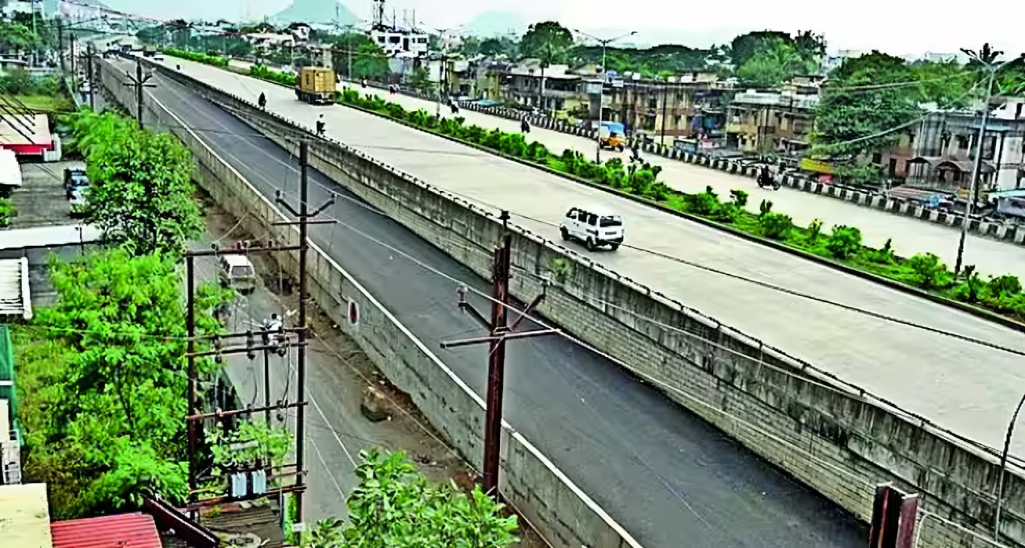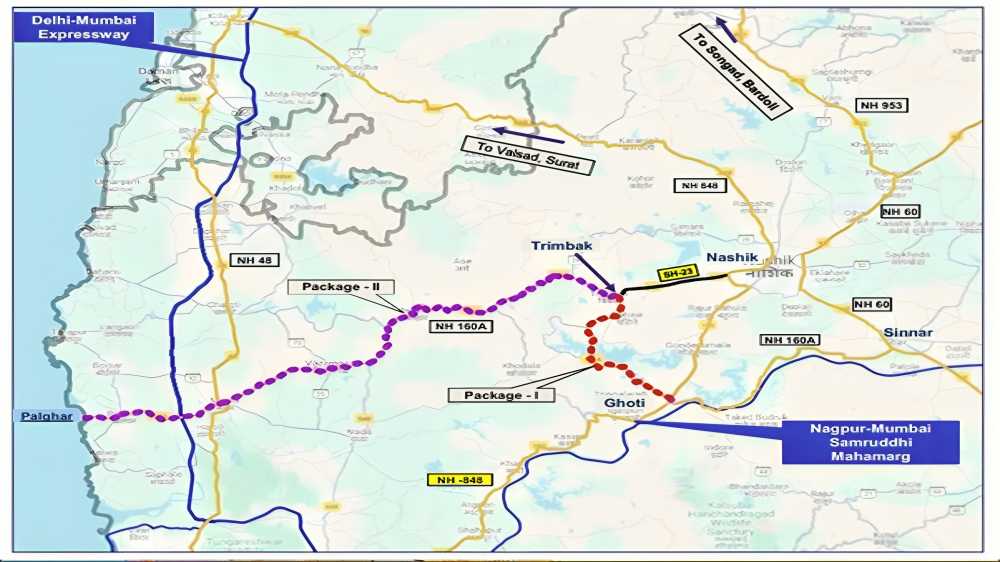

The Cabinet Committee on Economic Affairs (CCEA), chaired by Prime Minister Narendra Modi, has approved the rehabilitation and widening of the Ghoti–Trimbak (Mokhada)–Jawhar–Manor–Palghar stretch of National Highway 160A in Maharashtra. The project will be developed at an estimated cost of Rs 3,320.38 crore.
Spanning 154.635 km, the highway upgrade will be executed under the Engineering, Procurement and Construction (EPC) model. The corridor will be expanded into a mix of two-lane and four-lane roads with paved shoulders to improve traffic movement and regional connectivity.
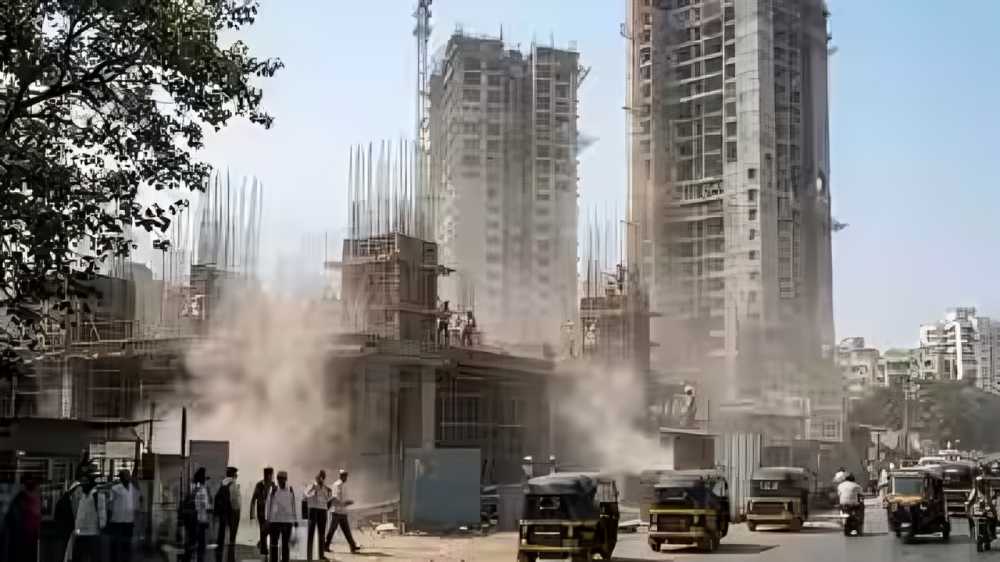
The project is expected to benefit industrial clusters located west of Nashik, particularly in Ambad and Satpur, where several Maharashtra Industrial Development Corporation (MIDC) zones generate heavy freight traffic. At present, much of this traffic passes through Nashik city using NH-848, contributing to congestion on existing routes.
Official data shows that NH-848 from Mumbai currently handles nearly 50,000–60,000 Passenger Car Units (PCUs) daily, while NH-60 from Pune carries around 40,000–50,000 PCUs, with both corridors operating close to saturation levels.
The upgraded NH-160A corridor will provide an alternate route through Trimbak, reducing traffic pressure on Nashik city roads. Vehicles travelling from Mumbai and southern Maharashtra are expected to connect to the route via the Mumbai–Nagpur Samruddhi Mahamarg and the Igatpuri interchange on NH-848.
According to projections, traffic on the Ghoti–Trimbak section is expected to cross 10,000 PCUs per day from 2028 onward, justifying the four-laning of the stretch.
The corridor will also improve connectivity to the Delhi-Mumbai Expressway, NH-48, and Maharashtra’s western coastal region, while enhancing access to tribal areas in Palghar district. Additionally, it is expected to strengthen links to industrial zones, logistics hubs, ports, airports, and tourism destinations, including Trimbakeshwar Temple and Arnala Fort.
The government stated that the project is expected to generate nearly 20 lakh person-days of direct employment and over 24 lakh person-days of indirect employment during the construction phase.
Source: DD News