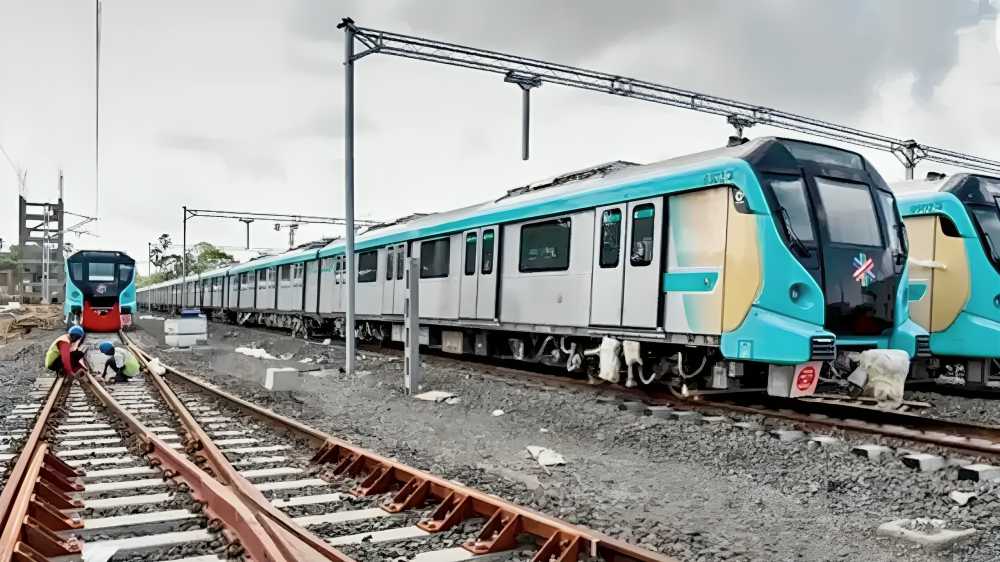

Passengers travelling on Mumbai Metro Line-3, popularly known as the Aqua Line, are expected to soon regain uninterrupted mobile network access across the underground corridor after months of connectivity issues.
The Mumbai Metro Rail Corporation Limited (MMRC) has awarded telecom infrastructure rights to major telecom operators to resume voice and data services throughout the Metro-3 route. The development is aimed at improving communication services for daily commuters using Mumbai’s first fully underground metro corridor.
MMRC has issued the Letter of Acceptance (LoA) jointly to Bharti Airtel Limited, Reliance Jio Infocomm Limited and Vodafone Idea Limited. These telecom companies will now deploy, operate and maintain In-Building Solutions (IBS) infrastructure across the entire corridor to ensure stable mobile connectivity inside stations and tunnels.
Officials said the agreement has been signed for a period of 25 years. Under the arrangement, telecom operators will be responsible for maintaining the infrastructure required for uninterrupted voice calls and internet access.
Authorities also stated that provisions have been made to facilitate Bharat Sanchar Nigam Limited (BSNL) network services within the underground metro system over the next six months.
Signal installation and propagation work by telecom providers is expected to begin shortly across the corridor’s underground sections.
According to officials, the move will significantly improve commuter convenience by enabling continuous access to mobile calls, messaging and internet services while travelling on the Colaba-Bandra-SEEPZ Metro-3 line.
The decision comes months after passengers experienced a complete communication blackout on the Aqua Line. In March, services were disrupted after the third-party telecom infrastructure provider was shut down for reportedly failing to comply with contractual conditions.
A Vodafone India spokesperson had earlier said, “Vi services on the Mumbai Metro line were impacted. As per the MMRCL arrangement, Vi’s connectivity was being provided via ACES, whose primary contract with MMRCL was terminated. Despite our readiness, factors involved are beyond our direct control.”
Earlier, MMRC had partnered with Saudi Arabia-based Advanced Communications and Electronics Systems Company (ACES) to provide underground cellular connectivity for the metro system.
Source: Mid-day