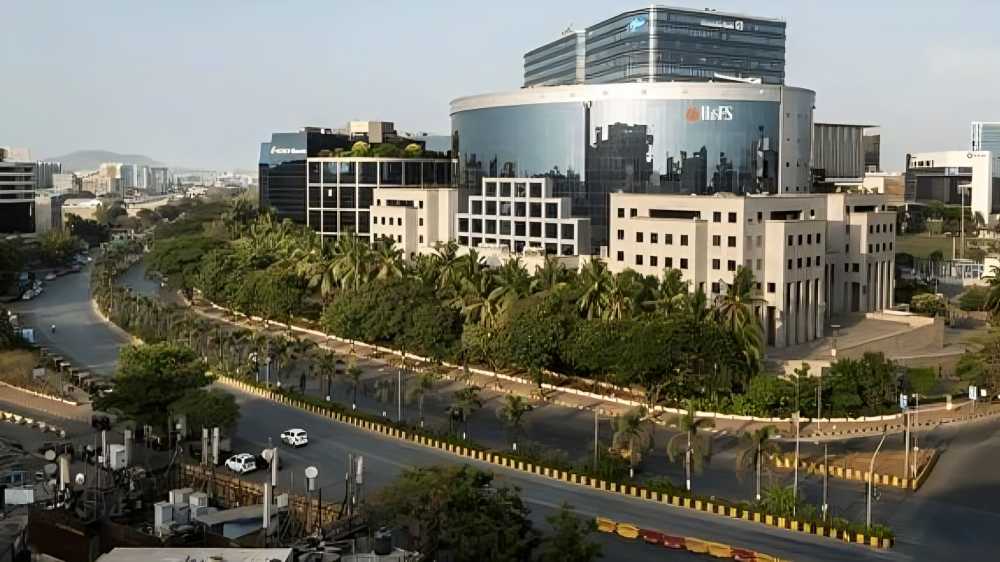

When the Bandra-Kurla Complex (BKC) was conceptualised in the 1970s, it was envisioned as Mumbai’s answer to Nariman Point’s growing congestion. The idea was simple: shift the financial district to reclaimed land along the Mithi River and design it with future-ready infrastructure, unlike the ageing road network of South Mumbai.
More than four decades later, that vision is being tested again—this time not by lack of space, but by pressure on mobility systems.
As nearly two lakh professionals working in BKC are being encouraged to avoid private vehicles every Friday and instead rely on metros, suburban trains and BEST buses, a familiar question has resurfaced: has Mumbai merely relocated its congestion problem rather than resolved it?
The initiative, led by the Mumbai Metropolitan Region Development Authority (MMRDA) with support from BEST, MMRCL, traffic police, transport unions and WRI India, aims to reduce traffic load in one of the city’s most congested business hubs. Around 90 companies have shown initial support, and internal surveys suggest nearly 82% of commuters would shift to public transport if reliability and integration improve.
However, implementation gaps remain evident. While commuters are being asked to change travel behaviour, supporting infrastructure—particularly last-mile connectivity—has not been upgraded at the same pace. The timing also presents challenges, as the initiative coincides with Mumbai’s peak heat and monsoon season, when walking conditions and feeder reliability are already strained.
The opening of Metro Line 3 has improved access to BKC, but the “last-mile” problem persists. The metro station in F Block is located nearly 1.5 to 2 kilometres from major office clusters in G Block, including One BKC, The Capital, ICICI Bank and Godrej BKC. On paper, this distance appears manageable, but in practice—especially during heavy rain—it becomes a significant barrier.
Global cities that have successfully reduced car dependency have combined restrictions with strong supporting infrastructure. Singapore integrates MRT stations with covered walkways and feeder buses, while London and several European cities prioritise seamless pedestrian access alongside transit expansion. The common factor is clear: commuters shift only when public transport is more convenient than private vehicles.
BKC already has the foundation for such a transition—metro access, bus networks and corporate participation. What remains missing is a coordinated last-mile system, including shuttle services between metro stations and office clusters, improved pedestrian corridors, subsidised transit partnerships and reliable feeder connectivity.
The current three-to-four-month review period will be critical in assessing whether this initiative becomes symbolic or structural. Success will depend not on participation in a single day’s experiment, but on sustained commuter adoption.
Ultimately, the challenge for BKC is not just traffic management, but whether Mumbai can finally align infrastructure, mobility and growth in a way that prevents yesterday’s congestion from repeating itself in tomorrow’s financial district.
Source: The Free Press Journal