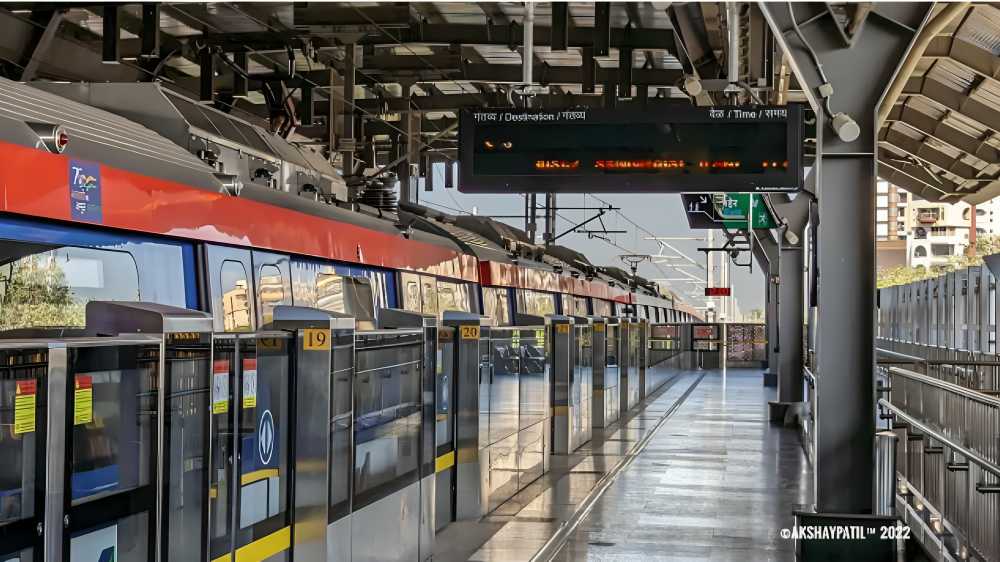

For the first time since the launch of Mumbai Metro 3’s Aqua Line, commuters are beginning to experience mobile connectivity across sections of the underground corridor. After months of delays and negotiations, telecom operators Airtel and Vodafone Idea (Vi) have started activating network services, allowing passengers to make calls, browse the internet and send messages while travelling through underground stations and tunnels.
However, connectivity is currently available only on select stretches of the route, with full coverage yet to be achieved.
At present, Vi users can access network services across 16 stations between Aarey JVLR and Acharya Atre Chowk in Worli. Airtel subscribers, meanwhile, can use mobile services at 10 stations stretching from Aarey JVLR to Bandra Kurla Complex (BKC).
According to officials from the Mumbai Metro Rail Corporation (MMRC), the rollout is being implemented in phases and will gradually expand as infrastructure installation progresses along the remaining sections of the corridor.
The stretch between Science Centre and Cuffe Parade is still undergoing telecom infrastructure development. Vi has confirmed that work is in progress across 11 stations on this segment and expects services to be activated in the coming weeks. Airtel is also expected to widen its coverage as deployment activities continue.
Unlike Airtel and Vi, Reliance Jio has not yet launched services on Metro 3. Sources indicate that the operator will need to establish fresh infrastructure before commencing operations, which could take additional time.
The delay in providing mobile connectivity stems from a prolonged disagreement over the implementation of telecom infrastructure within the underground metro network. MMRC had initially appointed ACES India to develop and manage a neutral telecom system for the corridor. However, telecom companies raised concerns over the proposed usage charges, resulting in months of deadlock.
To resolve the issue, MMRC scrapped the earlier arrangement and floated fresh tenders. In May, it signed a revised agreement with Airtel, Jio and Vi, allowing operators to install and manage their own telecom infrastructure.
Under the new framework, operators will deploy in-building solutions (IBS) and shared telecom systems throughout the underground corridor for the next 25 years. While connectivity has finally begun, full network coverage across the entire Metro 3 line is expected to be rolled out gradually over the coming months, with BSNL services likely to be introduced within six months.
Source: The Indian Express