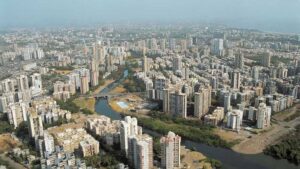

Once envisioned as a meticulously planned alternative to Mumbai, Navi Mumbai is increasingly facing criticism from residents who say the city’s original development vision is being undermined by growing infrastructure stress, environmental degradation and rapid urbanisation.
Across several nodes, residents have reported prolonged power outages, water shortages, deteriorating water quality and shrinking open spaces. In Ulwe, national-level powerlifter Aanantaa Sujata Baruah highlighted recurring overnight power cuts during the summer heatwave, while residents in Kamothe and Vashi raised concerns over inadequate water supply and discoloured water reaching households.
The growing frustration has sparked a wider debate about whether Navi Mumbai’s foundational planning principles are being sidelined. Conceived in 1970 by CIDCO as a counter-magnet to Mumbai, the city was planned with extensive open spaces, robust infrastructure and decentralised growth. Urban planners note that several elements of the original vision, including the relocation of major government functions, were never fully realised.
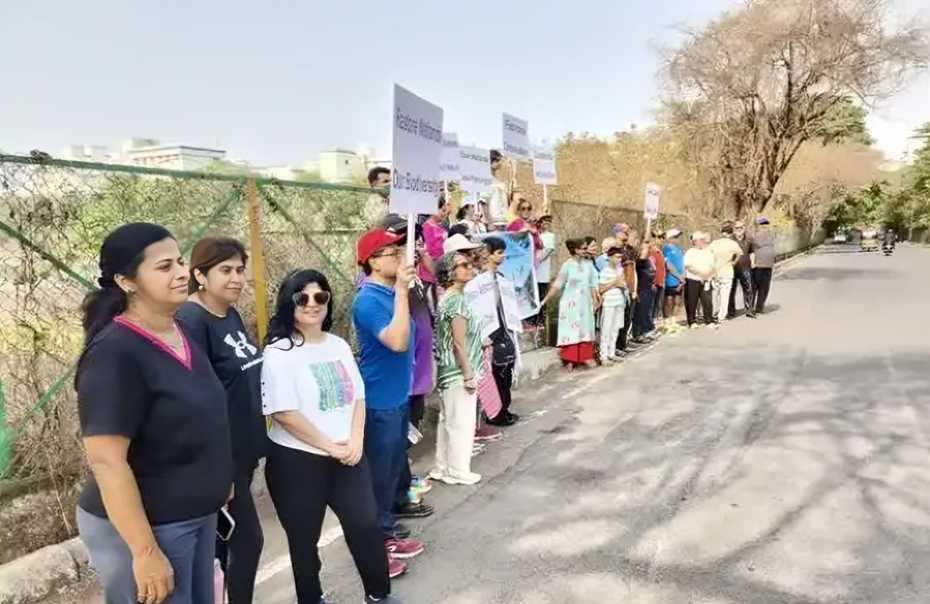
Environmental groups and civic activists argue that increasing construction activity and land development are putting pressure on green spaces, wetlands and recreational grounds. According to NMMC’s 2024 tree census, Navi Mumbai has approximately 15.3 lakh trees, but environmentalists claim the city is falling short of global urban greenery benchmarks and drifting away from its original objective of reserving 40% of land as open space.
Residents have also opposed the conversion of playgrounds and open grounds for infrastructure projects, arguing that recreational spaces are steadily disappearing. Concerns have similarly been raised about wetland conservation, mangrove protection and development activities in ecologically sensitive zones.
At the same time, Navi Mumbai is witnessing significant economic growth, particularly through large-scale investments in data centres and digital infrastructure. While experts caution against attributing utility shortages solely to data centres, many residents question whether infrastructure upgrades are keeping pace with rapid expansion.
Urban planners believe the city now faces a crucial challenge: balancing redevelopment, economic growth and environmental sustainability while preserving the planning principles that once made Navi Mumbai one of India’s most ambitious urban development experiments. As Maharashtra advances plans for a proposed “Third Mumbai,” the experiences of Navi Mumbai are increasingly being viewed as an important lesson in long-term urban planning and infrastructure management.
Source: Mumbai Mirror