
The proposed Nariman Point–Colaba Coastal Bridge has crossed a major regulatory milestone after the Maharashtra Coastal Zone Management Authority (MCZMA) recommended the project from the Coastal Regulation Zone (CRZ) perspective. The recommendation will now be forwarded to the Ministry of Environment, Forest and Climate Change (MoEF&CC), New Delhi, for further approval.
The decision was taken during the 200th meeting of the MCZMA held on July 23, 2026. After reviewing the proposal, the authority cleared the project with several environmental conditions aimed at safeguarding the coastal ecosystem, marine biodiversity and the interests of local fishing communities.
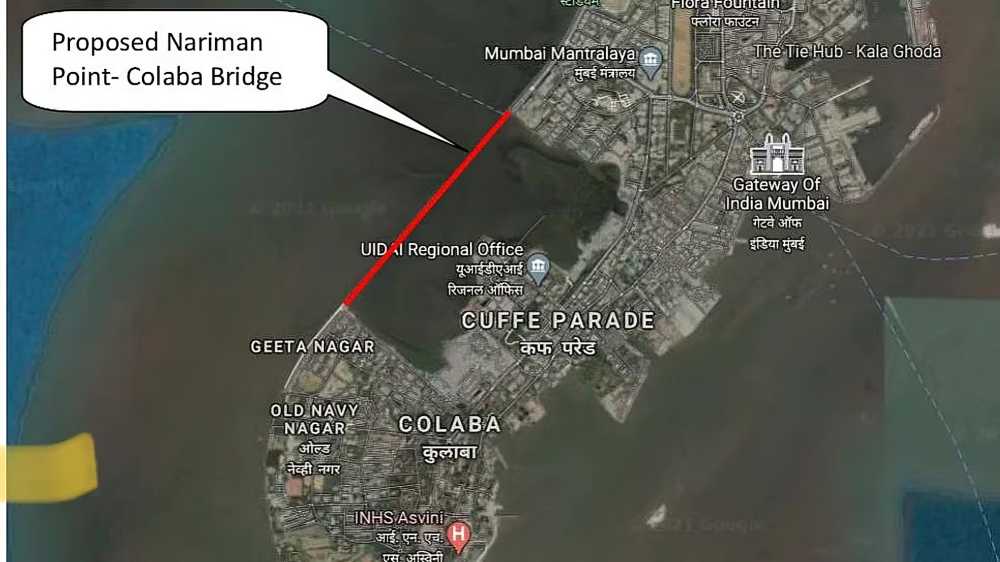
The project, proposed by the Mumbai Metropolitan Region Development Authority (MMRDA), involves the construction of a four-lane coastal stilt bridge with two-level ramps to establish a direct connection between Nariman Point and Colaba/Cuffe Parade in South Mumbai.
The upcoming bridge is expected to provide an alternate route between two important business districts, reduce travel time, ease congestion on Captain Prakash Pethe Marg and nearby roads, and improve connectivity with the Mumbai Coastal Road and Metro Line-3 corridor.
As per the proposal submitted by MMRDA, the bridge alignment will begin from Subhash Chandra Bose Road near Nariman Point and end at Captain Prakash Pethe Marg/Rodehouse Marg in Colaba. The overall project length, including ramps, is approximately 1.869 km, while the bridge section along with Ramp-1 measures around 704 metres.
The project will pass through coastal and marine areas and requires acquisition of nearly 1,765.51 square metres of land. The Environmental Impact Assessment (EIA) report submitted for the project identified possible environmental impacts during the construction phase.
According to the report, around 79 trees will need to be transplanted within the project’s right of way. The activity may temporarily affect local vegetation and habitats supporting nearby fauna. Construction work involving excavation and piling is also expected to generate nearly 2,212 cubic metres of muck.
The EIA report further noted that small-scale fishermen and fish farmers operating along the project stretch could face temporary disruptions during construction. To minimise the impact, MMRDA has been directed to coordinate construction schedules with fishing activities and obtain a No Objection Certificate (NOC) from the Commissioner of Fisheries before beginning work.
Once all approvals are secured, the Nariman Point–Colaba bridge is expected to become an important addition to Mumbai’s coastal transport network and provide a new connectivity link in South Mumbai.
Source: The Free Press Journal