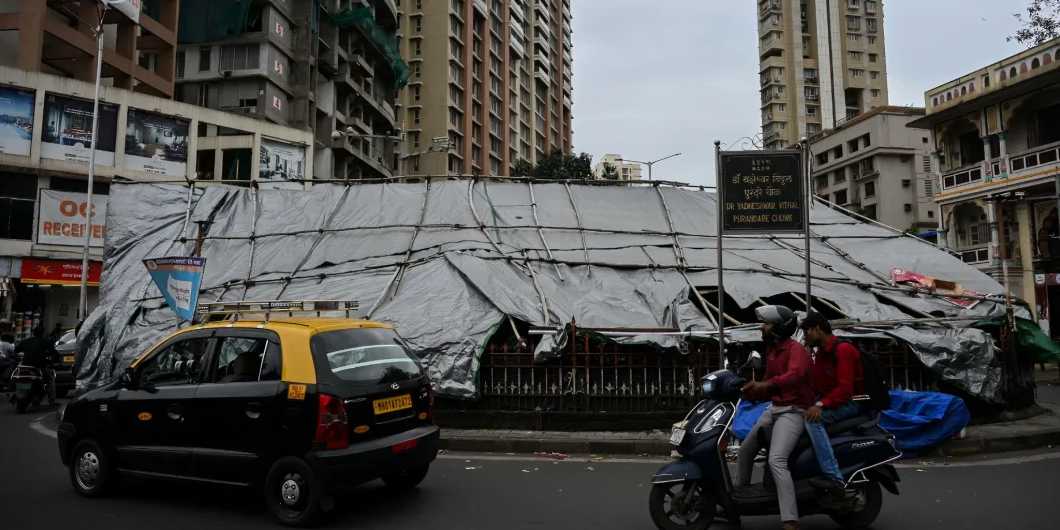

Nearly a year after pigeon feeding was prohibited in public spaces following a Bombay High Court directive, the Brihanmumbai Municipal Corporation (BMC) is planning to restore the appearance of the iconic Dadar Kabutarkhana while ensuring the ban continues to be enforced.
The civic body has proposed replacing the opaque tarpaulin sheets currently covering the heritage structure with transparent acrylic panels. The move aims to preserve the monument’s architectural character and visibility without allowing pigeon feeding to resume. The proposal has been submitted to the civic ward committee for approval, after which beautification work is expected to begin.

Constructed in 1933, the Dadar Kabutarkhana is a Grade II heritage structure located on a traffic island near Dadar railway station. It has long been recognised as one of Mumbai’s oldest pigeon-feeding sites and gained popularity as a filming location during the 1980s and 1990s, including for the 1989 Bollywood film Parinda. The enclosure, which features a central fountain, is currently managed by a local trust.
The proposal also comes months after Shiv Sena (UBT) sought BMC’s takeover of the site to improve road space at the busy Dadar junction.
“We have created a beautification plan where the entire Kabutarkhana will be covered under transparent acrylic sheets instead of an opaque tarpaulin cover. This move will restore the heritage outlook of the structure while at the same time preventing the activity of pigeon feeding,” a senior civic official told The Indian Express.
According to civic officials, the heritage structure itself will remain untouched to preserve its original character. Along with the acrylic enclosure, the surrounding traffic island will undergo landscaping and greening initiatives.
“The structure had been lying idle ever since pigeon feeding was banned by the administration; therefore, the best possible plan was to use this space for the public. Our plan also involves beautifying the island through landscaping and greenery works. We are aiming to plant trees so that the traffic island can become an oxygen hotspot and also contribute in a way to curb air pollution in Mumbai,” the official said.
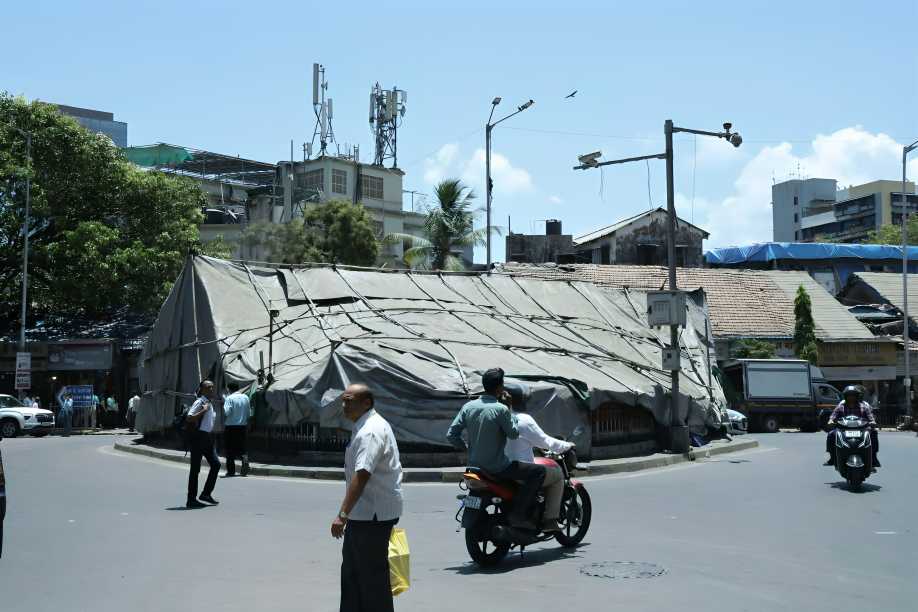
The adjoining footpath will also be repaired to improve pedestrian movement around the site.
Kabutarkhanas have historically held religious significance in Mumbai, particularly among Jain communities, where feeding pigeons is regarded as an act of jeev daya, or compassion towards living beings. Several such facilities were established across the city during the colonial period.
In August last year, the Bombay High Court ordered a ban on pigeon feeding in public places, citing public health concerns, including respiratory and pulmonary diseases. Following the order, Mumbai’s 51 Kabutarkhanas, including the one at Dadar, were shut and covered with tarpaulin.
To accommodate religious sentiments, the BMC identified four alternative pigeon-feeding locations at Aarey, Gorai, Versova and Wadala. However, officials said these designated sites have received very few visitors. The High Court had also directed the BMC to install CCTV cameras, deploy marshals, and use protective nets to prevent pigeons from gathering at public feeding spots.
Source: The Indian Express