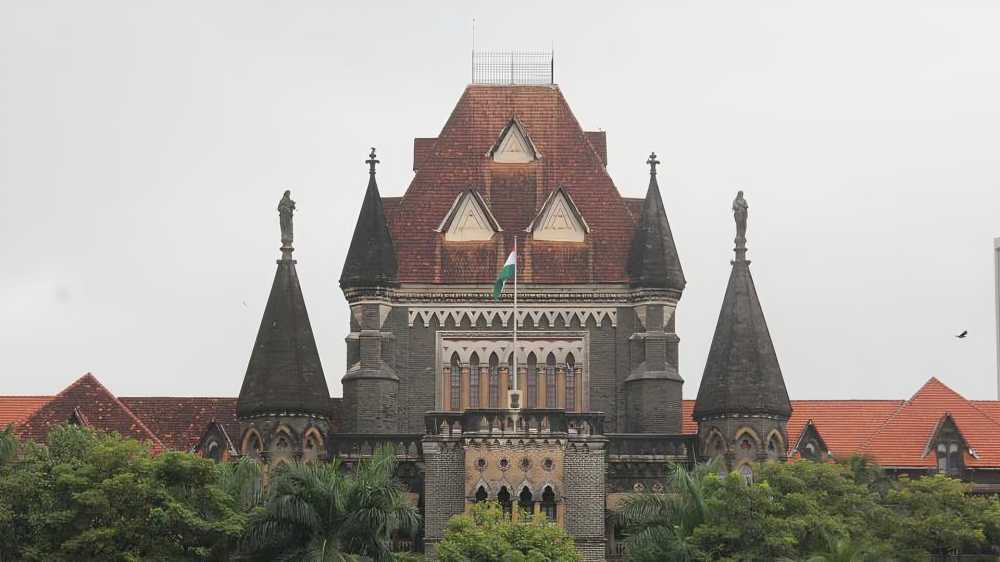

The Bombay High Court has overturned the Maharashtra cooperation minister’s 2025 order that approved the de-registration of the Hatkesh Udyog Nagar Industrial Premises Co-operative Housing Society in Mira Road, ruling that a developer cannot use alleged irregularities arising from his own actions as grounds to dissolve a society.
Justice Sandeep Marne, while hearing the matter, observed that allowing such a request would enable an errant developer to benefit from his own violations. “If a developer constructs a building without securing permissions, sells units therein, and after a society is formed by the unit purchasers, he applies for de-registration on the ground that the building constructed by him is illegal. Can de-registration of a society be undertaken in such a case at the instance of an errant developer? The answer to my mind appears to be in the negative,” the court said.
The petition was filed by members of the society, which consists of 72 industrial units located in an industrial estate near the Mira Road side of Ghodbunder Road. The members challenged the cooperation minister’s order confirming an earlier decision by the divisional joint registrar to cancel the society’s registration, stating that such a move would disrupt collective management and create “total chaos”.
The dispute originated in 2015 when Paresh Vora, proprietor of Hatkesh Builders, who had sold the industrial units to the members, sought de-registration of the society. He cited discrepancies in the registration documents, including differences in the number of industrial units and alterations made using white ink, along with alleged illegal construction at the site.
However, society members argued that the irregularities and construction-related issues were the responsibility of the developer himself.
The court noted that while there were discrepancies in some documents submitted before the deputy registrar, the circumstances surrounding the society’s formation also had to be examined. “No doubt, there appears to be some discrepancy in some of the documents which appear on record of the deputy registrar along with the registration proposal,” Justice Marne observed.
The court stated that the de-registration application was “cleverly drafted” as it failed to disclose the manner in which the industrial units were constructed. It noted that the builder had continued construction and sale of units without obtaining required development permissions from the planning authority and had instead relied on a no-objection certificate issued by the Ghodbunder gram panchayat.
The court also highlighted that the developer had not completed the required process for converting the land to non-agricultural use and had earlier raised no objections when unit purchasers formed the society.
Justice Marne further observed that despite the first units being sold in 1979, “despite the passage of 28 long years, he (builder) has done precious little for the formation of society.”
The judge said the developer was attempting to dissolve the society “for achieving the obvious oblique motive of claiming rights in the land from which he has already profiteered”.
The court concluded that although document discrepancies could ordinarily justify de-registration, the present case required a different approach as the developer should not gain advantage from his own violations. “However, once this court is convinced that de-registration of the society would enure to the benefit of respondent No 1 (builder), who himself is responsible for not securing necessary permissions, it would not be appropriate to uphold the order of de-registration,” it said.
The court ultimately allowed the discrepancies to be overlooked in the “peculiar” circumstances of the case to ensure that the builder did not benefit from his own wrong.
Source: Hindustan Times