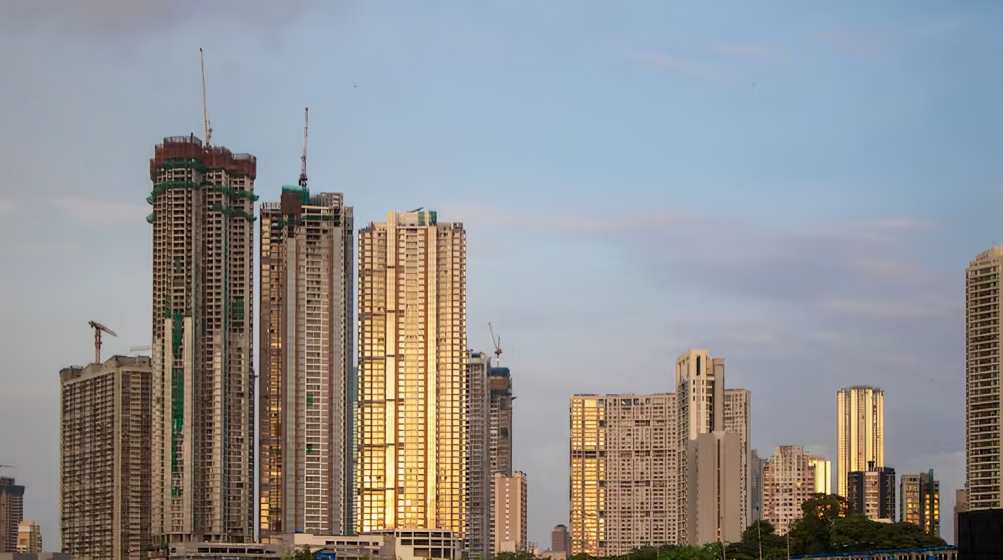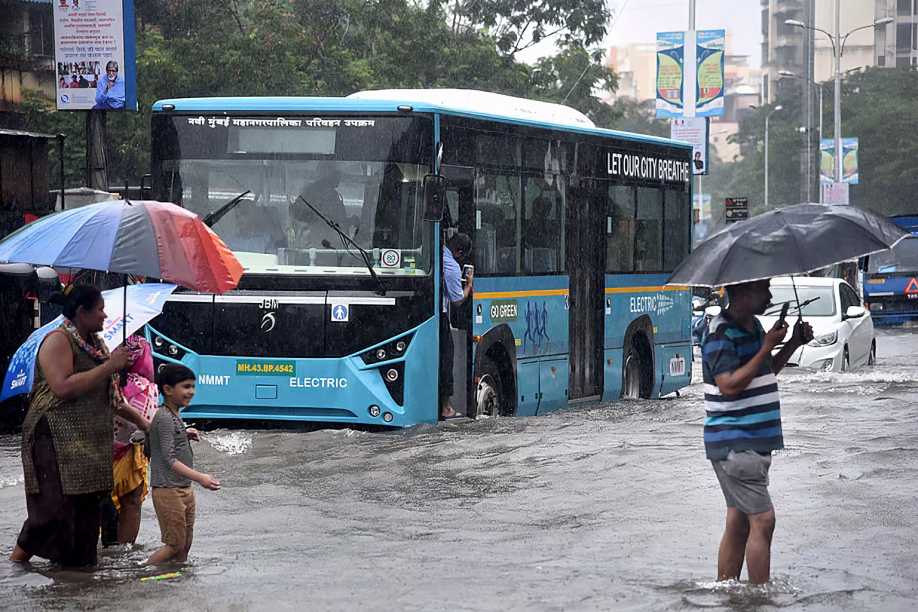

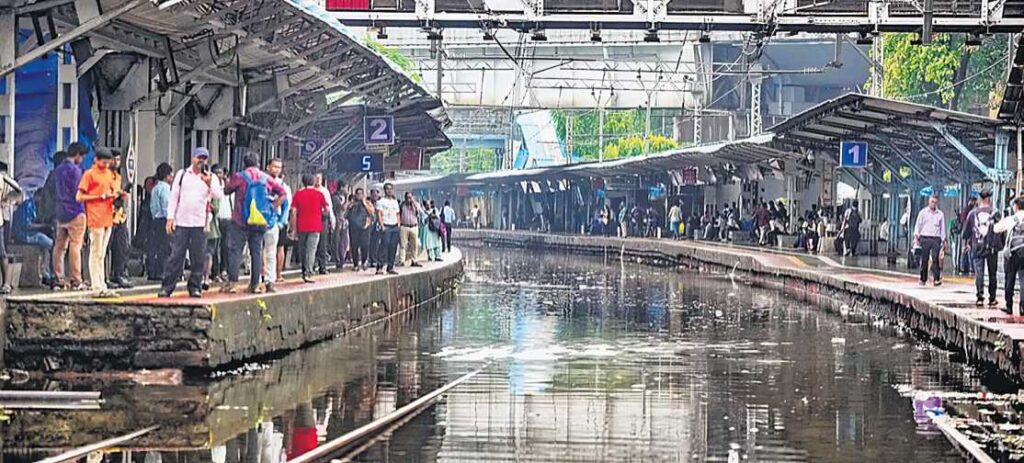
Mumbai receives substantial rainfall every monsoon, with annual averages of around 2,213 mm in Colaba and 2,502 mm in Santacruz. But the city’s recurring floods are also linked to concretisation, reduced open spaces, altered waterways and infrastructure that has struggled to keep pace with urban growth.
The July 26, 2005 floods remain the defining example. Mumbai recorded 944 mm of rain in 24 hours, exceeding the earlier 1912 record of 838 mm. A high tide prevented floodwater from draining into the sea, bringing large parts of the city to a standstill and causing more than 1,000 deaths across Maharashtra.
Urban planners say the problem is not rainfall alone. Pankaj Joshi, Principal Director of Urban Central, Mumbai, points to increasing concretisation, which leaves less land for rainwater to seep into the ground. During intense spells, water instead flows onto roads and depends on the drainage network to reach the sea. High tides can further slow that process.
Mumbai’s rainfall is also considerably higher than several other Indian cities. Delhi receives about 774 mm annually, Pune 720 mm, Bengaluru 986 mm and Chennai around 1,400 mm. Most of Mumbai’s rainfall arrives during roughly 80 monsoon days.
According to Joshi, rainfall patterns have also become less predictable, with intense spells followed by extended dry periods. He believes the civic administration needs to account for changing weather patterns in its planning.
The impact is visible beyond Mumbai. Nalasopara and Vasai-Virar, once dominated by agricultural land, have undergone extensive residential development. Joshi says construction expanded without corresponding stormwater infrastructure, leaving the region vulnerable to severe waterlogging.
Architect Milind Samel also highlights the decline of ground-level open spaces. Podium gardens and rooftop recreation areas cannot replace spaces that allow water to drain naturally.
The BMC has undertaken several flood-control measures, including nullah cleaning, river desilting, pumping stations and automated flood gates. Its proposed Rs 13,000-crore flood-mitigation master plan, prepared with IIT Bombay and the National Disaster Management Authority, proposes 33 pumping stations, compared with the existing 18 on the Mithi River. The civic body has also announced a Rs 20,730-crore climate budget for 2026-27.
However, planners argue that pumping alone cannot solve the problem. Joshi has suggested holding tanks that can store excess water during high tide and release it when the tide recedes. He has also called for protecting open spaces and restoring Mumbai’s rivers.
The broader challenge is how the city develops. Concentration of jobs in South Mumbai forces suburban residents into long commutes, while development in peripheral areas has not always been matched by drainage and transport infrastructure.
Mumbai’s monsoon vulnerability, therefore, is not simply about how much rain falls. It is increasingly about whether the city has enough natural and engineered capacity to absorb, store and move that water.
Source: The New Indian Express