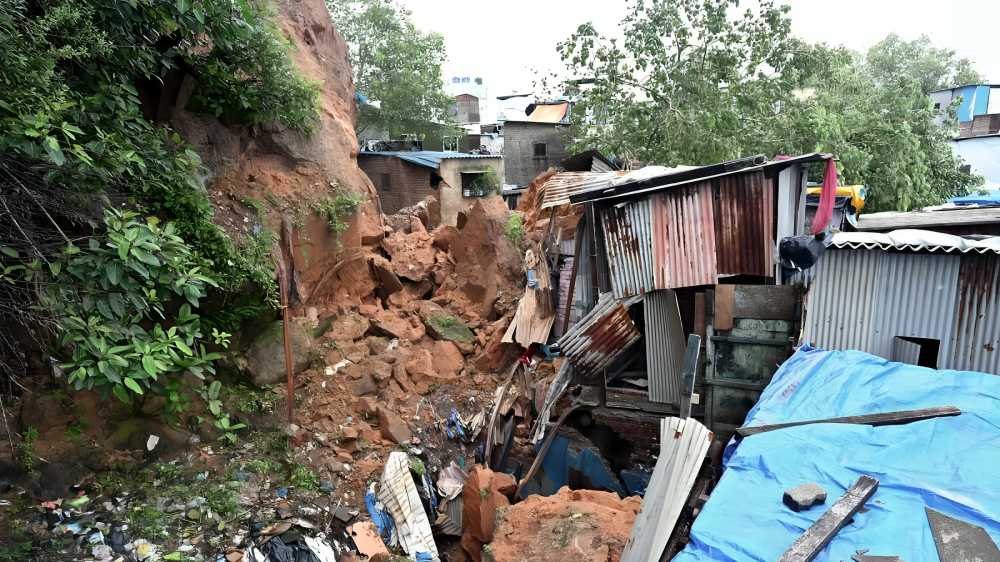

Mumbai’s soaring property prices are pushing some of the city’s poorest residents towards steep hillsides and forest-edge settlements, where low rents come with serious risks. From Ghatkopar and Bhandup to Mulund and Malad, thousands live in makeshift homes exposed to landslides, poor access and, in some areas, wildlife movement.
Four days after a landslide in Ghatkopar’s Chirag Magar killed eight residents, Mumbai Mirror visited several vulnerable hillside settlements. Despite being aware of previous incidents, residents said they have little choice but to remain, with affordable housing elsewhere largely beyond their reach.
At Durga Mata Nagar in Asalpha, Ghatkopar, residents said contractors charge around Rs 4 lakh to construct a 10×10-foot room and nearly Rs 6 lakh for a two-storey structure.
“Come and build a room here… you will have to get electricity connection. We pay for water and even electricity at a much higher rate. We are living on a hill, but we still have to buy every basic necessity,” said resident Ghulam Hussain.
Rents range from around Rs 1,200 to Rs 3,000 in parts of Ghatkopar, with prices generally falling higher up the hill. Rizwan Shaikh said, “If you want a rented room, you will have to choose among the options. See, here the rooms are small, toilets are outside except for a few houses who have toilets and bathrooms inside. The rents vary between Rs 1,200 to Rs 3,000, depending on the amenities. But the higher you climb, the cheaper the rates will be. However, it becomes difficult for elderly people to climb.”
Residents alleged that illegal construction continues despite the risks. Furkan Khan said, “I don’t think the rooms are available here…. The contractors build wherever there is space on rocks, on the slope and sometimes almost in the air. Once the room is built, nobody comes to check whether it is safe.”
Monsoon rainfall further increases the danger as water weakens soil and retaining structures. “Rainwater seeps into the soil, loosens the earth and increases the weight pressing down on already fragile structures. But we have no other option,” said Rizwan Shah.
Residents also alleged that illegal construction is enabled by corruption and political patronage, though such claims remain allegations.
In Mulund’s Hanuman Tekdi, basic rooms reportedly rent for around Rs 3,000, while better-equipped units with toilets and water can cost up to Rs 10,000. At Khindipada, residents said rainwater enters homes during the monsoon.
Wildlife adds another concern in some areas. “There is huge hill on the backyard…whenever we feel suffocated, we go atop the hill to relax but we are equally scared to go there alone as the leopard movement is high,” a resident said.
In Malad East’s Shiv Shakti Slum, Jambusi Nagar, around 500 hutments are located on the hillside. Residents also complained about expensive water and electricity.
The crisis highlights a difficult policy challenge: eviction without rehabilitation could displace families, while allowing unsafe settlements to remain leaves residents vulnerable to potentially fatal landslides. For many, however, these precarious homes represent years of savings and their only foothold in Mumbai.
Source: Mumbai Mirror