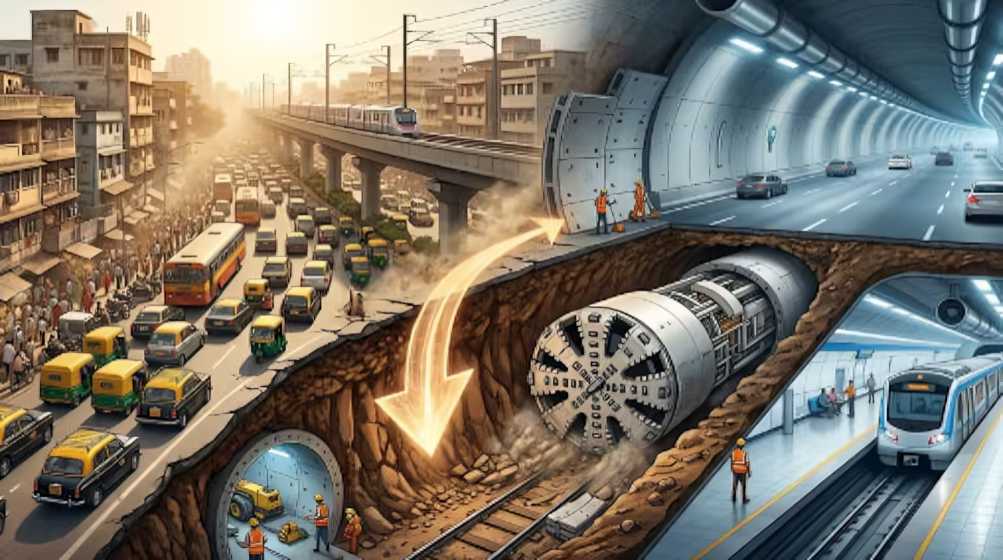

India’s major cities are increasingly looking beneath the surface to address growing congestion, rising land costs and limited space for new infrastructure. Delhi, Mumbai and Bengaluru are exploring underground transport and road projects as conventional expansion becomes more difficult.
Delhi’s Master Plan Delhi 2047 focuses on integrated transport, with better links between metro, rail, buses and regional transit systems. Anand Vihar-Karkardooma, Kashmere Gate and Nizamuddin-Sarai Kale Khan are planned as multimodal hubs.
The Delhi Metro is also expanding underground. Phase IV covers 61.679 km, including 22.359 km underground with 17 stations, at an estimated completion cost of nearly Rs 24,948 crore. The city has also proposed the 8.1-km Dwarka Road Tunnel, connecting Shiv Murti Interchange on the Dwarka Expressway with Nelson Mandela Marg in Vasant Kunj. The project is estimated to cost around Rs 6,969 crore.
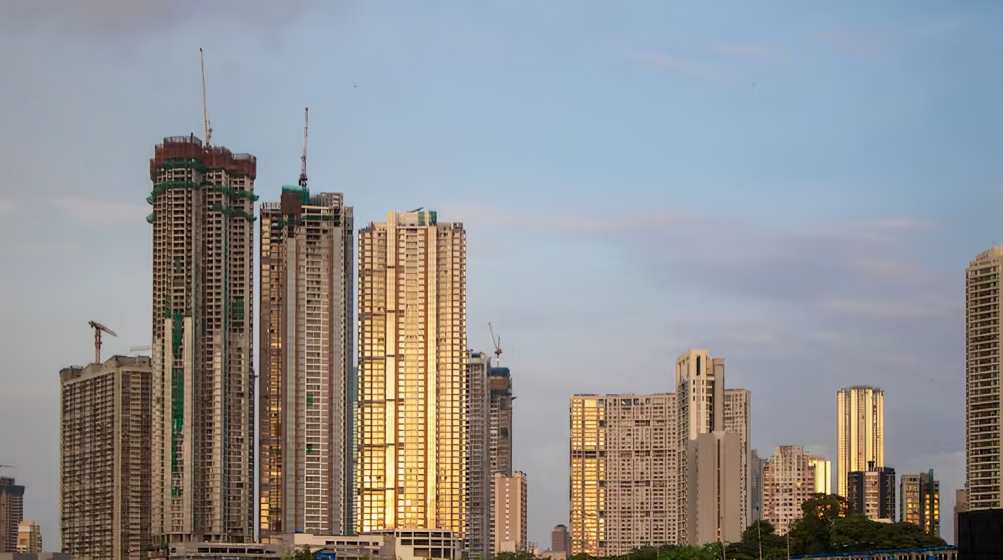
Mumbai faces an even greater space constraint because of its geography. Surrounded by water on three sides and with much of its land already occupied by buildings and roads, widening existing corridors often involves expensive acquisition and displacement.
The Mumbai Metropolitan Region Development Authority (MMRDA) is developing the Orange Gate-Marine Drive underground road project at an estimated cost of Rs 8,056 crore. Underground corridors are also being considered to connect key areas such as the Coastal Road, Bandra-Kurla Complex and airport routes. Tunnel boring has begun for the Goregaon-Mulund Link Road, including tunnels beneath Sanjay Gandhi National Park.
Bengaluru’s challenge is different. The city has more room to expand but its rapid growth has placed enormous pressure on its road network. Traffic-heavy areas such as the Outer Ring Road, Whitefield and Electronic City have limited scope for further road widening. Metro expansion remains a major response, with Phase 3 adding 44.55 km at a cost of Rs 15,611 crore.
Underground infrastructure can reduce land acquisition, preserve existing neighbourhoods and add transport capacity without consuming more surface space. However, tunnels require high investments in excavation, geological studies, ventilation, safety systems and emergency infrastructure.
Cities such as Tokyo, Singapore and London have demonstrated how underground networks can support dense urban areas. Singapore, for instance, combines underground rail infrastructure with road tunnels such as the 5-km Marina Coastal Expressway.
For Indian cities, going underground could become an important part of future urban planning. But the approach also raises questions about cost, construction risks and whether expensive subterranean infrastructure can provide sustainable solutions to rapidly growing cities.
Source: Money Control