
Nearly 25 years after Mumbai began developing resettlement and rehabilitation (R&R) housing for families displaced by infrastructure projects, several rehabilitation settlements are now struggling with serious maintenance, financial and governance issues, according to a study by Youth for Unity and Voluntary Action (YUVA).
The report, titled 25 Years Later: Infrastructure Conditions of R&R Housing in Mumbai, examined 38 cooperative housing societies (CHSs) across 53 buildings in four R&R layouts — RNA Park and J-Plot in Vashi Naka, Diwan in Vashi Naka and Charishma Colony in Mukund Nagar. The study also analysed individual housing conditions and consulted office-bearers of three CHS federations.
YUVA highlighted that while significant focus was given to constructing and allotting rehabilitation homes, there is no strong framework to manage their long-term maintenance and governance. The report pointed out that responsibilities between individual residents, housing societies and federations remain unclear, particularly for shared infrastructure.
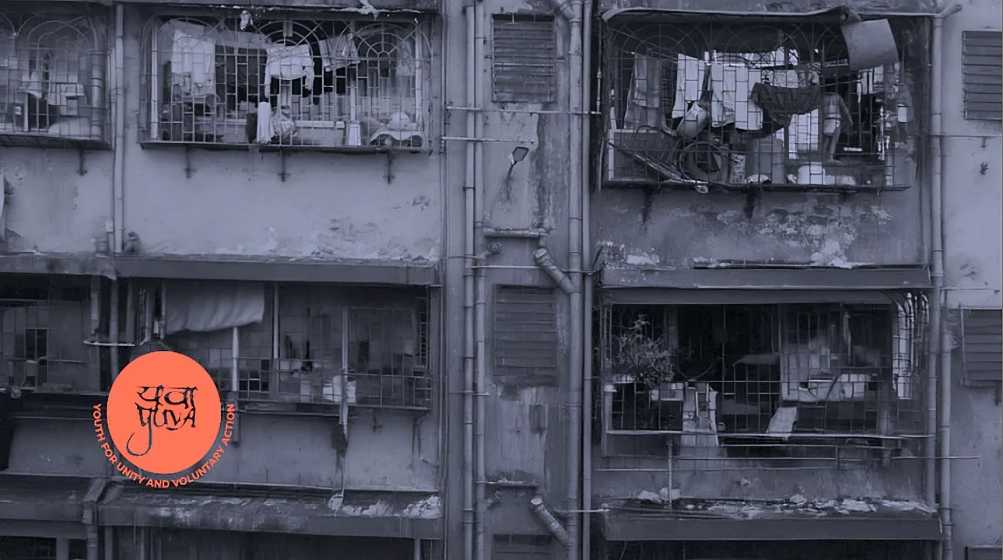
The buildings surveyed were constructed between 2004 and 2006 and were around two decades old during the study. Several societies reported major structural and maintenance concerns. External plaster damage and the need for repainting were reported by 36 of the 38 societies, while sewer blockages were reported by 33 societies. Internal plaster damage, water leakage and structural cracks were among other major issues identified.
The study also found that earlier repair efforts have not provided permanent solutions. Although MMRDA carried out maintenance work in several societies between 2008 and 2025, many buildings reported recurring problems after repairs.
Financial limitations have further complicated maintenance efforts. Most societies collect monthly charges ranging between Rs 200 and Rs 500, while many have not received their corpus funds. As a result, societies often struggle to finance major repairs and continue to depend on government agencies.
YUVA also highlighted challenges related to vacant rehabilitation homes, with thousands of unoccupied Project Affected Persons (PAP) tenements affecting society finances and maintenance.
At the layout level, the report noted gaps in garbage collection, drainage maintenance, street lighting and road upkeep. It stated that federations lack adequate funds and technical capacity to manage large-scale infrastructure responsibilities.
The study recommends a comprehensive policy for the post-allocation phase of R&R housing, including greater involvement of civic agencies, regular structural audits, financial support mechanisms for societies and time-bound allotment of vacant homes.
According to YUVA, Mumbai’s R&R system has created housing for displaced families but lacks a sustainable mechanism to ensure these homes remain safe, functional and financially viable over time.
Source: Money Life