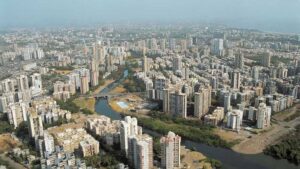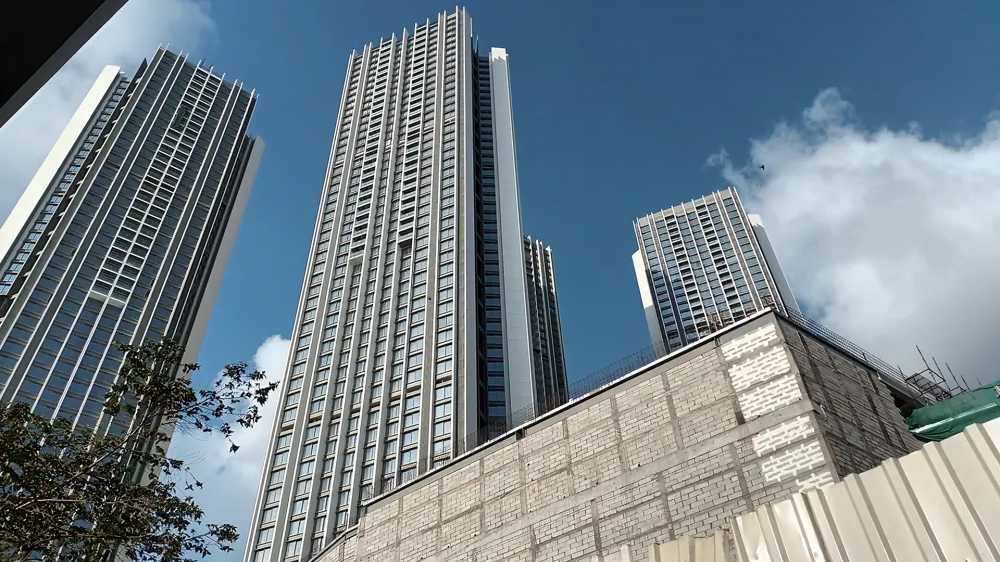

Mumbai’s skyline continues to rise, but a growing conversation is shifting attention from new towers to what happens to high-rise buildings decades after possession. A recent discussion on Reddit has sparked debate over maintenance expenses, structural repairs, construction quality and the eventual need for redevelopment of ageing residential towers.
The issue is particularly relevant in Mumbai, where high-rise societies depend on extensive common infrastructure such as lifts, fire-safety systems, water pumps, electrical installations, façades, plumbing networks and parking structures. Unlike standalone homes, these systems require residents to continuously contribute towards their upkeep and replacement.
One Reddit post asked, “What will happen to high-rise towers in Mumbai after 30 years? High maintenance, no redevelopment scope, less buyers. Every builder we are visiting is clearly saying 30 years is the max life they can consider. After that, everything depends on maintenance, repairs, etc. I wonder what will happen to these towers after 30 years. The returns being promised today may not even be close to what is expected. Why would anyone buy an old property with high maintenance at market rates?”
The discussion also highlighted concerns over whether major repair costs could eventually become financially burdensome for societies and whether redevelopment would emerge as a more practical solution.
However, another user argued that modern towers can remain structurally sound for much longer with proper planning and maintenance.
“Modern high rise towers are generally designed to have a life of more than 50 years. Many buildings constructed 40 years ago are still structurally good today if they have been properly maintained. Newer construction technologies can improve construction quality, consistency, and durability when used correctly. I believe we don’t need to be worry about a newly constructed tower for the next 50 years, provided it is well-designed, properly constructed, and maintained regularly,” a user commented.
Another resident stressed the importance of professional management and regular upkeep.
“I live in society of around 1000 flats in Mumbai and we are managing well with mc, pm and society committees so I don’t think that’s a issue we have completed 10 years while some buildings 5-6 years till now no issues lets see how it goes in next 20-30 years and yeah it’s same builders pm team so they know all problems well,” one user said.
Mumbai’s regulatory framework also provides for structural assessments of ageing buildings, with structural audits generally becoming relevant once buildings reach prescribed age thresholds. However, reaching 30 years does not automatically mean a tower is unsafe or needs redevelopment. The outcome depends on structural condition, construction quality and maintenance history.
Redevelopment Could Become the Long-Term Option
Experts point to redevelopment as one possible route for ageing buildings once maintenance and repair become increasingly expensive. Mumbai is already witnessing a significant shift towards redevelopment, with more than 1,000 projects launched since 2020, according to a JLL-NAREDCO Maharashtra report.
Redevelopment projects accounted for around 13% of Mumbai’s residential supply and 15% of housing sales during 2025 and the first half of 2026, compared with 6% between 2016 and 2021.
Borivali, Malad, Andheri, Vikhroli and Goregaon together account for around 36% of projects launched since 2020, while Mumbai’s western suburbs have contributed a significant share of redevelopment launches and sales.
The report also identified 1,202 active slum rehabilitation projects covering 321,858 hutments across 2,156 acres, highlighting the scale of Mumbai’s broader urban renewal pipeline.
For Mumbai’s high-rise homeowners, the question may therefore be less about whether a building can survive 30 years and more about how effectively societies can fund maintenance, maintain shared infrastructure and eventually assess whether repair or redevelopment offers the better long-term value.
Source: Hindustan Times