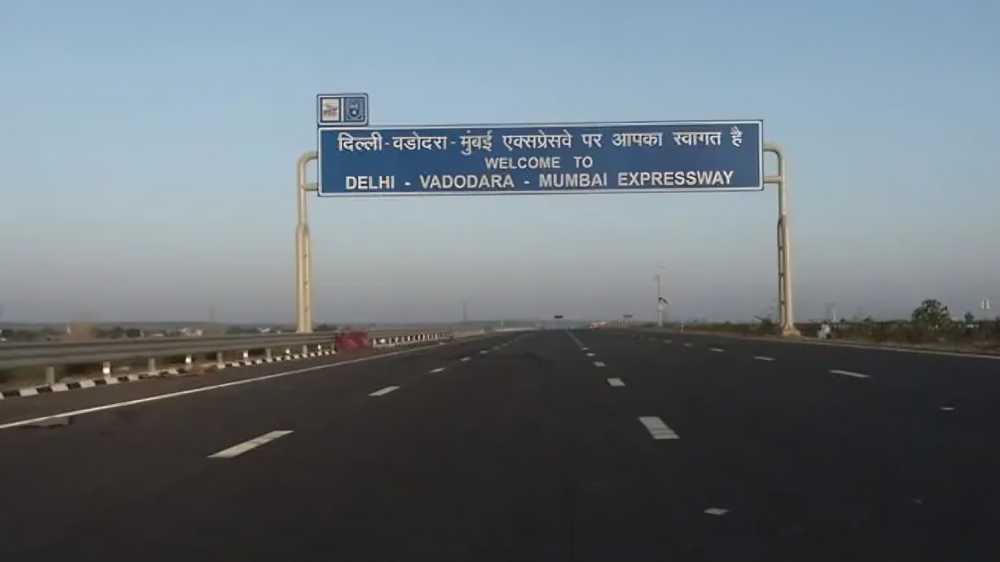

Prime Minister Narendra Modi has inaugurated key sections of the Vadodara-Mumbai Expressway, taking the total operational length of the 379-km corridor to around 150 km. The newly opened sections are expected to improve high-speed connectivity across Gujarat and strengthen the road link towards Maharashtra and Mumbai.
The inauguration covers two stretches in Gujarat: the Vadodara-Bharuch-Ankleshwar section and the Surat-Navsari section. Work continues on additional portions, including the Valsad-Vapi stretch in South Gujarat and sections through Palghar, Virar and JNPT in Maharashtra. The entire expressway is targeted for completion by 2027-28.
New Sections Strengthen South Gujarat Connectivity
The operational portion includes the 36-km Kim-Ena section, connecting the Kim interchange with Ena near Surat, and the 27.5-km Gandeva-Ena section, extending from Ena to the Gandeva-Kharel interchange near Navsari. Together, these form about 63.5 km of the eight-lane, access-controlled greenfield expressway.
Construction of the two sections in Gujarat was completed at an estimated cost of Rs 7,689 crore.
With the Vadodara-to-Navsari corridor now operational, high-speed road connectivity has been established across Vadodara, Bharuch, Ankleshwar, Kim, Surat and Navsari.
The expressway is expected to reduce pressure on the existing Mumbai-Ahmedabad National Highway (NH-48), particularly from heavy commercial traffic. Faster movement of freight is also expected to benefit key industrial and export-oriented sectors in South Gujarat, including textiles, diamonds and chemicals, as well as major industrial and port-linked centres such as Surat, Dahej, Ankleshwar and Hazira.
Part of the Delhi-Mumbai Expressway Network
The Vadodara-Mumbai Expressway forms a key section of the 1,350-km Delhi-Mumbai Expressway (NE-4). The larger network connects with the DND Flyway and Kundli-Manesar-Palwal (KMP) Expressway in Delhi-NCR before continuing through Rajasthan and Madhya Pradesh into Gujarat.
On the Maharashtra side, the route will extend through Vapi, Virar and JNPT in Navi Mumbai, creating a direct connection between Vadodara and the Mumbai region.
The corridor will also integrate with major highways, including the Ahmedabad-Vadodara Expressway, KMP Expressway and DND Flyway, while connecting with routes towards Jaipur, Noida International Airport, Indore-Ujjain and other regional economic centres.
In Maharashtra, connections with the Mumbai-Nagpur Samruddhi Expressway and Mumbai-Pune Expressway are expected to further expand the corridor’s role in the state’s road network.
Once fully operational, the Vadodara-Mumbai Expressway is expected to provide faster passenger and freight movement, reduce travel times and support stronger economic connectivity between western and northern India.
Source: NDTV