
India is moving towards a nationwide barrier-free toll collection system, with Union Road Transport and Highways Minister Nitin Gadkari saying the Multi-Lane Free Flow (MLFF) model is expected to be implemented across the country by February-March 2027.
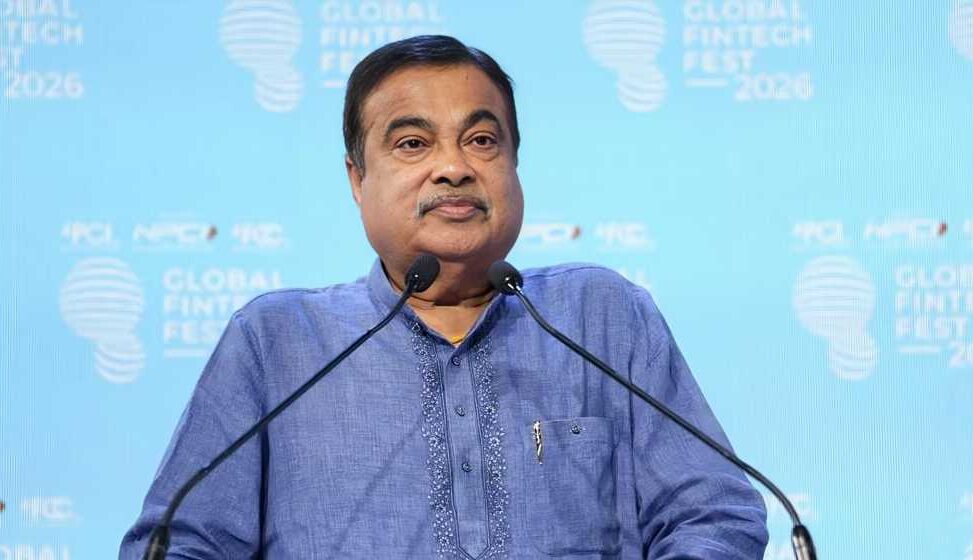
Speaking at the Global Fintech Fest in Mumbai, Gadkari said the government wants to eliminate the need for vehicles to stop at toll plazas. Under MLFF, overhead gantries identify vehicles electronically and collect tolls as they pass through without barriers or conventional toll booths.
“In one year, we want to get all our tolls free on the MLFF model. I directed officials to complete it by December 2026. I believe 60% to 70% of the work will be completed by the end of the year. By February-March, a barrier-free toll plaza system will be implemented across the country,” Gadkari said at the Global Fintech Fest in Mumbai.
Lower Fuel and Toll-Operating Costs
Gadkari said removing physical stoppages would not only improve traffic flow but also reduce fuel consumption and the expense of running toll plazas.
“In one year, we want to get all our tolls free on the MLFF model. I directed officials to complete it by December 2026. I believe 60% to 70% of the work will be completed by the end of the year. By February-March, a barrier-free toll plaza system will be implemented across the country,” Gadkari said at the Global Fintech Fest in Mumbai.
He said toll-plaza operations currently account for 12%-15% of costs, a figure that could fall to between 2% and 4% under the barrier-free system.
“This will help save Rs 6,000 crore to Rs 7,000 crore annually.”
Building on FASTag’s Success
Gadkari, who inaugurated India’s first barrier-free tolling system at the Mundka-Bakkarwala Toll Plaza on Delhi’s Urban Extension Road-II in May, said the next phase of tolling would focus on eliminating stoppages altogether.
FASTag has already reduced queues, waiting times and dependence on cash transactions at toll plazas.
“Earlier, the waiting time was 12 minutes, which used to stretch to 30 minutes at some places.”
He said software has also been developed to monitor waiting times at toll plazas.
“There has been an improvement of 80% to 90%, but I want it to improve further so that no one has to wait at toll plazas,” Gadkari said.
Rs 68,500 Crore Value of Time Saved
According to Gadkari, reducing delays at toll plazas could save approximately 71 crore hours of travel time and 56 crore litres of fuel annually. The resulting fuel savings are estimated at around Rs 5,250 crore.
“The economic value of the time saved by commuters is estimated at Rs 68,500 crore annually,” he said. “This is such a big benefit for the people.”
He also said the wider adoption of FASTag and digital toll collection has generated substantial financial benefits for the government.
“If you compare the system before and after FASTag, the benefit to our department alone comes to around Rs 20,000 crore to Rs 25,000 crore per year.”
The planned transition to MLFF marks the next stage in India’s digital transformation of highway tolling, with the government seeking to make journeys faster, more seamless and less costly for motorists while reducing the operational burden of traditional toll plazas.
Source: Hindustan Times