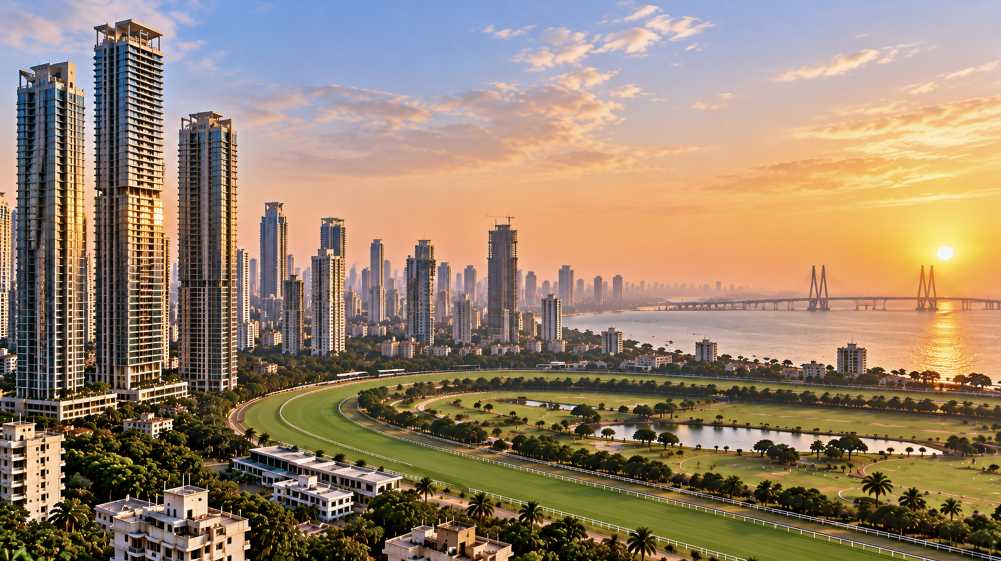

Mumbai is reinforcing its position as India’s leading data-centre market as demand for computing capacity rises from banks, cloud platforms, technology companies and artificial intelligence businesses. But the city’s rapid digital infrastructure expansion is also raising questions about how much additional pressure its land, electricity, water and connectivity systems can absorb.
According to CII-CBRE data, Mumbai’s share of installed data-centre capacity among India’s Tier-I markets could increase from 52% in the first half of 2026 to 68% by 2030. Its installed capacity is projected to more than double, from approximately 0.9 GW to over 2 GW.
Why Mumbai Remains a Prime Location
Mumbai’s position as a financial centre, extensive digital connectivity and access to international submarine cable networks make it an attractive destination for data-centre operators.
India’s overall data-centre capacity is also expected to expand sharply, from around 1.5 GW currently to nearly 7 GW by 2030, driven by AI, cloud computing, digital payments and the broader growth of online services.
However, the growth raises a strategic question: does most of this capacity need to be concentrated in major metropolitan markets?
Mumbai, Chennai, Delhi-NCR, Bengaluru and Hyderabad already host a large share of India’s data-centre infrastructure. These cities also face constraints involving land availability, electricity, water and supporting infrastructure.
The Urban Cost of Digital Growth
Data centres require substantially more than a building. They need uninterrupted power, high-speed connectivity, backup systems, cooling infrastructure and suitable sites. Expanding this ecosystem can place additional demands on surrounding public infrastructure.
For Mumbai, water availability is a particularly important consideration. Data centres operate continuously, and cooling systems can consume significant amounts of water depending on the technology used.
Electricity is another critical factor. Facilities require highly reliable power because even brief disruptions can affect operations. As more capacity comes online, planners will need to consider how generation, transmission and distribution infrastructure can expand without creating additional stress for households and other businesses.
Should India Diversify Its Data Centres?
There is a case for developing more facilities outside India’s largest cities. Locations with greater land availability, reliable renewable energy, adequate water resources and space for supporting infrastructure could accommodate future capacity while reducing pressure on dense urban areas.
But relocating data centres is not simply a matter of finding cheaper land. Network latency, connectivity, power reliability and proximity to customers remain important considerations.
Mumbai’s continued dominance is therefore understandable, but concentration also increases the importance of long-term planning.
Balancing Digital Expansion With Livability
Data centres can bring investment, construction activity, specialised jobs and support for India’s digital economy. Yet their direct employment footprint may be smaller than that of many traditional industrial projects.
For Mumbai, the question should therefore extend beyond how much capacity is being added. It should also consider what infrastructure the city must provide, who pays for it and what benefits residents receive in return.
India will undoubtedly require more computing capacity as AI and digital services expand. The challenge is ensuring that this growth does not outpace the infrastructure needed for everyday life.
Mumbai’s data-centre boom is a sign of the country’s digital progress. But the city’s future will depend on balancing that expansion with its finite supplies of land, water, power and public infrastructure.
The bigger question is no longer whether India needs more data centres. It is whether the country can distribute that growth intelligently — without making the cities at the heart of its digital economy more difficult to live in.
Source: Convergence Now