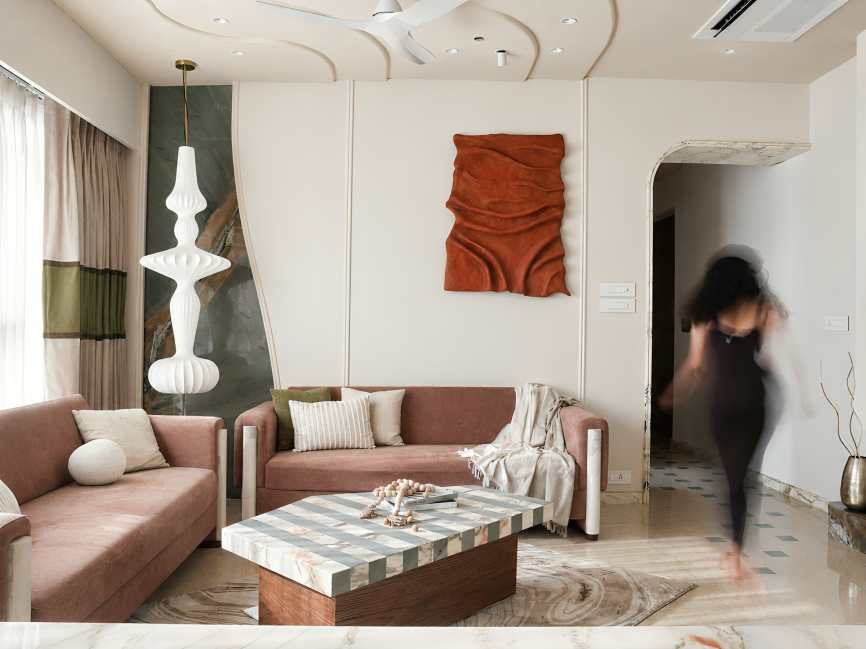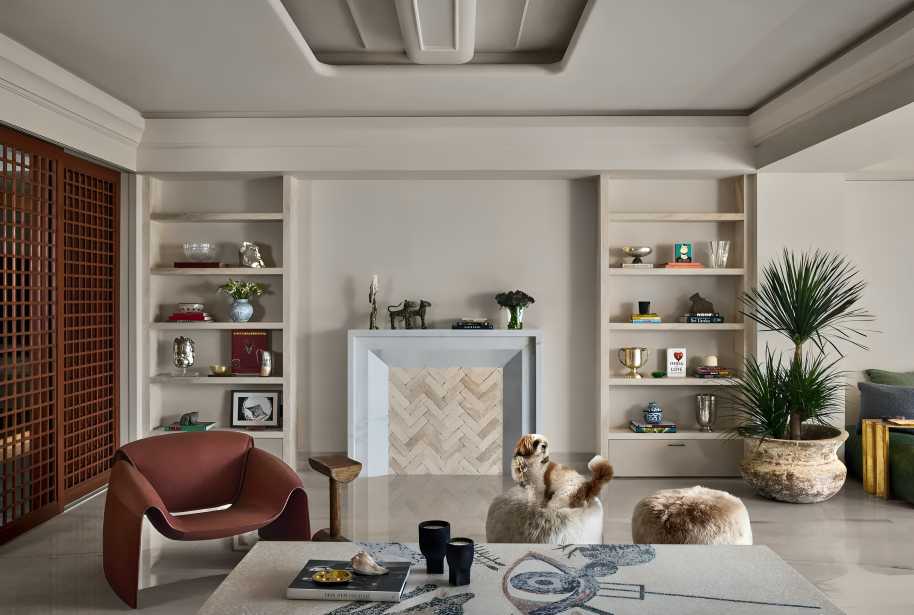

A South Mumbai apartment in Malabar Hill has been transformed into a relaxed contemporary home that places comfort, memory and understated design at its centre. Designed by Cape Town-based ARRCC in collaboration with Avas Design Studio, the residence occupies a building created by the late architect and artist Jehangir Vazifdar.
The project began with one element the homeowners were determined to preserve: an original Art Deco ceiling. For one of them, the ceiling recalled the home he had grown up in Girgaum, giving the feature a strong emotional connection. Despite extensively reworking the apartment’s layout, the designers carefully restored the ceiling and made it a focal point. “Keeping it gave the home a sense of memory and continuity,” share the couple.
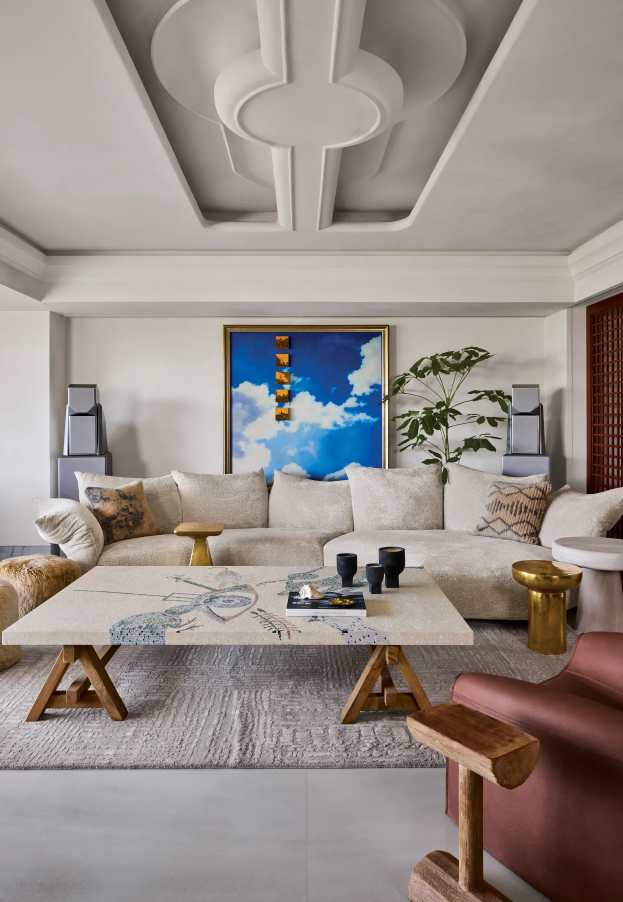
ARRCC, making its Mumbai debut with the project, reconfigured the floor plan and established the overall design direction, while Avas Design Studio worked with local artisans and vendors to execute it. The brief centred on “essentially barefoot luxury in an extremely urban environment: comfortable, peaceful, understated and timeless.”
The apartment deliberately avoids the formal rooms traditionally associated with older Mumbai homes. Instead, spaces are designed for everyday use and flexibility. Japanese-inspired sliding screens connect the living room and den, allowing them to function as one expansive area or become more intimate when separated. “When open, the living room and den operate almost as one enormous space. When closed, they create a more intimate environment,” Jathar explains.
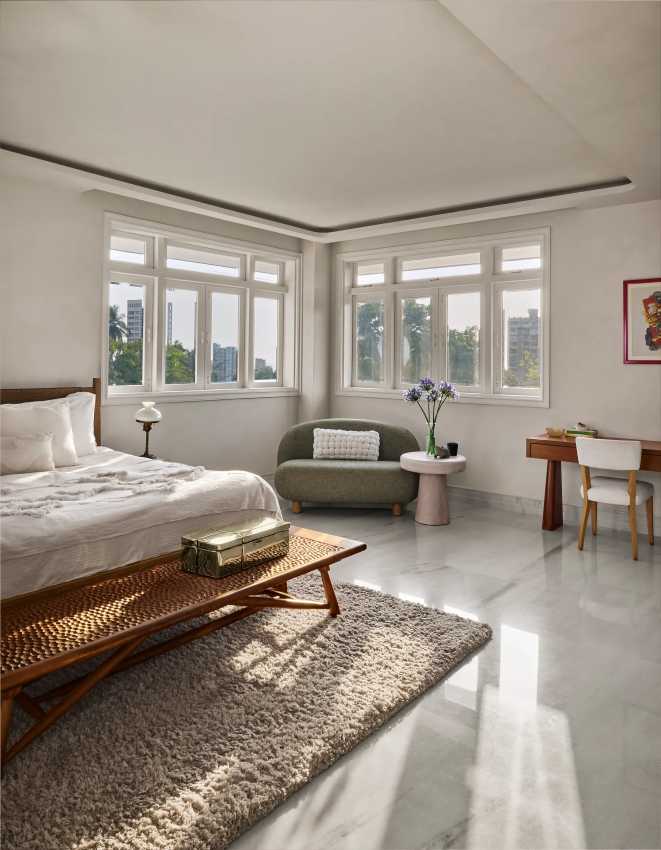
Natural materials, timber, stone and carefully selected furnishings create a warm and tactile atmosphere. Lighting designer Kanchan Shetty later refined the lighting scheme, adding atmosphere without making illumination the centre of attention. Jathar says, “Bringing her on board was one of the best decisions made. She has an incredible ability to understand space and create atmosphere without making the lighting itself feel like a feature.
Vintage furniture and artworks were selectively retained, ensuring sentiment did not compromise the overall composition. Elsewhere, unexpected details, including a dining-table stone base repurposed as a planter, add a lived-in quality.
Even after extensive design intervention, the apartment avoids feeling precious. “The greatest success of this home is that it doesn’t feel like it is trying to be a luxury home,” Jathar remarks. “It simply feels very good to live in.”
Source: Architectural Digest