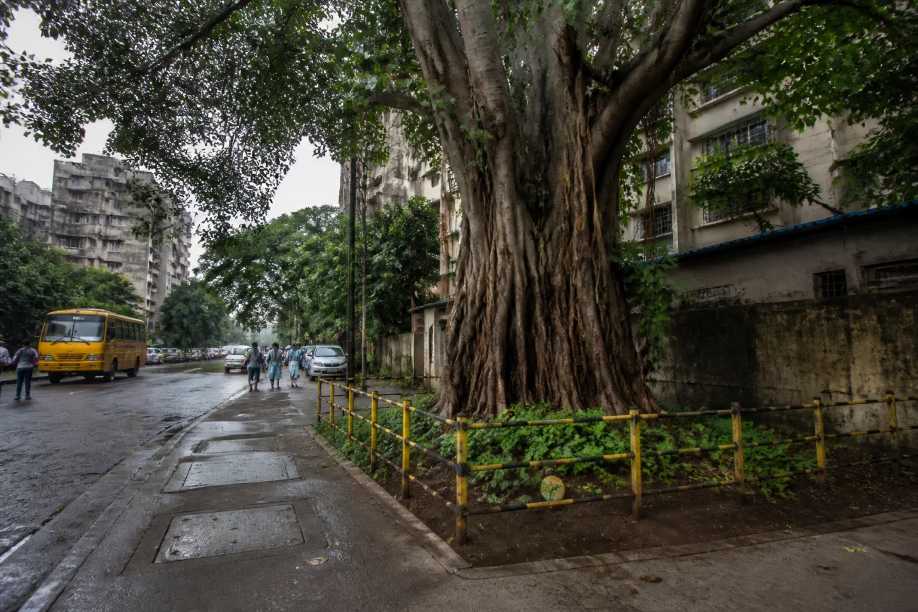

The BMC’s fact-finding inquiry into the June 30 Chembur tree crash has highlighted how urban safety risks can emerge from the interaction between trees, infrastructure and surrounding environmental conditions.
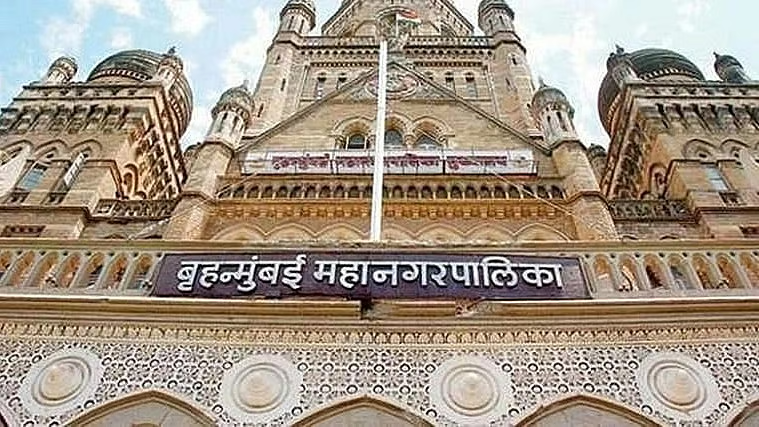
The report, submitted to BMC Commissioner Ashwini Bhide on October 6, examined the collapse of an old peepal tree near Diamond Garden onto a school bus, which killed 11-year-old Vihaan Srivastava and injured four other children.
Prepared by former Mumbai University vice-chancellor and botanist Prof Sanjay V Deshmukh, the inquiry has not assigned responsibility to any individual or authority. Instead, it examined several factors that could have contributed to the incident, including the tree’s biological condition, root-zone activity, soil, drainage, road works and weather.
The findings highlight a broader challenge for Mumbai, where responsibility for trees and surrounding infrastructure is often divided between different departments and agencies. Underground utilities, excavation, road construction and drainage works can alter conditions around trees, potentially affecting their long-term stability.
The inquiry also points to the limitations of relying solely on visual tree inspections. While visible decay, damaged branches or tilting may indicate danger, underground conditions affecting roots may not always be apparent. The report therefore considered whether activities around the tree could have contributed to its weakening.
One important area identified is the mapping of underground utilities. Proper records could help ensure excavation and infrastructure work do not unintentionally damage tree root zones. Such coordination is particularly important in a dense city where roads, drainage systems, water lines, power networks and telecommunications infrastructure are frequently modified.
The report does not establish that any single factor caused the tree to collapse. Instead, it considers the possibility that multiple conditions combined over time. It also examined wider aspects of the incident, including the bus’s location and insurance-related issues.
The inquiry is the first part of a broader assignment ordered by the BMC following the tragedy. Prof Deshmukh is expected to submit additional components dealing with urban forestry policy and preventive measures. One policy document has reportedly already been submitted, while further recommendations are awaited.
The eventual recommendations are expected to cover tree-risk assessment, root-zone protection and coordination between utility, road, drainage and tree-management agencies.
The Chembur incident has therefore raised questions beyond the condition of a single tree. It underscores the need for Mumbai to assess natural assets alongside the infrastructure surrounding them and develop systems that can identify risks that cross departmental boundaries.
Source: Urban Acres