
The Brihanmumbai Municipal Corporation (BMC) is preparing measures to manage Mumbai’s water supply amid concerns over inadequate rainfall and incomplete lake replenishment. The civic body plans to allocate funds across its 26 administrative wards to restore traditional wells and introduce a mobile application for booking water tankers.
Mumbai requires approximately 4,100 million litres of water daily. As of October 13, the combined water stock in the seven lakes supplying the city stood at 92.36%. The BMC had previously imposed a 10% cut after deficient rainfall during August and September, attributed to El Niño conditions.
Additional Municipal Commissioner (Projects) Abhijit Bangar said the well-restoration initiative would focus on making water available locally for non-drinking purposes. Housing societies could use the water for gardening and washing vehicles, while storage tanks in slum areas could support local requirements.
Bangar emphasised that restoration would depend on establishing systems to distribute the water effectively. “Rejuvenation of all 3000 wells will not be undertaken unless forward linkages (a method that ensures water from a well is distributed and reaches a desired location) are established. The exercise will serve no purpose if we revive a well without a system to use its water,” he said.
The proposal to restore 350 wells emerged in June when Mumbai’s water reserves fell to 12.12%, raising shortage concerns. On June 11, Municipal Commissioner Ashwini Bhide instructed officials across all 26 wards to survey and clean wells and arrange rainwater recharge. Bangar noted that open wells require the removal of accumulated silt and waste before their water can be used.
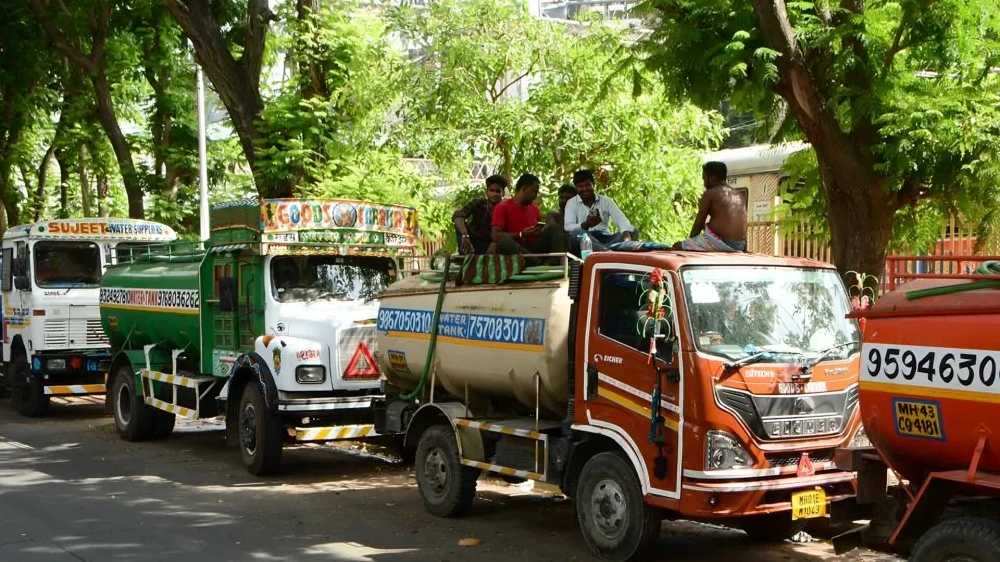
Separately, the BMC plans to replace manual tanker reservations through ward offices with an app-based system. Residents would be able to book tankers, pay fees and track allocations digitally. Mumbai currently has 33 designated water-filling points.
“The policy will address how tankers can be used to supply potable water whenever there is a shortfall. Instead of visiting ward offices to pay fees and wait for manual scheduling, citizens should be empowered to book and track water tankers instantly through a secure mobile app,” Bangar said.
The existing cuts—10% for domestic consumers and 20% for commercial and industrial users—will continue. Bangar said carryover reserves from the Bhatsa and Upper Vaitarna dams, alongside these restrictions, placed the city in a comfortable position.
Source: Hindustan Times