
The Brihanmumbai Municipal Corporation (BMC) issued 270 show-cause notices and 29 stop-work notices to construction sites for breaching air pollution control regulations between October 1 and 22, 2026. Ghatkopar’s N ward recorded the highest number of show-cause notices at 105, followed by Mulund’s T ward with 52 and Dahisar’s R/S ward with 42.
According to the civic body’s environment department, these three wards accounted for 199 notices, representing nearly 74% of all show-cause notices issued across Mumbai during the period.
At a review meeting on Tuesday, municipal commissioner Ashwini Bhide instructed officials to take strict action against developers violating the BMC’s 28-point pollution control guidelines. She also directed authorities to ensure that air quality monitoring stations, sensors and related equipment across the city remain functional.
Show-cause notices are issued when inspections identify violations of prescribed dust-control measures. These include covering construction sites and scaffolding, deploying water sprinklers or anti-smog guns, managing dust during excavation and debris handling, and meeting air-quality monitoring requirements. Developers must explain the violations and rectify them within the specified period. Continued non-compliance can lead to stop-work orders, although the BMC can halt construction immediately in serious cases.
Beyond the leading wards, Bandra East’s H/E ward received 19 show-cause notices, Jogeshwari’s P/E ward 15, Dadar’s G/N ward 12 and R/C ward 10. Meanwhile, Andheri East’s K/S ward recorded the most stop-work notices at eight, followed by Jogeshwari East’s K/N ward with four. Colaba-Byculla wards A, B and E, along with Worli’s G/S ward, reported no notices.
“The civic body’s enforcement measures are aimed at ensuring that developers implement prescribed mitigation measures, with stop-work notices serving as a more stringent step when violations persist or warrant immediate intervention,” said an official from BMC’s environment department.
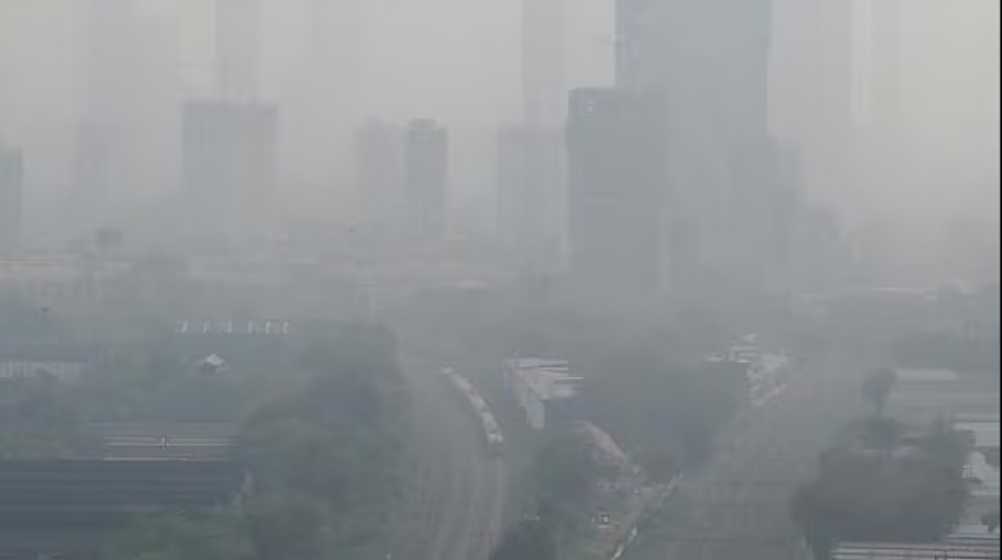
Mumbai’s air quality improved on Tuesday, with the average AQI falling to 99 from 105 on Monday, moving into the ‘satisfactory’ category. However, 11 of the city’s 24 monitoring stations continued to record moderate pollution levels.
Experts linked the deterioration following the monsoon’s withdrawal on October 3 to delayed sea breezes, low wind speeds and temperature inversion, which restrict the dispersal of pollutants. A senior BMC official said, “As a result of this phenomenon, pollutants remain trapped in the atmosphere, affecting air quality,” the official told HT last week.
Source: Hindustan Times