
The estimated expenditure on the Mumbai-Ahmedabad bullet train corridor has nearly doubled to Rs 2,02,797 crore from its original projection of Rs 1.08 lakh crore. Around Rs 92,761 crore had already been spent on the project as of March 2026, according to a Right to Information (RTI) response cited in a Deccan Herald report.
The 508-km Mumbai-Ahmedabad High-Speed Rail (MAHSR) corridor connects Maharashtra, Gujarat and the Union Territory of Dadra and Nagar Haveli. Initially scheduled for completion in 2023, the project has encountered considerable delays, largely due to land acquisition difficulties and compensation-related issues.
The National High Speed Rail Corporation Ltd (NHSRCL), responding to an RTI application filed by a news reporter, said the revised completion schedule could be established only after all construction contract packages were awarded.
“The anticipated completion timeline can be ascertained after award of all contract packages,” the corporation stated.
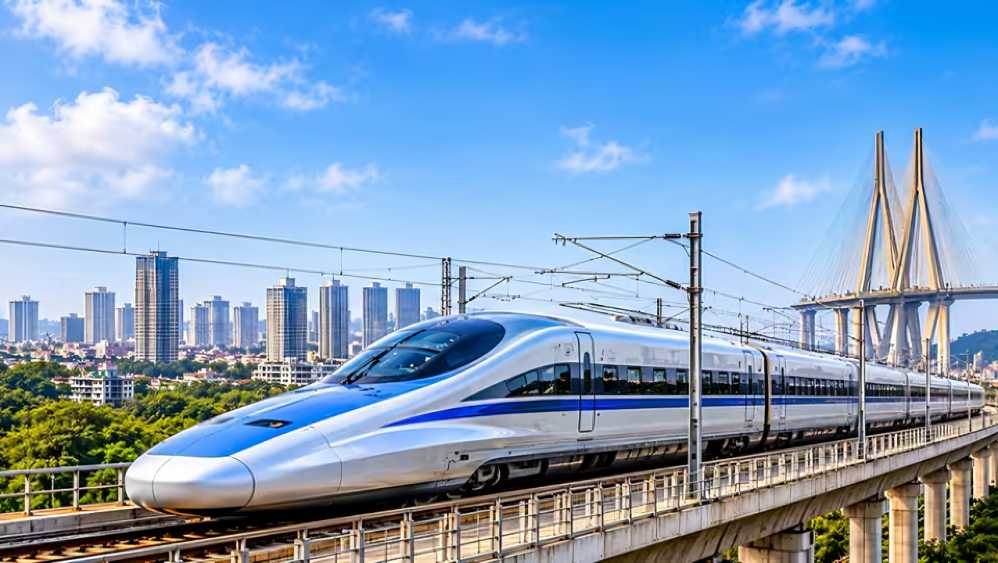
The RTI disclosure also highlighted a significant change in the project’s original plan for train operations. Initially, the corridor was expected to use Japanese Shinkansen trains. However, the NHSRCL has now opted to introduce domestically manufactured high-speed trainsets instead.
The first indigenous trainset, currently being manufactured by BEML Ltd, is expected to be dispatched in February 2027, with additional sets scheduled to follow.
Meanwhile, questions have also emerged over reported differences between India and Japan concerning the procurement of signalling systems for the corridor.
The NHSRCL declined to share correspondence between the two governments on the matter, citing a non-disclosure agreement. It also refused to disclose documents indicating Japan’s position on the proposed use of Indian-made trains.
The corporation invoked Section 8(1)(f) of the Right to Information Act, which exempts confidential information received from foreign governments from public disclosure.
The rising project cost, delayed execution and changes in technology procurement have added to the uncertainty surrounding the corridor’s completion.
Source: Mint