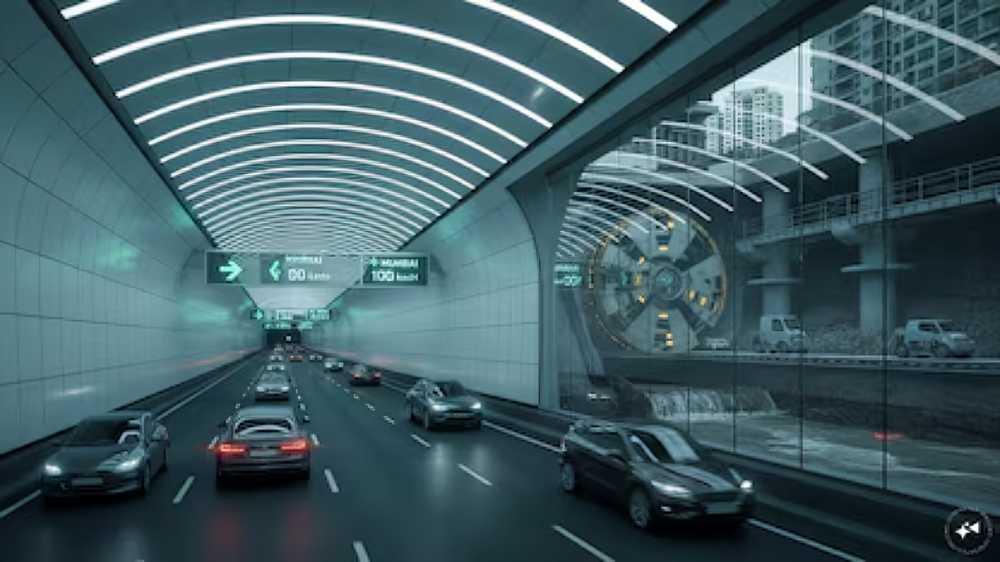

Mumbai is set to get an extensive underground road network estimated to cost Rs 53,928.2 crore, aimed at reducing traffic congestion and improving connectivity between major business districts, residential neighbourhoods and transport hubs. The ambitious project, popularly referred to as ‘Pataal Lok’, has received in-principle approval from Maharashtra Chief Minister Devendra Fadnavis.
Proposed by the Mumbai Metropolitan Region Development Authority (MMRDA), the network will have a total construction length of approximately 61.74 km, comprising tunnels in both directions. It will connect important locations, including the Bandra-Worli Sea Link, Bandra-Kurla Complex (BKC), Dharavi, Mumbai International Airport and the Western and Eastern Express Highways.
First announced by Fadnavis in November 2025, the project will now move into further planning stages. These include appointing consultants, arranging finances, obtaining statutory permissions and selecting construction agencies. However, the authorities have not yet announced when construction will begin or when the network is expected to become operational.
Three-Lane Tunnels Beneath Key City Locations
The proposed infrastructure will comprise two tunnel stretches of around 30.87 km each, with a diameter of approximately 14 metres. Each tunnel will accommodate three traffic lanes.
A central section will pass beneath the Mithi River, linking BKC and Dharavi. Four branches will extend from this stretch to connect different parts of the city.
One route will provide access to the Bandra-Worli Sea Link and the Coastal Road, while another will lead towards Dharavi. A separate connection will serve BKC’s G Block and the upcoming bullet train station.
The northern extension will reach Terminal 2 of Chhatrapati Shivaji Maharaj International Airport, running parallel to the Western Express Highway beneath Bandra East, Vakola and Vile Parle. The BKC corridor will also feature an exit at Chunabhatti, connecting motorists to the Eastern Express Highway.
Eastern Suburbs to Get Underground Connectivity
The second phase will extend towards the eastern suburbs, passing beneath congested areas such as Asalpha and Sakinaka in Andheri East before joining the Eastern Express Highway near Ghatkopar. The network is also expected to integrate with the Coastal Road and proposed elevated corridors along Mumbai’s eastern side.
Source: CNBC TV18