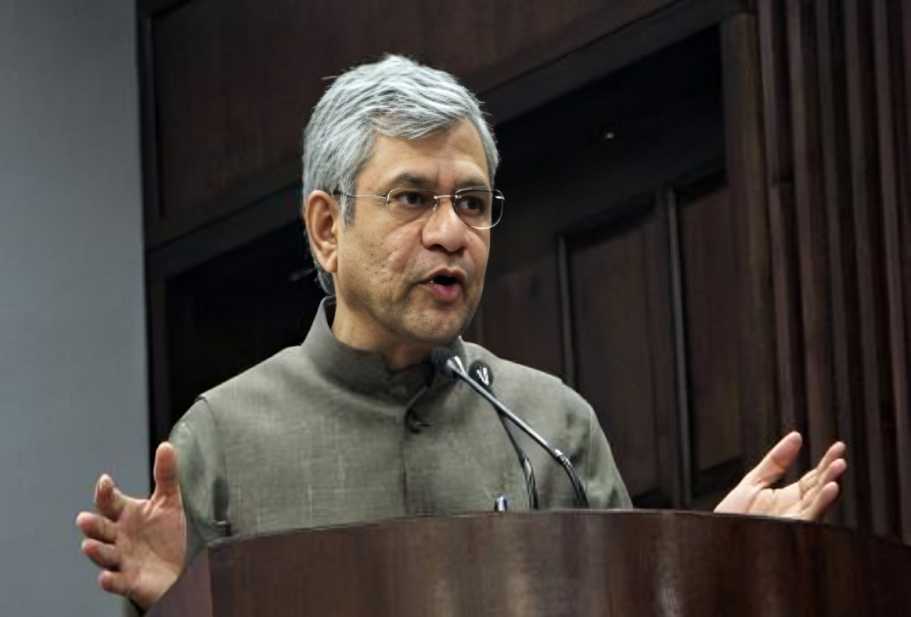

Union Minister for Railways, Information & Broadcasting, and Electronics & Information Technology, Ashwini Vaishnaw, addressed the second session of the post-Budget Webinar series on the theme “Sustaining and Strengthening Economic Growth: Infrastructure, Logistics & Freight,” outlining a roadmap for the next phase of railway expansion.
The Minister identified three core priorities: synchronised capacity expansion, stronger quality and eligibility standards, and reforms in documentation and contract frameworks to curb disputes and ensure timely project completion. Highlighting the rapid transformation of Indian Railways over the past decade, he noted that nearly 35,000 km of new tracks have been laid — exceeding the total railway network of Germany — and about 99% of the network has now been electrified.
Vaishnaw emphasised that such accelerated growth demands parallel enhancement in industry capacity. Railway development, he said, is a collaborative effort between government and private stakeholders. Abrupt fluctuations in project scale can strain industry readiness, making coordinated planning essential. He stressed the need for continuous skill development, robust supervision, improved quality benchmarks and greater adoption of advanced technologies to match the pace of infrastructure expansion.
Referring to the Mumbai-Ahmedabad High-Speed Rail Corridor, he described it as a steep learning experience, noting that train operations beyond 160 kmph significantly increase design and operational complexities. Through cooperation with IITs, industry partners and railway engineers, these challenges were successfully addressed.
Building on that progress, he announced that the Prime Minister has approved seven new high-speed passenger corridors covering 4,000 km. Achieving these ambitious targets, Vaishnaw said, will require coordinated participation from construction firms, equipment manufacturers, supply chains, signalling experts, rolling stock producers and maintenance teams.
He also called for tighter qualification norms and reduced subcontracting to strengthen accountability in public projects. Concluding the session, the Minister thanked participating ministries, stakeholders and industry representatives, stating that their suggestions would guide future sectoral reforms aligned with Union Budget objectives.
Source: Lokmat Times