
Maharashtra’s economy is expected to maintain a strong growth momentum in 2025–26, with the state projected to expand at 7.9%, higher than the national growth estimate of 7.4%.
According to the Economic Survey of Maharashtra 2025–2026, the state continues to hold its position as India’s largest economy, while also highlighting challenges related to healthcare infrastructure and social sector capacity. The survey estimates that Maharashtra’s nominal gross state domestic product (GSDP) will reach Rs 51 lakh crore in 2025–26, up from Rs 46.22 lakh crore in 2024–25, reflecting sustained economic activity across multiple sectors.
The report noted that Maharashtra contributes nearly 14% to India’s gross domestic product (GDP), with the services sector emerging as the primary driver of growth. This sector is expected to expand by around 9% during the year.
Meanwhile, the industrial sector is projected to grow by 5.7%, while agriculture and allied activities are expected to grow by 3.4%. Key areas such as financial services, information technology, logistics and tourism have seen notable expansion, particularly in major urban centres including Mumbai, Pune and Nagpur.
The survey also highlighted that Maharashtra’s per capita income remains significantly higher than the national average. It is projected to reach Rs 3.47 lakh in 2025–26, compared with the estimated national average of Rs 2.19 lakh, reflecting the state’s higher levels of productivity and industrialisation.
Public finances have remained stable, with revenue receipts estimated at Rs 5.60 lakh crore for the upcoming fiscal year. Despite rising development expenditure, the state has maintained fiscal discipline, with the fiscal deficit projected at 2.7% of GSDP.
Maharashtra continues to play a major role in attracting investment, accounting for about 31% of India’s total foreign direct investment inflows between October 2019 and March 2025. The state is also home to more than 63.8 lakh MSMEs, which collectively employ over 2.5 crore people and contribute around 15% to India’s exports.
On the social front, inflation remained under control between April and December 2025, with rural inflation recorded at 2% and urban inflation at 1.5%. Food inflation stayed below 1% during the period, offering some relief to households.
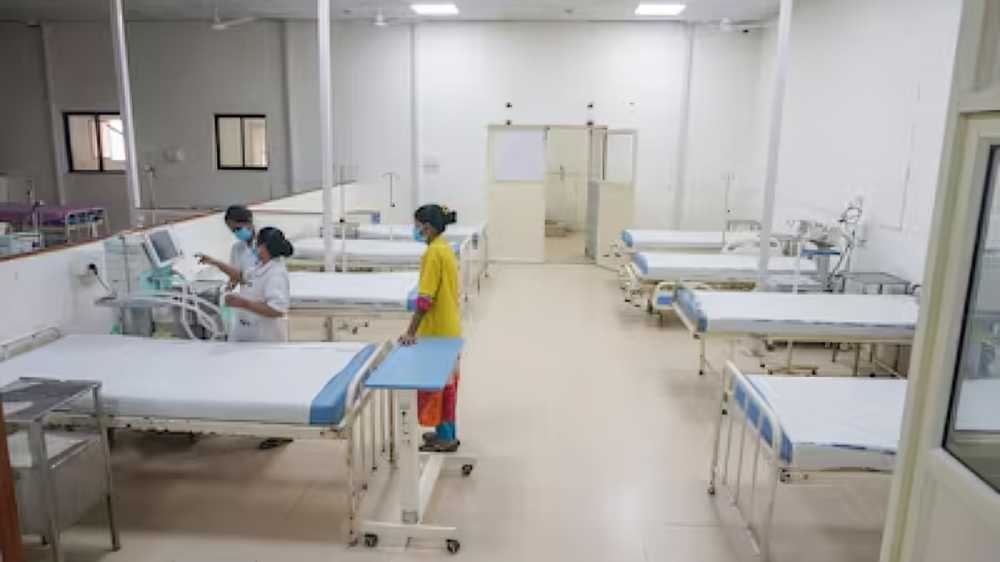
Health indicators have shown improvement, with the infant mortality rate declining to 14 per 1,000 live births and the birth rate falling to 14 per 1,000 population. However, the survey also pointed to gaps in healthcare infrastructure. Maharashtra currently has 528 government hospitals and around 73 hospital beds per lakh population, indicating the need for further expansion in healthcare capacity.
The report also highlighted the reach of welfare programmes across the state. The public distribution system currently serves more than 2.7 crore ration card holders, while the Shivbhojan scheme has delivered over 4 crore subsidised meals through nearly 1,900 centres.
Overall, the survey presents Maharashtra as a key driver of India’s economic growth, supported by a strong services sector, industrial activity and investment inflows, while also emphasising the importance of strengthening social and healthcare infrastructure.
Source: News18