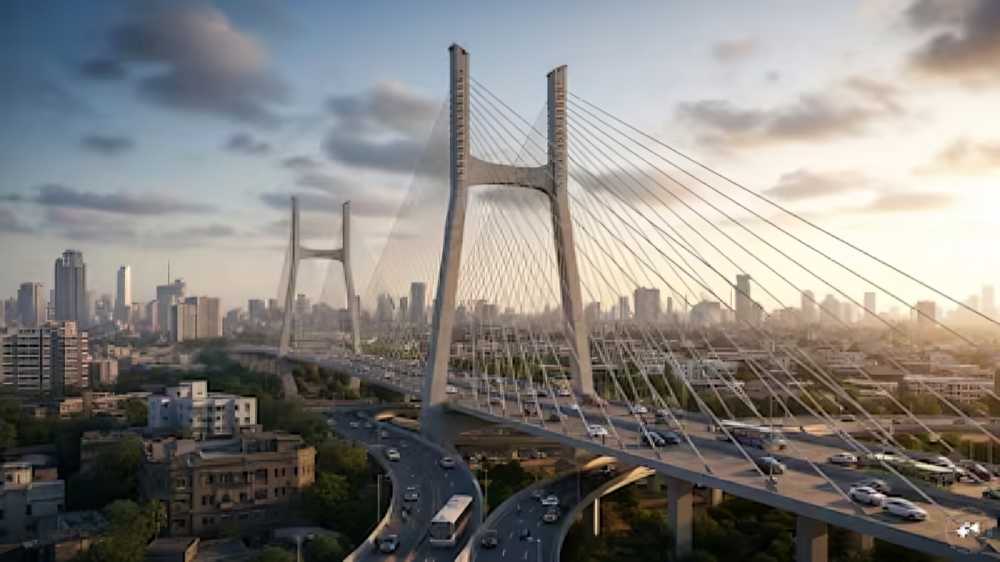

South Mumbai’s traffic-prone stretches in Lalbaug and Mazgaon could soon see significant relief, as the Brihanmumbai Municipal Corporation (BMC) moves ahead with plans for a major flyover project. The civic body has invited bids for constructing a Rs 805-crore cable-stayed flyover that will connect the Y-Bridge in Byculla to the JJ Flyover, according to The Indian Express. The project is designed to strengthen east-west connectivity while easing pressure on key north-south routes in central and south Mumbai.
Project Alignment and Design
The proposed main carriageway will link the Y-Bridge near the Mumbai Fire Brigade headquarters directly to the JJ Flyover ramp, covering a stretch of 85 metres. The broader redevelopment includes rebuilding the existing Y-Bridge as a cable-stayed structure, with two arms spanning approximately 916 metres, including approach roads, and reaching a height of 9.7 metres.
A cable-stayed design has been chosen as it allows the bridge deck to be supported by cables attached to pylons, reducing the need for multiple piers—especially beneficial over busy railway tracks. The construction will be executed in phases to minimise disruption to daily traffic movement.
Addressing Congestion Hotspots
Once completed, the flyover is expected to help motorists bypass major bottlenecks at Saboo Siddik Polytechnic College and the Richardson and Cruddas stretch along JJ Road in Nagpada. It is also likely to reduce congestion on the Eastern Express Highway by improving connectivity between the eastern suburbs and South Mumbai.
Additionally, two new connecting arms will link the Olivant Bridge in Mazgaon, providing better access to both the Eastern Freeway and the Mumbai Trans Harbour Link.
Why the Upgrade Is Needed
The redevelopment follows a structural assessment by the Indian Institute of Technology, Bombay (IIT-Bombay), which found the existing Y-Bridge—built in 1922—to be unsafe. While the old bridge had six lanes, the new design aims to expand capacity to eight lanes. Built using modern materials such as stainless steel, the new structure is expected to offer greater durability and a longer lifespan.
Source: News18