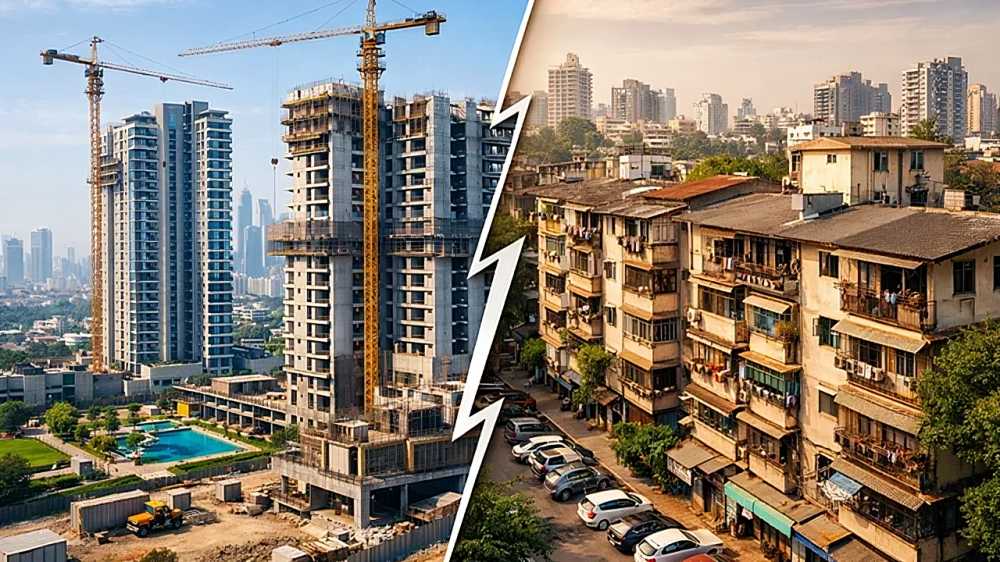

A growing price divide between new and resale homes is reshaping housing trends in Maharashtra, particularly in Mumbai and Pune. According to a recent report by 1 Finance Magazine, newly launched properties are commanding a significant premium over resale units, reflecting evolving buyer preferences and the impact of infrastructure-led development.
The report highlights that new homes in Mumbai now carry a premium of 23% over resale properties, while Pune follows closely at 22%. Thane, in comparison, shows a more moderate gap of 8%. This trend indicates that buyers are increasingly willing to pay more for newly built homes, even within the same locality, due to the added benefits they offer.
Shift in Buyer Preferences
Traditionally, resale properties enjoyed an edge due to their established locations and immediate availability. However, over the past decade, this dynamic has shifted considerably. In Mumbai, the premium for new homes has surged from around 5% in 2016 to 23% in 2025, underlining a clear change in buyer priorities—from simply securing a prime location to focusing on quality, amenities, and long-term value.
“Earlier, the right pin code was enough; today, buyers are paying a premium for product quality, new supply and connectivity. The gap between primary and resale stock in the same micro-market is now in double digits, making infrastructure-linked pockets far more decisive for both end-users and investors. As infrastructure reshapes commute maps across India, pricing power will increasingly be set by connectivity-led pockets and the new supply entering them,” says Purvang Mashru, Senior Quantitative Research Analyst, 1 Finance.
Market Trends and Variations
Greater Mumbai continues to be the country’s costliest housing market, with average primary prices at Rs 35,602 per sq ft as of December 2025. However, the premium for new homes varies across micro-markets. South Mumbai has seen a steep premium of 46%, while central areas report a relatively lower gap of 8%. The eastern suburbs have witnessed a sharp rise from just 2% in 2016 to 30% currently.
These variations suggest that pricing trends are increasingly influenced by micro-market dynamics, connectivity improvements, and the availability of modern housing stock, rather than broad city-wide patterns.
Source: Outlook Money