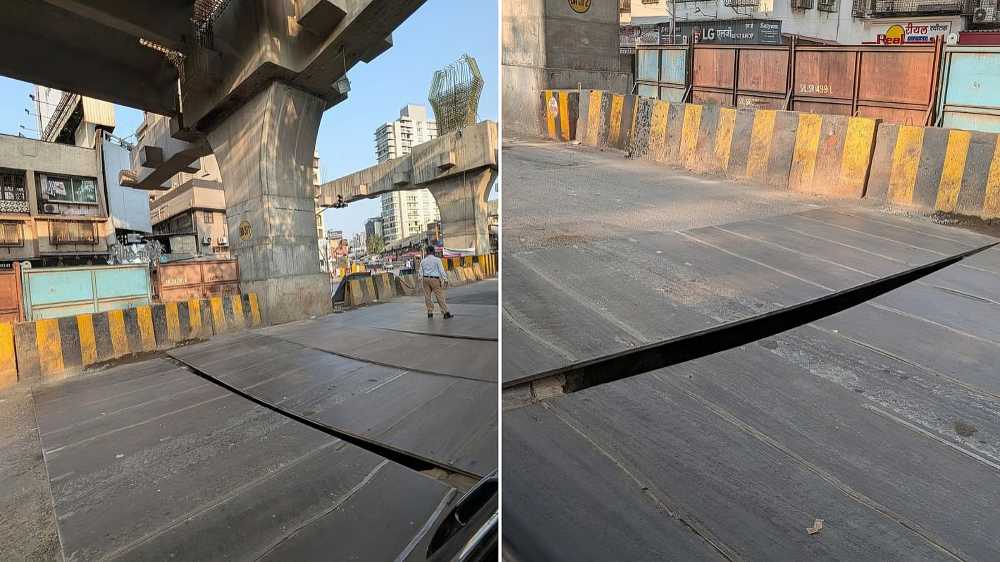

A partial road collapse along SV Road in Bandra has disrupted traffic flow in Mumbai’s western suburbs, underscoring the vulnerability of surface infrastructure during underground utility works. The incident has led to congestion on one of the city’s key north–south corridors, prompting swift action from civic and traffic authorities.
The cave-in occurred near a busy commercial junction, where a portion of the roadway gave way amid ongoing pipeline replacement work beneath the surface. The affected section had been temporarily covered with metal plates, a standard practice during excavation. However, instability in the underlying structure caused the stretch to collapse, necessitating immediate safety measures.
Authorities quickly cordoned off the damaged area, reducing available road space and slowing vehicular movement. Commuters experienced significant delays, with traffic spillovers impacting nearby junctions and parallel routes, particularly during peak hours.
Urban infrastructure experts point out that such incidents often arise from the combination of ageing underground networks and heavy traffic loads above. While pipeline upgrades are essential for improving long-term water supply resilience, executing them in dense urban settings poses risks to road stability.
The disruption also highlights a broader challenge—ensuring effective coordination between underground works and surface transport systems. In cities like Mumbai, even temporary breakdowns in infrastructure can trigger widespread ripple effects on mobility and daily life. Experts stress the importance of stronger interim solutions, such as reinforced road plating and continuous monitoring during excavation.
Officials have indicated that repair work will be prioritised to restore normal traffic movement. This will involve stabilising the damaged section, completing pipeline work, and relaying the road surface.
While short-term inconvenience is expected, the incident underscores the need for better-integrated planning to balance infrastructure upgrades with urban mobility demands.
Source: Urban Acres