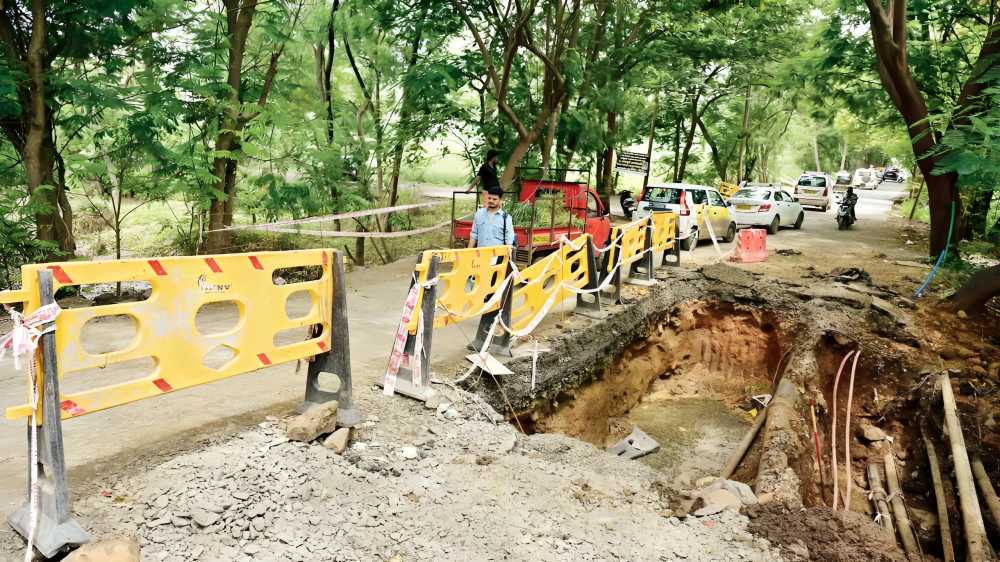

The Brihanmumbai Municipal Corporation (BMC) is preparing a new trenching policy aimed at reducing repeated excavation of Mumbai’s concretised roads, particularly on stretches developed before 2023 that do not have underground utility duct infrastructure.
The policy is expected to be finalised after the monsoon and is part of the civic body’s broader effort to protect newly concretised roads from frequent digging linked to utility repairs and cable installation work.
Mumbai currently has around 2,050 km of roads, of which nearly 1,224 km had already been concretised before 2023. In the same year, the BMC launched a Rs 17,000 crore project to construct an additional 700 km of roads. According to civic officials, around 521 km of this network has already been completed, taking the city’s total concretised road network to nearly 1,745 km.
Officials stated that all roads developed under the post-2023 project include dedicated underground ducts that allow utility agencies to access or install cables without digging up the road surface. Agencies can reportedly carry out work by opening access lids connected to these ducts.
However, roads constructed before 2023 lack this facility, resulting in repeated excavation for repairs and utility work. To address the issue, the BMC plans to make it mandatory for agencies seeking excavation permission to also facilitate construction of utility ducts beneath the road surface. In cases where agencies are unable to carry out the duct work, the civic body will undertake the installation alongside ongoing repair activities.
The civic administration also plans to enter into one-year agreements with utility providers, making them responsible for restoration and repairs related to excavation work during that period.
The issue recently gained attention following repeated power disruptions in Mumbai. The BEST Undertaking had linked some of the delays in repair work to pending permissions required for digging concretised roads to access utility cables.
According to officials, the proposed policy will support non-invasive access to nearly 32 to 34 utility services, including electricity, internet, gas, sewage and water infrastructure, without damaging road surfaces.
Source: Mid-day