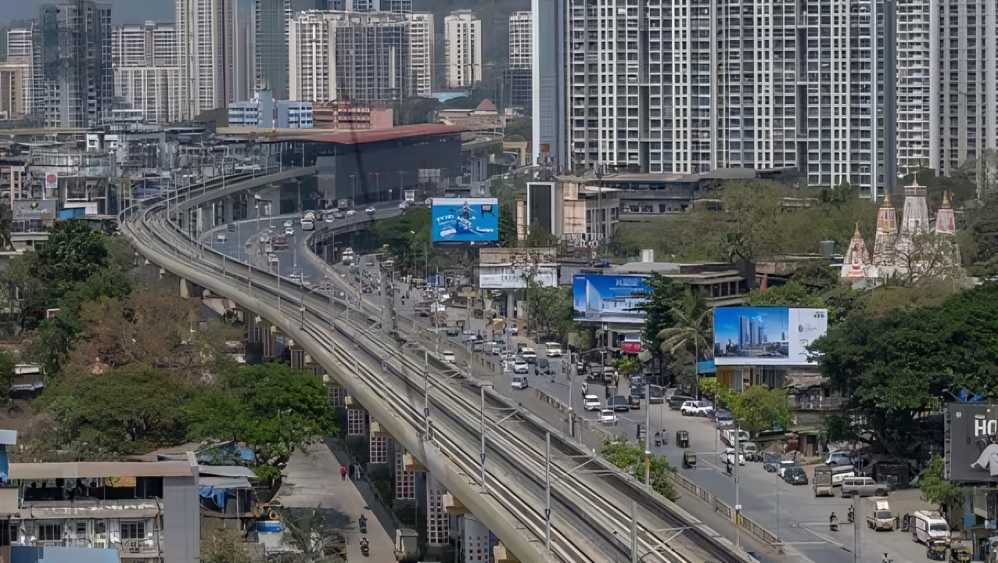

Mumbai’s metro network reached a major milestone on April 7 with the inauguration of Phase 1 of Metro Line 9 and Metro Line 2B, a move expected to significantly influence the city’s real estate landscape. With improved connectivity and reduced commute times, experts believe suburban housing markets are poised for increased demand.
Metro Line 9 now connects Dahisar East to Kashigaon, extending metro access into Mira Bhayandar in Thane district, while Line 2B links Mandale to Chembur. Regular services on both lines began on April 8, taking Mumbai’s total operational metro corridors to six. Notably, this marks the first time a metro line has extended beyond municipal limits into areas like Mira Road.
Improved transit infrastructure is expected to enhance the appeal of previously peripheral micro-markets such as Mira Road, Dahisar, and Chembur. Real estate experts say reduced travel time and better connectivity to business hubs are key factors driving interest from both homebuyers and investors. Developers are also likely to accelerate new project launches along these corridors to capitalise on rising demand.
Metro Line 9, running between Dahisar East and Kashigaon, is the first metro corridor in Thane district. Meanwhile, Line 2B, currently operational between Mandale and Diamond Garden, improves connectivity across key Harbour Line locations.
According to real estate experts, the commencement of operations of two new Metro lines will have a substantial impact on real estate. “The impact of the Mandale–Diamond Garden stretch of Mumbai Metro Line 2B (Phase 1), spanning over 5.3–5.5 km with 5 stations, on real estate is substantial because it brings first-time metro connectivity to parts of eastern Mumbai like the Chembur–Mankhurd belt,” they said.
ANAROCK data indicates notable price appreciation across metro-linked corridors. Micro-markets along Line 2B have seen price increases of 26–32% between 2022 and Q1 2026, with Chembur recording the highest growth. Similarly, areas along Line 9 such as Mira Road and Bhayandar have witnessed price rises of up to 37%.
“The Metro expansion and infrastructure push are redefining how Mumbai and its suburbs live and move. Enhanced last-mile connectivity and reduced travel times are making the Mira-Bhayandar micro-markets far more attractive for homebuyers and investors. Areas once considered peripheral are now emerging as new hubs for residential and commercial activity,” said real estate developer Purvesh Sarnaik (Director) of Vihang Ahead. “As commute times shrink and accessibility improves, we are witnessing a clear uptick in interest from both end-users and investors looking to capitalise on this infrastructure-led growth. This will not only boost commercial and residential demand but also accelerate the overall development of these regions into self-sustained urban hubs,” Sarnaik said.
With over 100 km of operational metro lines, Mumbai now ranks second in India after Delhi in terms of metro network size, reinforcing its position as a rapidly evolving urban transit hub.
Source: Hindustan Times