
In an interview with Sweety Bhagwat, Principal Correspondent, Afcons Project Director Ranjan Kumar Mishra—who led the project from inception—detailed the challenges, innovations and milestones behind the landmark structure.
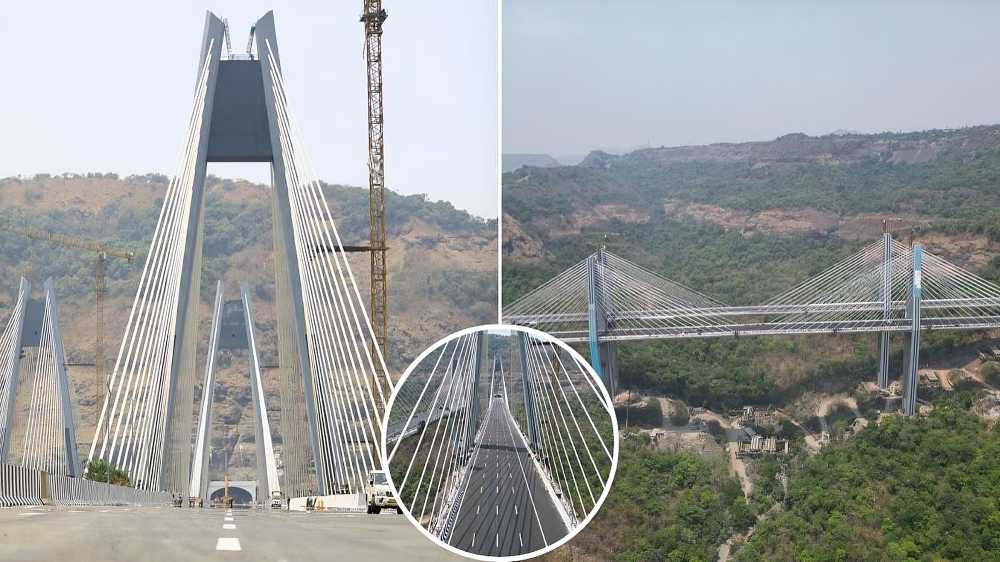
The tallest cable-stayed bridge on the Mumbai–Pune Missing Link is now complete ahead of its proposed May 1 opening. Constructed by Afcons Infrastructure over nearly six years, the bridge has been designed to endure high wind conditions, carry heavy loads and operate with a lifespan of around 100 years.
Mishra described the project as one of the most complex he has handled, primarily due to its location between two hills in the Western Ghats. With no initial site access, the team first had to establish connectivity—reaching through the Pali Road stretch and building an additional 10–12 km access route to transport materials, machinery and workforce.
He explained that early challenges were as much logistical as engineering, involving the creation of complete on-site infrastructure, including worker housing and essential facilities. From a design perspective, the terrain introduced strong wind forces and aerodynamic complexities, requiring extensive analysis of pylons, piers and cable systems.
As India lacked specialised testing facilities, scaled models of the bridge were developed and tested in laboratories in Copenhagen and London, especially after delays during the Covid period. These studies helped assess stability across construction stages and under operational conditions.
Each of the twin carriageways—built in a 4+1 lane configuration—has a weight of approximately 1.25 lakh tonnes. The bridge has been engineered to handle extreme loads under IRC Class 70R standards, enabling it to support even heavy-duty vehicles like military tanks.
Equipped with a structural health monitoring system, the bridge will track parameters such as cable vibrations and pylon movement throughout its lifecycle. A centralised control room will oversee real-time operations.
With pylons rising up to 182 metres and a maximum span of 305 metres, the structure stands as a major engineering achievement. Designed for speeds up to 120 kmph, it will operate optimally at 100 kmph, enhancing connectivity and efficiency on this critical corridor.
Source: The Free Press Journal