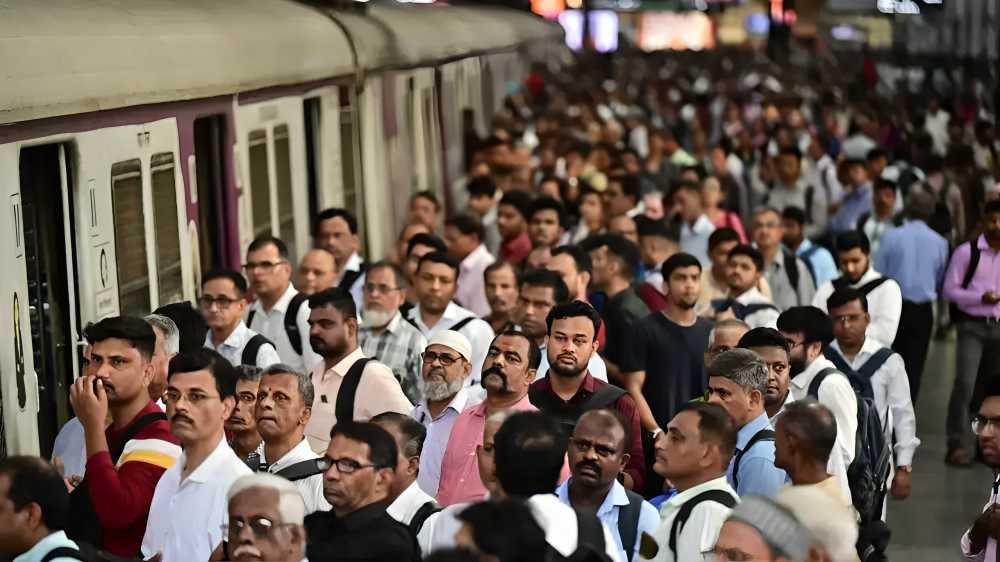

Mumbai’s suburban railway system is set to undergo a notable capacity enhancement this week, with Western Railway beginning the conversion of select services into longer train formations to help reduce congestion during peak travel hours. The initiative focuses on some of the most heavily used commuter corridors in the Mumbai Metropolitan Region, where persistent overcrowding continues to strain daily operations and commuter comfort.
As part of the operational upgrade, 17 existing suburban services will be reconfigured from 12-coach rakes to 15-coach formations. This change is expected to raise per-train passenger capacity by nearly 25 percent, offering partial relief on routes that routinely witness extreme footfall. The improvement is particularly relevant for long-distance suburban stretches such as Virar–Dahanu and Churchgate–Virar, both of which have seen growing passenger demand driven by rapid residential expansion in outer suburbs.
Transport experts describe the move as a necessary but incremental response to Mumbai’s deeper structural mobility challenges. The suburban railway remains the city’s primary transport backbone, carrying millions of commuters each day and linking residential zones with major employment centres. However, urban sprawl and real estate growth in peripheral regions have significantly outpaced infrastructure upgrades, intensifying pressure on existing rail capacity.
Officials have confirmed that eight of the upgraded 15-coach services will operate on the Virar–Dahanu section, which is increasingly integrated into the broader metropolitan commute network. The remaining nine services will run on the Churchgate–Virar corridor, one of the busiest stretches in the entire suburban system. Rather than increasing the number of trains, authorities are focusing on lengthening rakes to maximise efficiency within existing track constraints and tightly managed schedules.
Alongside these changes, the gradual introduction of additional air-conditioned suburban services reflects a slow but steady shift towards improved commuter comfort. While AC trains still form a limited portion of the overall fleet, their expansion signals evolving passenger expectations, particularly among daily office travellers spending long hours in transit.
Experts, however, caution that capacity augmentation alone may not fully resolve Mumbai’s overcrowding issues. Sustainable relief, they argue, will depend on coordinated planning across suburban rail, metro, and bus systems, supported by transit-oriented development that reduces travel distances.
For commuters, the immediate outcome is expected to be modest yet noticeable—slightly improved boarding conditions and marginally less congestion during rush hours. Over time, such upgrades may contribute to a safer and more efficient suburban rail experience in one of the world’s most densely used transport networks.
Source: Urban Acres