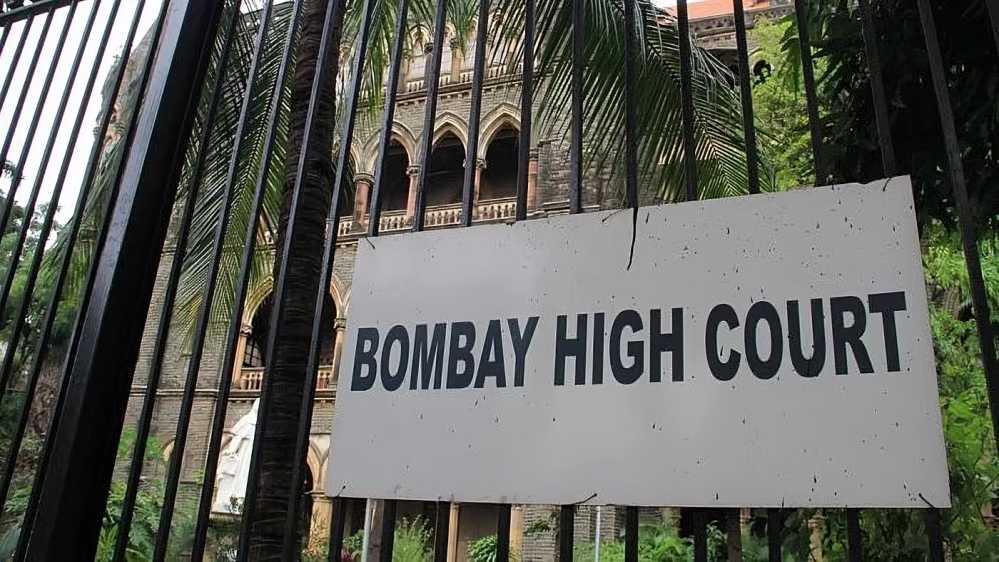

The Bombay High Court has ruled that authorities cannot insist on a no-objection certificate (NOC) for construction near defence establishments at a late stage, directing officials to issue an occupancy certificate for two residential buildings located near INS Trata.
In its May 5 judgment, a bench of Justices G S Kulkarni and Aarti Sathe emphasised that any requirement for defence clearance must be applied in a fair, reasonable, and legally consistent manner. The court observed that if there are genuine security concerns, these must be addressed at the initial stages of construction itself, rather than after substantial progress has already been made.
“There cannot be a casual approach in such matters and more particularly, like in the present case, where construction has progressed substantially in accordance with the sanctioned plans and the permission granted by the planning authority,” the HC maintained.
The court also underlined that property rights under Article 300A of the Constitution cannot be compromised arbitrarily or outside the framework of law.
The ruling came while allowing a petition filed by Techno Freshworld LLP, developers of the Prabhadevi Indraprastha Cooperative Housing Society project in Worli. The developers had challenged a stop-work notice issued in October 2025 due to the absence of an NOC from naval authorities, as well as the denial of an occupancy certificate by the Maharashtra Housing and Area Development Authority.
The bench held that insisting on an NOC at this stage was “illegal, invalid and unjustified,” noting that the buildings were located beyond the prescribed distance norms and that the planning authority had already granted all necessary permissions during construction.
The court further stated that the stop-work notice and rejection of the occupancy certificate were “arbitrary and illegal.” It also pointed out inconsistencies in enforcement, observing that several structures exist in the vicinity without such approvals.
“We believe that the requirement of an NOC cannot be selectively insisted/foisted by the naval authorities,” the court remarked.
The judgment reinforces the need for timely regulatory clarity and non-arbitrary decision-making in urban development matters.
Source: Hindustan Times