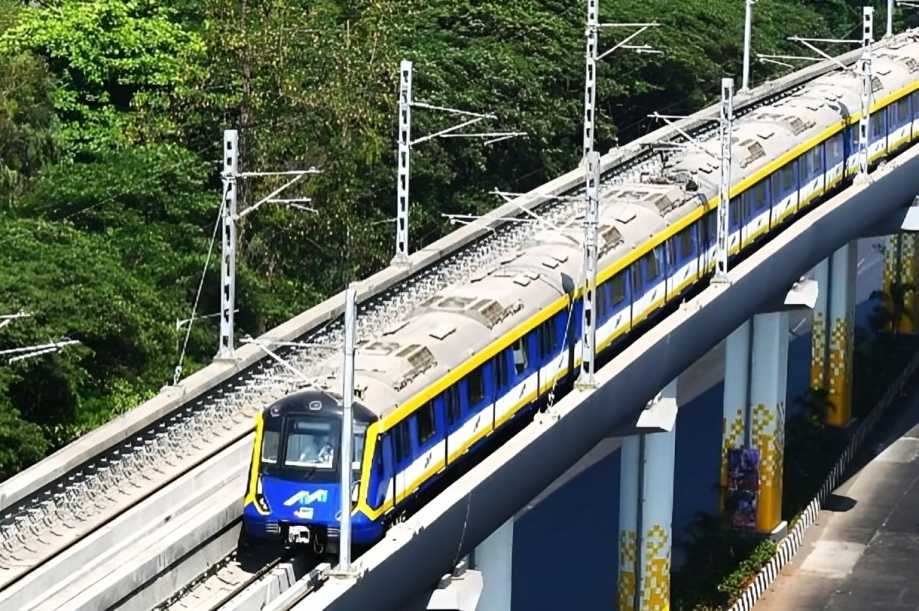

The Mumbai Metropolitan Region Development Authority (MMRDA) has submitted a revised proposal to the Maharashtra government for Metro Line 13, a major new metro corridor planned between Bhayandar and Dongarpada in north Virar. The project is estimated to cost Rs 17,724.99 crore, reflecting a sharp rise from the earlier projected cost of Rs 6,900 crore.
The proposed corridor aims to strengthen connectivity across the rapidly expanding western suburbs of the Mumbai Metropolitan Region and reduce congestion on the heavily burdened Western Railway suburban network.
Under the earlier proposal, the project featured a fully elevated 23-km corridor with 20 stations extending from Shivaji Chowk in Kashimira to Virar. However, officials later revised the alignment to improve ridership potential and enhance the project’s long-term financial viability.
The updated Metro Line 13 corridor will now stretch nearly 24.9 km and include 17 stations, comprising 14 elevated stations and three underground stations. A major reason behind the steep increase in project cost is the addition of a 3.25-km underground section between Vasai and Nallasopara.
“Construction costs have significantly risen since the initial proposal was drafted. Underground metro construction is substantially more expensive than elevated corridors,” an MMRDA official said.
At the Bhayandar end, the corridor will begin at Subhash Chandra Bose Ground, which is also expected to function as an interchange station with the partially operational Metro Line 9. The line will terminate at Dongarpada, near the Naringi Cricket Ground, where authorities have proposed building a metro depot.
Key stations planned along the route include Naigaon, Juchandra, Golani Naka, Vasai, Nallasopara East, Nallasopara West, Virar, Viva College, Yazoo Park, and Dongarpada.
Officials believe the corridor will significantly improve daily commuting in the Vasai-Virar belt, one of the fastest-growing residential regions in the Mumbai Metropolitan Region, while also reducing dependence on overcrowded suburban railway services.
Source: Swarajya