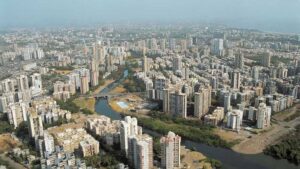

Mumbai’s skyline has continuously evolved through redevelopment, transforming old neighbourhoods into clusters of high-rise residential and commercial towers. However, while the city has expanded vertically at a rapid pace, its environmental balance has steadily weakened, with shrinking green cover and rising temperatures becoming an increasing concern.
Over the years, Mumbai’s intense urbanisation has reduced open spaces and tree cover, contributing to a stronger urban heat island effect. Summers have become noticeably harsher, with roads and concrete-heavy neighbourhoods retaining heat long after sunset. Researchers and environmental studies have repeatedly highlighted that dense construction activity, loss of vegetation and declining open land are intensifying localised heat stress across the city.
Mumbai’s Climate Action Plan has already identified rising temperatures, extreme rainfall events and environmental degradation as key long-term risks to the city’s liveability. Reports indicate that between 1980 and 2018, Mumbai lost nearly 40% of its green cover and over 80% of its open land, even as construction activity expanded significantly.
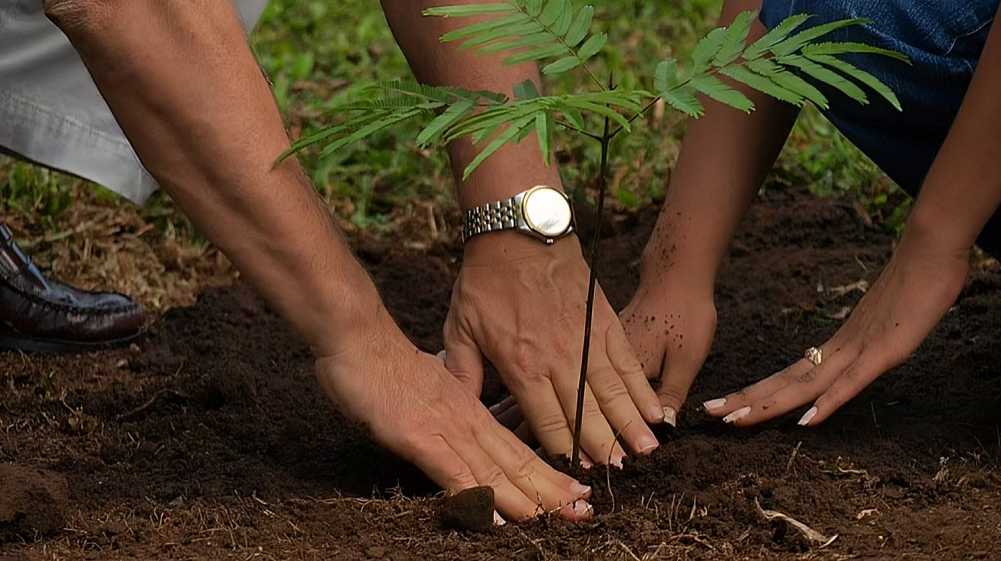
Against this backdrop, experts and urban planners are increasingly calling for stronger environmental obligations to be directly linked with real estate approvals. One proposal gaining attention is the introduction of a mandatory policy requiring one full-grown tree plantation for every new residential apartment and office unit approved for construction.
Under such a framework, if a project receives approval for 500 apartments, the city’s green cover should increase by 500 trees. Similarly, commercial projects creating new office units would also carry corresponding plantation obligations. Supporters of the proposal argue that environmental responsibility should become an integral part of the city’s approval architecture rather than remaining limited to symbolic sustainability measures.
Urban planners also stress that plantation activity should remain localised. Trees planted in distant peripheral regions cannot offset the environmental impact created by dense construction in central urban neighbourhoods where heat accumulation, air circulation issues and declining shade directly affect residents.
Experts further argue that the focus should not only be on plantation numbers but also on long-term survival and ecological quality. Native tree species suited to Mumbai’s coastal climate, rainfall patterns and canopy requirements would need to be prioritised, while occupancy certificates could be linked to verified and geotagged proof of plantation and maintenance.
With thousands of residential and commercial units approved annually, even moderate implementation of such a policy could add lakhs of trees across Mumbai over the next decade. Increased urban canopy cover could help lower surface temperatures, improve pedestrian comfort and strengthen climate resilience across densely populated neighbourhoods.
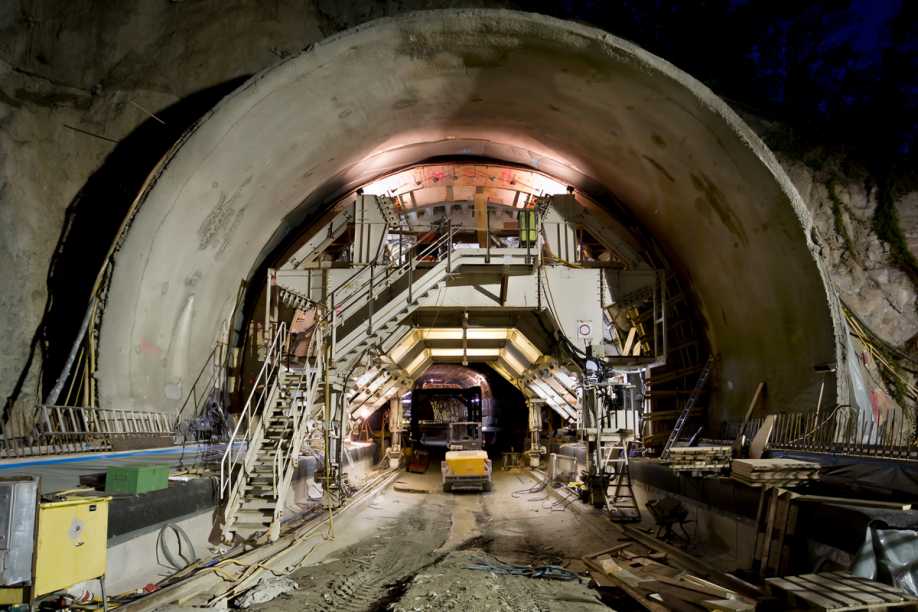
The proposal also extends to public infrastructure projects, including metro corridors, road works, railway expansion and government housing developments, which could be required to include measurable greening obligations alongside construction targets.
Urban experts believe Mumbai’s future growth cannot rely only on concrete expansion and taller skylines. As climate pressures increase, integrating ecological restoration into development approvals may become essential to preserving long-term urban liveability.
Source: The Free Press Journal